
 Posted by
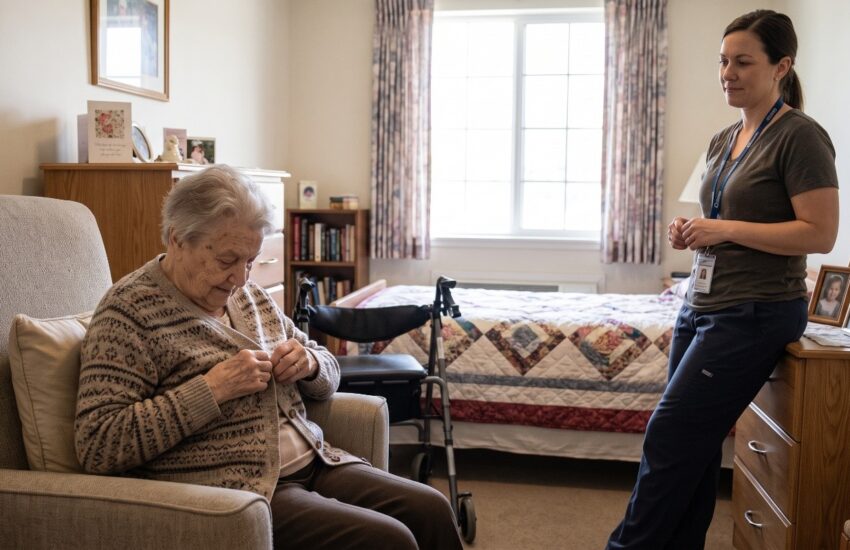
 My mother had been in the nursing home for three weeks when I walked in and found her sitting in a chair by the window, staring at a sweater on the bed. She wanted to put it on. She had been waiting forty-five minutes for someone to help her. When I asked why she did not just put it on herself, she looked at me with a mix of frustration and shame. “They told me not to,” she said. “They said I might fall.” The sweater remained on the bed. She remained cold. And something in her spirit dimmed.
That moment taught me something I have never forgotten. Independence is not a luxury. It is not a reward for good behavior. It is a fundamental human need. For seniors in nursing homes, the loss of independence is one of the most painful parts of the transition. They lose their homes, their routines, their privacy, and often their sense of self. Maintaining independence, even in small ways, is essential to their dignity, their mental health, and their quality of life.
The research supports this. Seniors who retain a sense of control over their daily lives report higher life satisfaction, lower rates of depression, and slower cognitive decline. They are more engaged, more motivated, and more physically active. They live longer. Independence is not just about doing things for yourself. It is about feeling like your life is still your own.
Nursing homes, by their very nature, are institutions. They run on schedules, routines, and safety protocols. They prioritize efficiency and risk management. These priorities are understandable, but they often come at the cost of individual autonomy. Residents are told when to wake up, when to eat, when to bathe, and when to sleep. They are told what to wear and where to sit. Their choices are narrowed to a handful of options that are often not choices at all. “Do you want to take a shower now or after lunch?” is not a real choice if you did not want to shower at all.
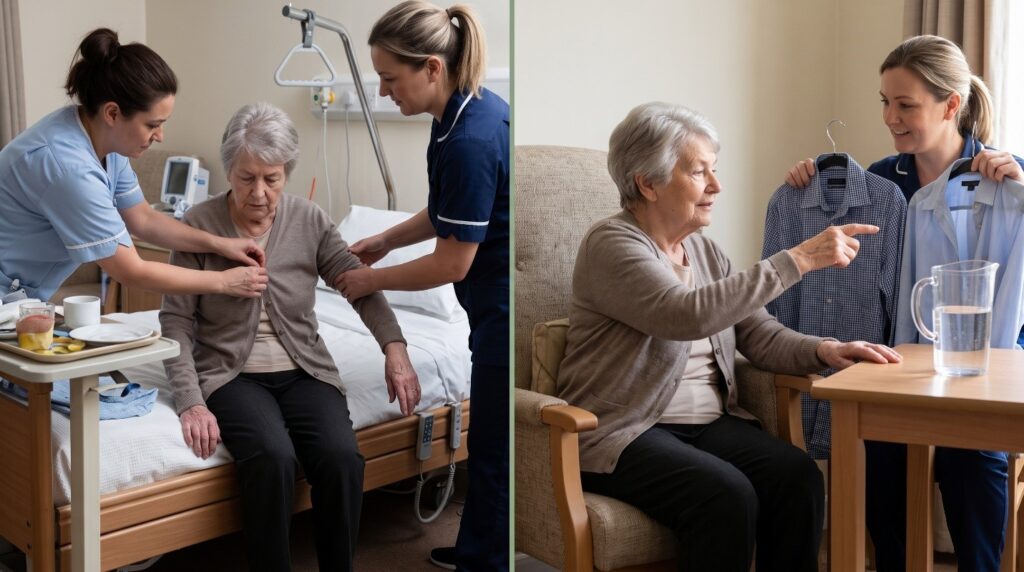
The good news is that small changes can make a significant difference. Facilities that prioritize independence find ways to offer real choices within safe boundaries. They allow residents to sleep in if they are not morning people. They offer a menu, not a tray. They let residents choose what to wear, even if the outfit does not match. They involve residents in their own care planning. They ask what matters to them. They listen to the answer.
The physical environment can support independence too. A well-designed room with everything within reach. A bathroom with grab bars that allow a resident to toilet themselves. A walker that fits properly so someone can move around without assistance. These are not just conveniences. They are tools of autonomy. When my mother’s facility finally adjusted her walker and moved her belongings within reach, she started doing more for herself. She felt capable again.
Staff culture is the most important factor. A facility that sees residents as tasks to be managed will undermine independence at every turn. A facility that sees residents as adults with the right to make their own choices will find ways to support autonomy, even when it is inconvenient. The best caregivers do not just do things for residents. They do things with residents. They wait a little longer. They let residents try, even if it takes more time. They ask before they act. They respect the word no.
Family members play a role too. We can advocate for our loved ones’ independence. We can ask about their preferences and share them with staff. We can resist the urge to do everything for them when they can still do some things for themselves. We can support their choices, even when we disagree. My mother wanted to wear that sweater. It was not the sweater I would have chosen. But it was her choice, and it mattered.
Independence does not mean doing everything alone. It means having a say. It means being consulted. It means being treated as an adult. It means having a reason to get up in the morning. My mother did not need to put on that sweater by herself. But she needed to know that she still had a say in what happened to her body and her day. That is not a small thing. That is everything.
References
Ibrahim, J. E., Davis, M. C., & Lee, A. H. (2018). Independent living in nursing homes: Residents’ autonomy, dignity, and quality of life. *Journal of Aging Studies, 46*, 1–8.
O’Connor, S., & O’Brien, L. (2022). Nursing support for older people’s autonomy in residential care: An integrative review. *Nursing Open, 9*(3), 1411–1424. [https://doi.org/10.1002/nop2.12428](https://doi.org/10.1002/nop2.12428)
Moilanen, T., Kangasniemi, M., Papadopoulos, I., Mynttinen, M., & Siipi, H. (2021). Older people’s perceived autonomy in residential care: A systematic review. *Nursing Ethics, 28*(5), 706–723.
Oosterveld-Vlug, M. G., Pasman, H. R. W., van Gennip, I. E., Willems, D. L., & Onwuteaka-Philipsen, B. D. (2013). Changes in the personal dignity of nursing home residents: A longitudinal qualitative interview study. *PLoS ONE, 8*(9), e73822. [https://doi.org/10.1371/journal.pone.0073822](https://doi.org/10.1371/journal.pone.0073822)
Fetherstonhaugh, D., Tarzia, L., Bauer, M., Nay, R., & Wellman, D. (2016). “The Red Dress or the Blue?” How do staff perceive that they support decision-making for people with dementia living in residential aged care facilities? *Journal of Applied Gerontology, 35*(6), 611–629.
Sandman, L., Gustavsson, S. M., & Gustavsson, M. (2019). Ethics of autonomy and dependence in nursing home care. *Nursing Ethics, 26*(5), 1421–1433.
Hjaltadóttir, I., Gústafsdóttir, M., & Jonsdottir, H. (2018). Residents’ experiences of living in nursing homes: The importance of autonomy, meaningful activities, and social relationships. *Scandinavian Journal of Caring Sciences, 32*(4), 1415–1424.
World Health Organization. (2015). *World report on ageing and health*. World Health Organization. [https://www.who.int/publications/i/item/9789241565042](https://www.who.int/publications/i/item/9789241565042)