
 Posted by
I had never heard of group homes until my aunt needed one. She had developmental disabilities and had lived with my grandmother her entire life. When my grandmother died, we were lost. The large institutions we toured felt cold and overwhelming. The assisted living facilities did not have the specialized support she needed. Then a social worker mentioned group homes. She said they were small. She said they were home-like. She said they might be exactly what my aunt needed. She was right.
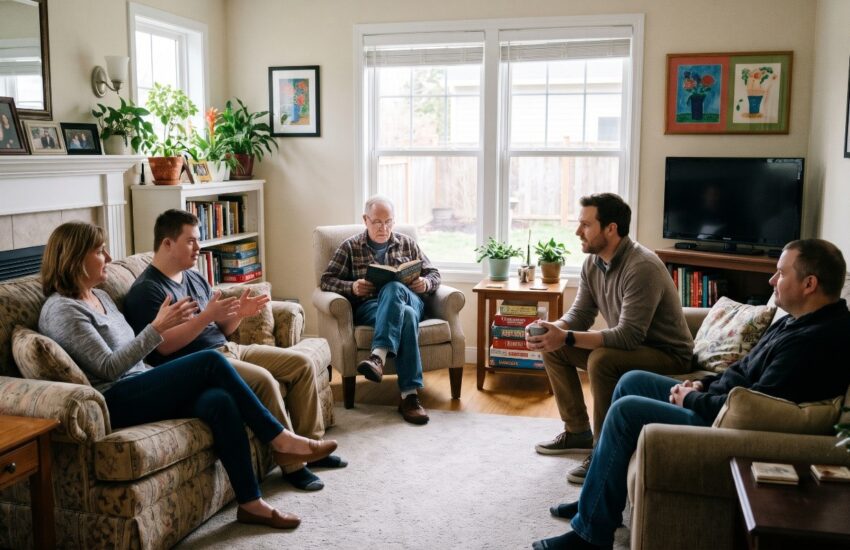
Group homes are small residential facilities that provide care and support for people who cannot live independently. They typically serve between four and ten residents, though some are smaller and some are larger. They are designed to feel like homes, not institutions. Residents have their own rooms or share with a roommate. They share common living areas, kitchens, and bathrooms. They participate in household routines. They are part of a community.
The first thing I learned is that group homes serve many different populations. Some serve adults with developmental disabilities. Some serve people with mental illness. Some serve seniors who need assistance with daily living. Some serve people recovering from addiction or transitioning from homelessness. The population a group home serves determines the level of care and the type of staff. My aunt’s group home served adults with developmental disabilities who needed help with daily tasks but could participate in community activities. The staff were trained in disability support. The environment was structured but not restrictive.
The second thing I learned is that group homes are not nursing homes. They do not provide skilled nursing care. They do not have medical staff on site around the clock. They are for people who need supervision, support, and assistance with daily living, but not for people who need ongoing medical care. My aunt needed help with cooking, cleaning, and managing her money. She needed reminders to take her medication. She needed someone to help her navigate social situations. She did not need a nurse. The group home was the right level of care.
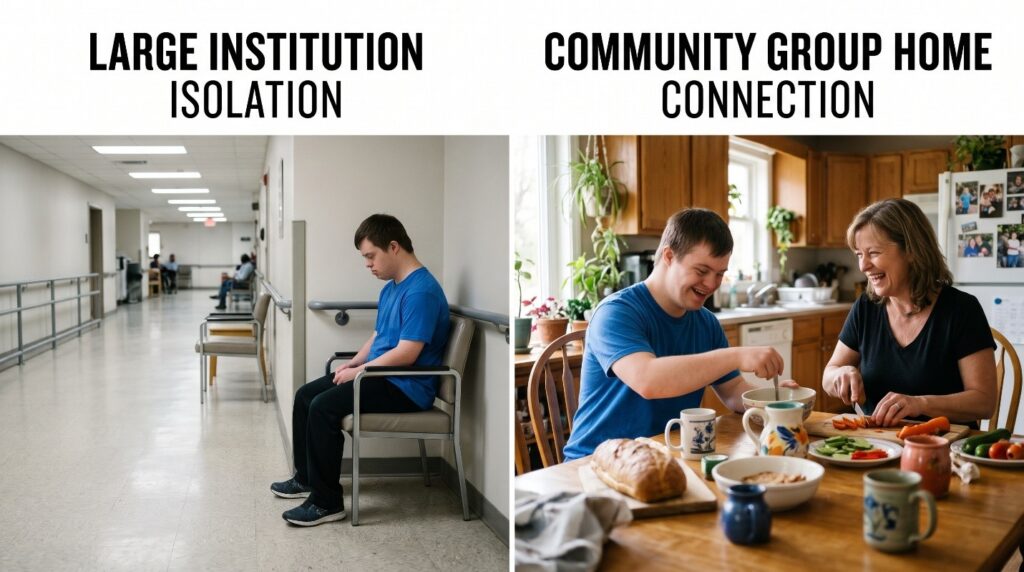
The third thing I learned is that the quality of group homes varies enormously. Some are excellent. Some are not. I toured several before choosing one. I looked at the physical condition of the home. Was it clean? Was it safe? Was it well-maintained? I looked at the staff. Were they kind? Were they engaged? Did they seem to genuinely care about the residents? I talked to the residents. Were they happy? Were they treated with dignity? I asked about staffing ratios. I asked about activities. I asked about meals. I asked about medication management. I asked about the complaint process. The home I chose was not fancy. But it was clean, the staff were warm, and the residents seemed content. That was enough.
The fourth thing I learned is that group homes are regulated. They must be licensed by the state. They must meet health and safety standards. They must undergo regular inspections. The regulations vary by state and by the population served. I checked the licensing status of every home I toured. I asked to see the most recent inspection report. I asked about any complaints or violations. Transparency is a good sign. A home that hides its records is a home to avoid.
The fifth thing I learned is that my aunt thrived in the group home. She had been isolated living with my grandmother. She had few friends. She spent most of her time watching television. In the group home, she had housemates. She had activities. She had a routine. She learned to cook simple meals. She started painting. She made a friend. She was not just cared for. She was living.
The sixth thing I learned is that group homes are not for everyone. Some people need more medical care than a group home can provide. Some people need more supervision. Some people need a different kind of environment. It is important to be honest about what your loved one needs. If a group home is not the right fit, it is not a failure. It is information.
The seventh thing I learned is that families are still part of the equation. My aunt’s group home encouraged family involvement. We were invited to care planning meetings. We visited regularly. We were included in decisions. The staff knew us. They knew my aunt’s history. They knew her preferences. We were partners, not outsiders.
Group homes are not a last resort. They are a choice. They offer something that large institutions cannot. They offer a home. They offer community. They offer dignity. For my aunt, they offered a life. That was everything.
References
1. National Institute on Aging. (2023). *Long-term care facilities: Assisted living, nursing homes, and other residential care*. [https://www.nia.nih.gov/health/assisted-living-and-nursing-homes/long-term-care-facilities-assisted-living-nursing-homes](https://www.nia.nih.gov/health/assisted-living-and-nursing-homes/long-term-care-facilities-assisted-living-nursing-homes)
2. American Planning Association. (n.d.). *APA policy guide on community residences*. [https://www.planning.org/policy/guides/adopted/commres.htm](https://www.planning.org/policy/guides/adopted/commres.htm)
3. U.S. Census Bureau. (2024). *2024 American Community Survey/Puerto Rico: Group quarters definitions*. [https://www2.census.gov/programs-surveys/acs/tech_docs/group_definitions/2024GQ_Definitions.pdf](https://www2.census.gov/programs-surveys/acs/tech_docs/group_definitions/2024GQ_Definitions.pdf)