
 Posted by
 My mother and her roommate arrived at the nursing home on the same day. Same age. Same dementia diagnosis. Same medical history. But their outcomes diverged completely. My mother had family nearby, a robust retirement income, and years of good nutrition. Her roommate had no visitors, depleted savings, and a history of housing instability. She declined faster. She died sooner.
Their medical care was identical. But the social determinants of health were worlds apart. Social determinants are the conditions where people live, learn, work, and age. They include economic stability, education, social connection, neighborhood environment, and access to healthcare. They shape health outcomes more than medical care does.
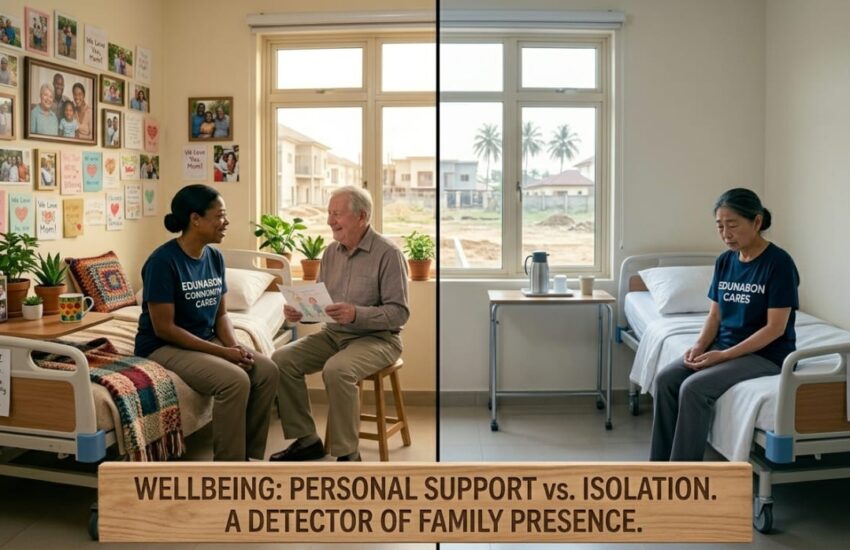
For nursing home residents, these determinants don’t disappear at the door. A resident with a dedicated family advocate gets better care than one without. Not because the staff is cruel. Because families catch errors, request appointments, and push for attention. My mother’s regular visits meant staff knew someone was watching. Her roommate had no one.
Economic stability follows residents inside. Those with higher incomes can afford private rooms, better amenities, and outside specialists. Individuals on Medicaid often end up in lower-quality facilities with fewer staff members. My mother’s second facility was mostly private-pay. The care was better. That’s not a coincidence. Money buys access.
Social isolation is a killer. Residents without regular visitors have higher rates of depression, faster cognitive decline, and shorter lifespans. One study found that lonely residents were nearly twice as likely to die within two years. Her roommate had no visitors at all. She stopped eating. She stopped speaking. She faded.

Neighborhood and environment matter even before admission. Residents who lived in safe, walkable neighborhoods before entering care tend to have better mobility and less fear of falling. Those from disadvantaged neighborhoods often arrive with untreated chronic conditions, worse nutrition, and less preventive care.
Education influences health literacy. Residents with more education better understand their conditions and advocate for themselves. Those with less education may not know to ask about new medications, alternative treatments, or transfer options. Staff isn’t always good at explaining. The gap widens.
Food insecurity doesn’t end at the nursing home door. Residents who faced hunger before admission often have damaged relationships with food. They may hoard snacks, eat too fast, or refuse meals. The nursing home offers three meals a day, but that doesn’t erase a lifetime of scarcity.
Housing history leaves its mark. Residents who experienced homelessness or frequent moves often have complex trauma, difficulty trusting authority, and fewer family supports. They may struggle to adjust to institutional rules. They may be labeled “difficult” when they’re actually traumatized.
Access to transportation affects health. Residents with family who drive get to outside appointments, specialists, and visits home. Those without rely on facility vans, public transit, or nothing at all. Missed appointments mean missed care.
Immigration status and English proficiency create additional barriers. Residents who are not citizens may fear asking for help. Those with limited English may not understand their rights or care plans. My mother’s Korean-speaking friend was given a meal containing pork despite religious prohibitions. No one explained. No one asked.
What can families do? First, recognize that your loved one’s history shapes their health. Ask about food insecurity, housing instability, trauma, education level. Share that history with staff. It’s not private. It’s clinical information.
Second, advocate for social supports within the facility. Request a social worker. Ask about resident councils. Push for programs that address isolation. The facility can’t fix poverty, but it can notice loneliness.
Third, if you have resources, share them. Visit regularly. Bring familiar foods. Celebrate holidays. Small gestures of connection buffer against the indifference of institutions.
My mother’s roommate died alone. No family came to claim her body. The staff held a small memorial. I sat in the back, crying for a woman I never truly met. Her medical care had been fine. Everything else had failed her. Social determinants kill. Not slowly or quietly. We don’t have to accept that.
There’s so much more to learn about health equity in long-term care. Our website is filled with articles on social determinants, family advocacy, and creating inclusive environments. Head over and explore, because everyone deserves dignity, regardless of their past.
References
World Health Organization. (2019, May 29). *Social determinants of health*. https://www.who.int/health-topics/social-determinants-of-health
Chen Medical Center. (2025, January 27). *Understanding the social determinants of health in older adults*. https://www.chenmed.com/blog/understanding-social-determinants-health-older-adults
Office of Disease Prevention and Health Promotion, U.S. Department of Health and Human Services. (2026, February 23). *Social determinants of health and older adults*. https://odphp.health.gov/our-work/national-health-initiatives/healthy-aging/social-determinants-health-and-older-adults
U.S. Department of Health and Human Services, Office of the Assistant Secretary for Planning and Evaluation. (2022, March 31). *Addressing social determinants of health: Examples of successful initiatives*. https://aspe.hhs.gov/sites/default/files/documents/e2b650cd64cf84aae8ff0fae7474af82/SDOH-Evidence-Review.pdf
Dovepress. (2026, May 22). *Social determinants of health, nursing care quality, and patient outcomes in long‑term care settings*. https://www.dovepress.com/social-determinants-of-health-nursing-care-quality-and-patient-outcome-peer-reviewed-fulltext-article