
 Posted by
 I remember the day the hospital discharge planner said the word “rehab.” My mother had survived a serious fall and a hip replacement. She was stable, but she could not walk. She could not get out of bed. She could not care for herself. She could not come home. The hospital was ready to discharge her, but I was terrified. How could she go home when she could not even stand up?
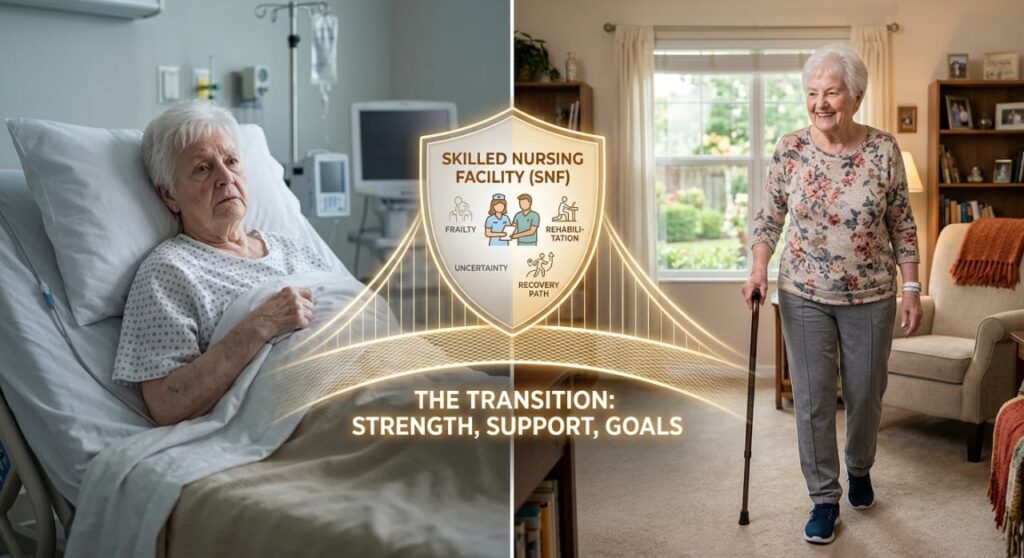
That was the day I learned about Skilled Nursing Facilities. I did not know what they were. I only knew she needed more care than I could provide. The discharge planner explained that a Skilled Nursing Facility is a short-term care option for people who need intensive rehabilitation before they can return home. It is not a nursing home. It is a bridge between the hospital and home.
The first thing I learned is that a Skilled Nursing Facility is not the same as a nursing home. A nursing home is a long-term residential facility that provides custodial care for people who need ongoing help with daily activities. A Skilled Nursing Facility focuses on short- to medium-term treatment, typically 30 to 90 days, for people recently discharged from the hospital. The goal is not long-term care. It is recovery.
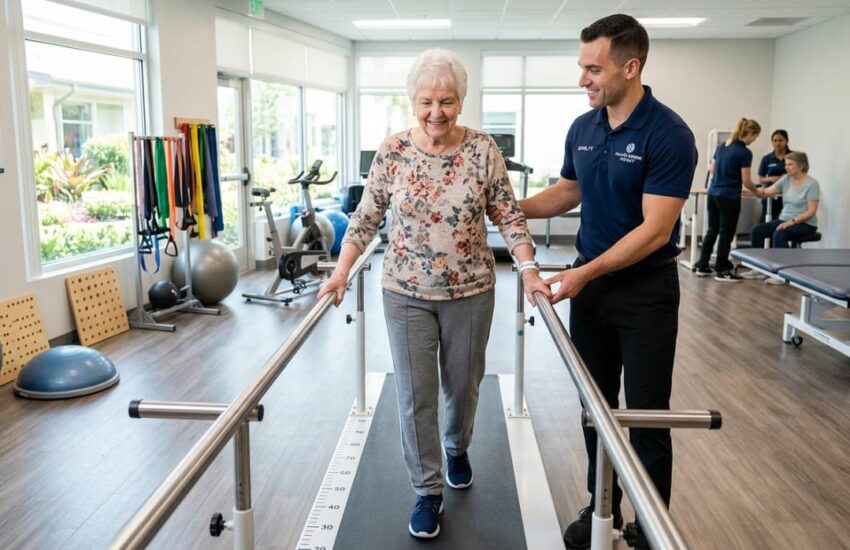
The care team is completely different. In a nursing home, non-medical workers typically provide custodial care. In a Skilled Nursing Facility, the care is provided by medical professionals: registered nurses, speech pathologists, vocational nurses, physical therapists, and occupational therapists. My mother’s team included all of these specialists. They did not just help her bathe and dress. They helped her regain the ability to walk, to climb stairs, to use her hands. The care was intense and goal-oriented.
One of the most surprising benefits was the interdisciplinary approach. The nurses, therapists, and doctors did not work in isolation. They collaborated on her care plan. The physical therapist told the occupational therapist what my mother could do physically, and the occupational therapist helped her practice those skills in real-life scenarios. The social worker helped us navigate the financial and emotional stress. The pharmacist reviewed her medications for interactions. Everyone was on the same page. That coordination was essential to her recovery.
Skilled Nursing Facilities are also regulated and overseen by the government. State health departments conduct surveys and inspections to monitor quality. There are also strict safety protocols to minimize the risk of infection, falls, and pressure ulcers. The Joint Commission National Patient Safety Goals require these facilities to have measures in place to prevent specific clinical harms. It is a safe and clean environment designed for recovery.
The cost was a challenge. Skilled nursing care is expensive, and Medicare only covers it under specific conditions. To qualify, my mother had to have been formally admitted to a hospital for at least three consecutive days and require daily skilled nursing care or therapy for a condition treated during that hospital stay. Medicare Part A covered the full cost of the first 20 days, but after that, she had to pay a daily coinsurance. I learned to plan for the costs well before she was discharged.
I also learned to ask questions. The administrator provided the state’s evaluation of the facility. The Medicare nursing home comparison tool and the Five-Star Quality Rating System helped me compare options. I asked about the staff-to-resident ratio, the availability of therapy, and the discharge planning process. I made an unannounced visit to see the environment for myself. I watched how staff interacted with residents. I asked to speak with families of current residents.
The transition from hospital to Skilled Nursing Facility was not easy. My mother was anxious and confused. But the facility staff were prepared. They completed a thorough assessment within 24 hours of admission. They developed an initial care plan and reassessed her regularly. They communicated with her hospital doctors to ensure continuity of care. Within a week, she was walking with a walker. Within a month, she was ready to come home.
Skilled Nursing Facilities are a critical part of the healthcare system. They provide the intensive, short-term rehabilitation that many people need after a hospital stay. They are not a place to give up. They are a place to recover. They are the bridge that allows people to go home.
There is so much more to learn about navigating post-hospital care. Our website is filled with articles on rehabilitation, Medicare coverage, and choosing the right facility. Head over and explore, because the right care at the right time can change everything.
References
Centers for Medicare & Medicaid Services. (n.d.). *Skilled nursing facilities*. Medicare.gov. https://www.medicare.gov/providers-services/original-medicare/skilled-nursing
Centers for Medicare & Medicaid Services. (n.d.). *Skilled nursing facility care*. Medicare.gov. https://www.medicare.gov/coverage/skilled-nursing-facility-care
Medicaid.gov. (n.d.). *Nursing facilities*. https://www.medicaid.gov/medicaid/long-term-services-supports/institutional-long-term-care/nursing-facilities
California Department of Aging. (2020, March 26). *Skilled nursing facilities: Care options*. https://aging.ca.gov/Care_Options/Skilled_Nursing_Facilities/
Caringinfo. (2024, February 29). *Skilled nursing facilities: What they are & how to pay for care*. https://www.caringinfo.org/planning/finding-care-outside-of-the-home/skilled-nursing-facilities/