
 Posted by
 The first year after my mother moved into the nursing home, she lost weight, stopped talking, and stared at the wall for hours. The staff said she was “just adjusting.” The doctor said she was “just old.” No one asked her how she was feeling. No one offered therapy. No one adjusted her medications. She was not just adjusting. She was depressed, and no one was paying attention.
Mental health in nursing homes is not a luxury. It is a necessity. And it is often neglected.
Depression is the most common mental health condition among nursing home residents, affecting up to 50% of the population. The prevalence of depression in long-term care is significantly higher than in older adults living in the community, where rates are around 10% to 15%. Severe depression affects about 12% of nursing home residents. These are not just numbers. They are mothers and fathers, grandparents and friends, people who once found meaning in their lives.
Untreated depression in nursing homes has serious consequences. It is associated with a higher risk of suicide, cardiovascular disease, and cognitive decline. It leads to social withdrawal, loss of appetite, and sleep disturbances. It worsens chronic conditions, increases hospitalizations, and shortens lives. The link between mental health and physical health is clear, and ignoring one means damaging the other.
Anxiety is also common in nursing homes. Residents worry about their health, their families, and their loss of independence. Many are anxious but lack the words to express it. They may become irritable, restless, or clingy. They may refuse care or withdraw from others. These behaviors are often labeled as “difficult” rather than recognized as symptoms of anxiety.
One of the biggest barriers to mental health care in nursing homes is the lack of trained mental health professionals. Many facilities do not have psychologists or psychiatrists on staff. They rely on primary care providers who may not screen for mental health conditions or may prescribe medications without adequate monitoring. Approximately 40% of nursing home residents diagnosed with depression do not receive any treatment. That number is unacceptable.
Antidepressants are often overprescribed, but they are not always the right solution. Therapy, social connection, and meaningful activities are also essential. Cognitive-behavioral therapy, reminiscence therapy, and supportive counseling have all been shown to improve mental health in nursing home residents. But these interventions require trained staff and adequate time. And in a facility where staffing is already stretched thin, mental health often takes a back seat.
Another major issue is under-recognition. Symptoms of depression in older adults often present differently than in younger people. Instead of sadness, residents may show apathy, irritability, or physical complaints. They may withdraw or refuse to eat. These symptoms are sometimes mistaken for “normal aging” or the progression of dementia. Screening tools like the Geriatric Depression Scale can help, but they must be used consistently, and staff must be trained to interpret them.
The role of social connection cannot be overstated. Residents who have regular visitors, participate in activities, and feel a sense of purpose are less likely to develop depression. Meaningful engagement is protective. Yet many residents are isolated for hours or days at a time. Family visits are not always possible, and staff do not always have time to sit and talk. This loneliness is not just emotional; it is a risk factor for poor physical health.
Mental health support also extends to staff. Nursing home workers experience high levels of stress and burnout, which can affect their ability to provide compassionate care. Staff who are trained in mental health first aid are better equipped to recognize signs of distress and respond appropriately. A healthier staff creates a healthier environment for residents.
If you have a loved one in a nursing home, pay attention to their mental state. Ask about mood, sleep, and appetite. Ask if they have been screened for depression or anxiety. Ask if they have access to a psychologist or psychiatrist. If the facility does not have these resources, advocate for them. Your voice can make a difference.
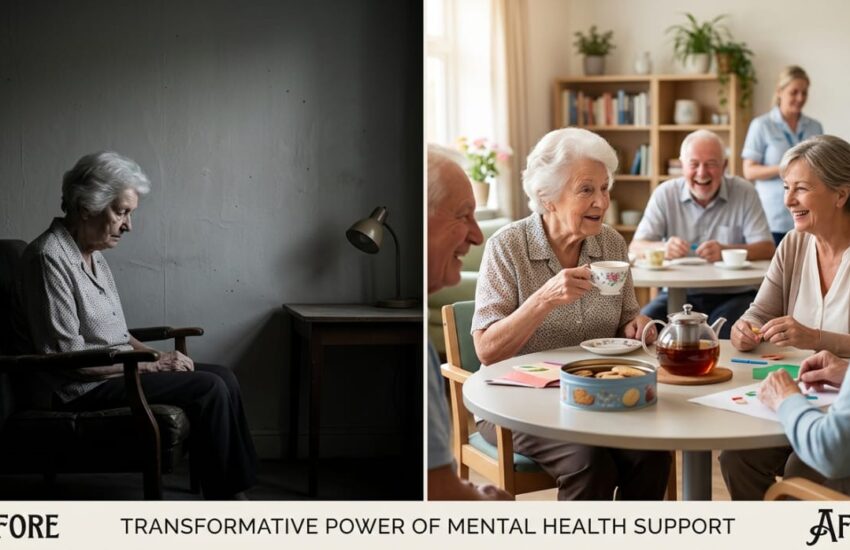
My mother eventually received help. A social worker who specialized in geriatric mental health saw her during a routine visit and recognized the signs. She recommended therapy, and my mother started seeing a counselor who visited the facility weekly. She also joined a small group activity that met three times a week. Within a few months, she began eating again. She started talking again. She did not return to who she was before, but she stopped disappearing.
Mental health is not a side issue. It is central to health, dignity, and quality of life. Every resident deserves to feel seen, heard, and supported. That includes their emotional well-being.
References
Grabowski, D. C., Aschbrenner, K. A., Rome, V. F., & Bartels, S. J. (2010). Quality of mental health care for nursing home residents. *Health Affairs, 29*(3), 527–534.
Cohen-Mansfield, J., & Jensen, B. (2010). Prevalence of psychiatric disorders among older adults in long-term care homes: A systematic review. *International Psychogeriatrics, 22*(7), 1–11.
Aaltonen, M., et al. (2022). Physical exercise and multicomponent exercise programs for older adults in nursing homes: A systematic review. *Aging & Mental Health*.
Frontiers in Public Health. (2021). Non-pharmacological approaches to depressed elderly with no or mild cognitive impairment in long-term care facilities: A systematic review of the literature. *Frontiers in Public Health*.
Wiley. (2016). The prevalence of anxiety among older adults in nursing homes and other residential aged care facilities: A systematic review. *International Journal of Geriatric Psychiatry*.