

 Posted by
 The signs were there for months before I noticed them. My mother laughed off the stacks of unopened mail. She blamed the grocery delivery mix-up on the store. She said she preferred wearing the same sweater every day. I wanted to believe her.
Then I visited unannounced on a Tuesday afternoon and found expired food in the refrigerator, a pile of unpaid bills on the counter, and my mother sitting in the dark because she could not remember how to turn on the lamp. She was not fine. She was struggling, and I had been too afraid to see it.
Assessing the needs of a senior loved one is not a single conversation or a checklist. It is an ongoing process of observation, conversation, and honesty. It requires setting aside what you want to be true and paying attention to what is actually happening. Getting it right means the difference between supporting independence and missing a crisis.
Start with the practical and visible. A home visit, ideally unannounced, reveals more than a planned lunch ever will. Look at the refrigerator. Is there food, and is it fresh? Check the mail. Is it opened and organized, or gathering dust? Notice the bathroom. Are there expired medications, soiled linens, or signs of difficulty with bathing or toileting? These details are not about prying. They are about understanding whether daily life is actually working.
Physical function is the next area to evaluate. Can your loved one walk across the room without holding onto furniture? Can they rise from a chair without using their arms? Can they dress themselves, prepare a simple meal, and manage their own medications? Pay attention to weight changes, balance issues, and complaints of pain. A senior who was once active but now spends most of the day in a chair is telling you something without saying a word.
Cognition requires a gentler touch. You are not administering a test, you are noticing patterns. Are conversations repeated? Are appointments missed? Is the same question asked within minutes? Does your loved one struggle to find words, follow a story, or remember recent events while recalling the distant past with clarity? These are not signs of stubbornness. They are signals that the brain needs support.
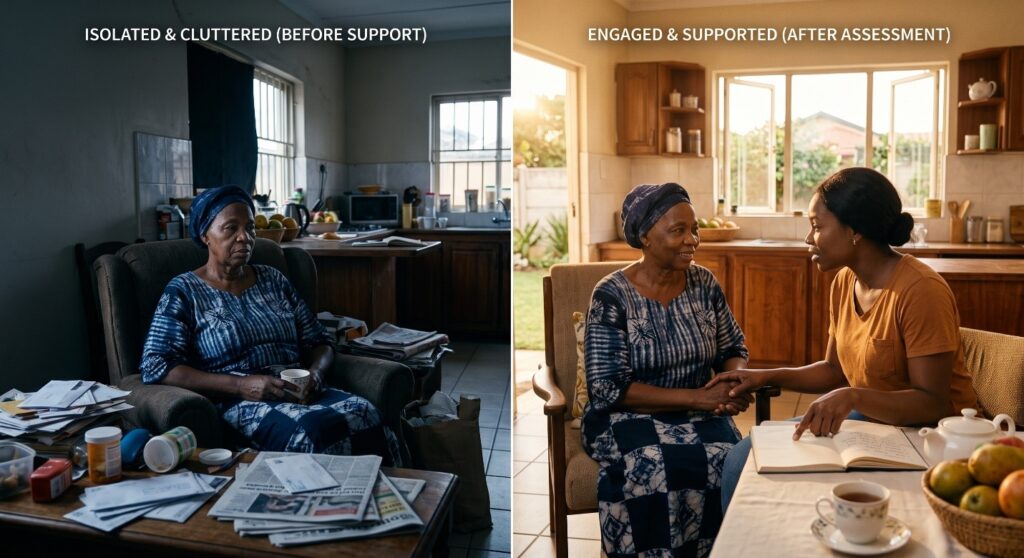
Emotional well-being is the most overlooked piece of the puzzle. Isolation, grief, and depression are common among seniors and often go untreated. A senior who used to enjoy church, bridge, or gardening and now declines all invitations is not simply tired. They may be lonely, sad, or anxious. Ask directly how they are feeling. Listen without rushing to fix. Sometimes the greatest need is connection, not a service.
The environment tells its own story. Loose rugs, poor lighting, cluttered walkways, and stairs without railings are accidents waiting to happen. Does the house feel safe and manageable, or has it become too much? Are there signs of pests, water damage, or neglected maintenance? A home that once supported independence can quietly become a hazard.
Finances matter too. A senior who is confused about money, missing payments, or falling for scams may need help managing their affairs. Have a respectful conversation about what is happening. Offer help without taking control. If the situation is serious, involve a trusted financial advisor or elder law attorney.
The final and most important step is asking your loved one what they need. Not what you assume. Not what you would choose. What do they want for their own life? Independence, dignity, and being heard are needs as real as any physical limitation.
Assessing needs is not a one-time event. It is a practice of paying attention, revisiting assumptions, and adjusting as circumstances change. It is also an act of love. My mother did not want to be evaluated. She wanted to be understood. When I finally stopped guessing and started asking, we found a path forward that honored who she was.
There is so much more to learn about supporting seniors and their families. Our website is filled with articles on care planning, home safety, and caregiver support. Head over and explore, because understanding the need is the first step toward meeting it.
References
Administration for Community Living. (2025, May 13). *NCSC checklist for caregiver assessments*. [https://acl.gov/sites/default/files/NCSC/ncsc-assessments-checklist-2025-05-13-acl.pdf](https://acl.gov/sites/default/files/NCSC/ncsc-assessments-checklist-2025-05-13-acl.pdf)
Administration for Community Living. (n.d.). *Caregiver assessments*. [https://acl.gov/ncsc/caregiver-assessments](https://acl.gov/ncsc/caregiver-assessments)
National Council on Aging. (2025, January 2). *What is in-home care?* [https://www.ncoa.org/adviser/local-care/in-home-care/](https://www.ncoa.org/adviser/local-care/in-home-care/)
AARP. (2021, June 27). *How to assess if an older adult needs caregiving help*. [https://www.aarp.org/caregiving/home-care/assessing-need-for-caregiver/](https://www.aarp.org/caregiving/home-care/assessing-need-for-caregiver/)
Carers UK. (n.d.). *Having a needs assessment*. [https://www.carersuk.org/help-and-advice/practical-support/needs-assessment/](https://www.carersuk.org/help-and-advice/practical-support/needs-assessment/)