
 Posted by
 My mother was fiercely independent. After my father died, she made it clear she would stay in her own home, on her own terms, until she couldn’t. I admired her stubbornness. I also worried constantly.
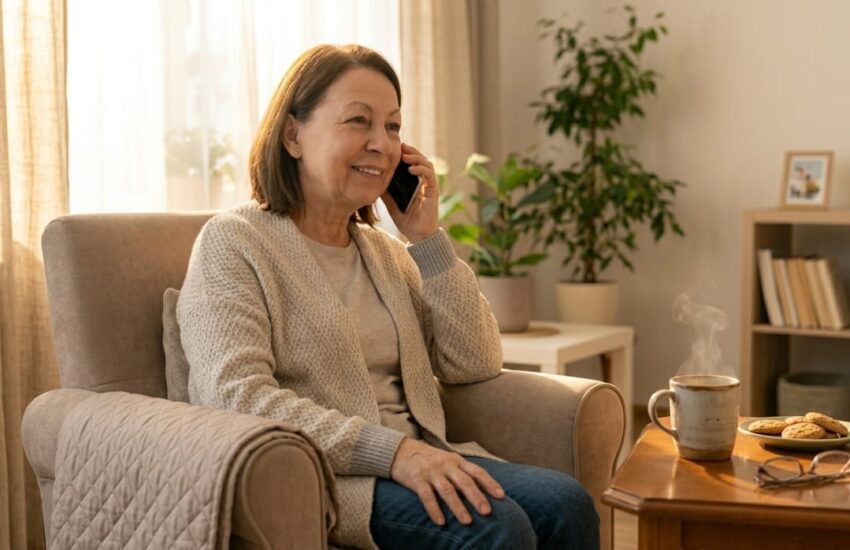
The compromise was a daily check-in. Every morning, I called at 8:30. Every evening, she called me before bed. We didn’t talk long, usually just a few minutes, but those calls became the backbone of her ability to live alone safely. Then one morning, she didn’t answer.
I called again. Nothing. I texted. Nothing. My heart started racing. I called her neighbor, who had a key. Twenty minutes later, the neighbor called back. My mother had fallen during the night, couldn’t reach her phone, and had been on the floor for hours. She was bruised, scared, and dehydrated, but she was alive. Because I’d noticed the silence.
That day taught me something I’ll never forget: regular check-ins and communication for seniors living at home aren’t just about staying in touch. They’re a lifeline. They’re early warning systems. They’re the difference between a minor incident and a major crisis.
The first benefit is obvious but worth stating: safety. A daily check-in creates a baseline. When something deviates from that baseline, a missed call, a confused response, a change in voice, you know immediately that something might be wrong. My mother’s fall was caught within hours instead of days because we had a system. Without that system, she could have lain there much longer, with consequences that don’t bear thinking about. But safety is just the beginning.
Regular communication also allows you to spot subtle changes before they become emergencies. A senior who’s usually chatty but becomes quiet might be depressed or in pain. Someone who repeats questions might be showing early signs of cognitive decline. A voice that sounds different might indicate a respiratory infection. When you talk to someone every day, you learn their normal. And when you know normal, you can spot abnormal early.
The emotional benefits are just as important. Seniors living alone are at high risk for loneliness and isolation. A daily check-in isn’t just a safety call; it’s a connection. It tells them someone is thinking about them, someone cares, someone will notice if they disappear. That knowledge is profoundly protective for mental health.
My mother looked forward to our calls. She’d save up little stories to tell me, what the neighbor’s cat did, what she watched on TV, a memory that surfaced unexpectedly. The calls gave her a reason to get up in the morning, to be alert, to stay engaged with the world. Without them, I think she would have retreated much earlier.
Practical coordination is another benefit. During our calls, we handled logistics: appointments, prescriptions, grocery lists, repairs. Things that might have required a separate call or visit got handled in the flow of conversation. This efficiency meant I could stay on top of her needs without becoming overwhelmed or resentful.
For family caregivers who live at a distance, regular check-ins are essential. I lived an hour away, which meant I couldn’t pop over easily. But a phone call took five minutes. Those five minutes kept me connected to her daily reality in ways that weekly visits never could. When she mentioned her mailbox was broken, I could send someone to fix it. When she said she’d run out of a medication, I could call the pharmacy. The check-ins made distance manageable.
Technology has made check-ins easier than ever. We eventually added a medical alert pendant, but my mother refused to wear it consistently. She did, however, always answer her phone. For some seniors, a simple phone call works better than any gadget. For others, video calls, smart speakers, or check-in apps might be the right fit. The key is finding what works for your loved one and making it routine.
What doesn’t work is sporadic contact. Calling when you have time or when you remember creates uncertainty. Seniors need predictability. They need to know someone will check on them at a certain time every day. That reliability reduces anxiety for everyone.
I learned to build redundancy into our system. If I couldn’t call at 8:30, I’d text to let her know I’d call later. If she didn’t answer, I had a backup plan, the neighbor, another family member, a wellness check from local police. Having a plan for what happens when the check-in fails is as important as the check-in itself.
The quality of communication matters too. A rushed, distracted call where you’re multitasking doesn’t provide the same benefits as genuine conversation. I learned to sit down, put away my phone, and really listen. To ask open-ended questions, not just “Are you okay?” To notice tone, pauses, energy level. The information I gathered during those calls wasn’t always explicit; it was often in what she didn’t say or how she said it.
Regular check-ins also empowered my mother to maintain her independence longer. Because we had this system, she didn’t need more intrusive monitoring. She wasn’t forced into assisted living before she was ready. The daily calls gave me enough confidence to let her keep living on her terms. They weren’t a restriction on her freedom; they were an enabler of it.
If you have a senior loved one living alone, start a check-in system before you need one. Don’t wait for a crisis. Pick a time that works for both of you. Make it a ritual. Build in backup plans. And then use that time to really connect, not just to check a box.
My mother is gone now. She died peacefully in her own home, in her own bed, exactly as she wanted. The daily calls continued until her final weeks. In the end, she couldn’t always answer, but the system still worked. The neighbor would check, would call me, would sit with her until I arrived. The habit of connection outlasted her ability to participate in it fully.
I still miss those calls. Every morning at 8:30, my hand reaches for the phone out of habit. I’ve learned to let the moment pass, to grieve, to be grateful for all the mornings we had. The calls didn’t just keep her safe. They kept us close. And that closeness, that daily act of showing up, even from a distance, was the greatest gift we gave each other.
There’s so much more to learn about supporting seniors who want to age in place. Our website is filled with articles on safety, communication, and balancing independence with support. Head over and explore, because a simple call can change everything.
References
Gerontological Society of America. (2025, August 5). *Communicating with older adults: A review of what really works*. https://www.geron.org/News-Events/GSA-News/Press-Room/Press-Releases/clearer-conversations-better-care-new-guide-highlights-best
True Blue Ally. (2024, September 1). *Senior fall prevention month, Episode 2: Importance of regular check-ins on seniors to reduce falls*. https://www.trublueally.com/northern-vermont/blog/Senior-Fall-Prevention-Month-Episode-2-Importance-of-Regular-Check-Ins
Blue Moon Senior Counseling. (2020, August 9). *7tips for improving communication with senior citizens*. https://bluemoonseniorcounseling.com/7-tips-for-communicating-with-seniors/
CuroG. (2025, July 8). *12 strategies for effective communication with elderly patients*. https://curogram.com/blog/ffective-communication-with-elderly-patients
CheckInBee. (2024, January 31). *How a simple check-in helps seniors stay independent*. https://checkinbee.com/blog/how-a-simple-check-in-helps-seniors-stay-independent/