
 Posted by
 My mother’s decline began not with a fall or an illness but with silence. After my father passed, she withdrew. She stopped answering the phone, declined invitations, and spent most days alone in her apartment. She was safe, but she was disappearing. I thought I was protecting her by letting her rest. I did not realize that isolation was slowly eroding her health.
Social connection is not a luxury. It is a biological necessity. Research has shown that loneliness and social isolation are as damaging to health as smoking 15 cigarettes a day. They increase the risk of heart disease, stroke, and dementia. They weaken the immune system and accelerate cognitive decline. For seniors, the consequences can be devastating, and they often go unnoticed until they have already taken hold.
For seniors aging at home, the risk of isolation is high. Mobility decreases. Friends move away or pass on. Driving becomes difficult. The world that was once full of people and activity can shrink to the size of a living room. The pandemic made this worse, but it also gave me a new lens on the problem. I realized that I could not wait for my mother to reach out. I had to actively build a web of connections around her.
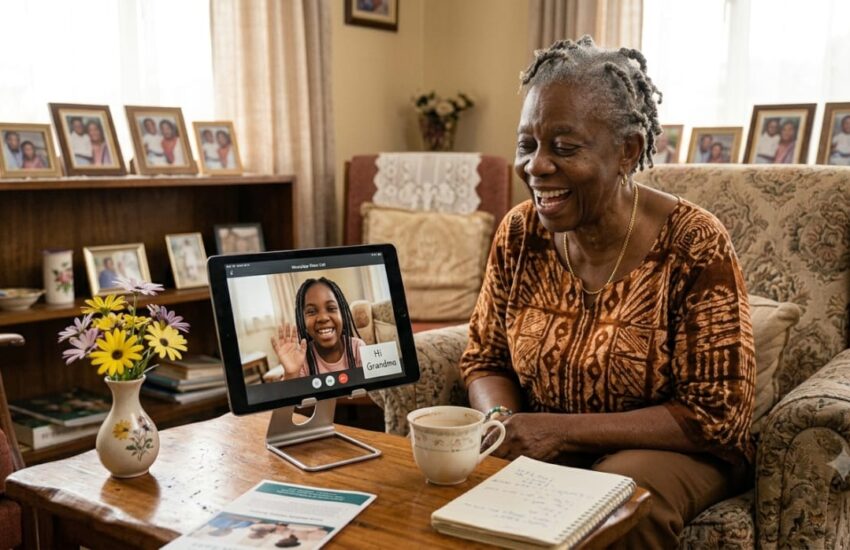
I learned that meaningful connection does not have to be elaborate. A weekly phone call from a grandchild, a visit from a neighbor, or a letter in the mail can provide a sense of being seen and remembered. One of the most powerful gifts I gave my mother was a digital photo frame that family members could load with pictures from their phones. She could not master video calls, but she could watch the slideshow endlessly. Each photo was a reminder that she was loved and part of a larger family.
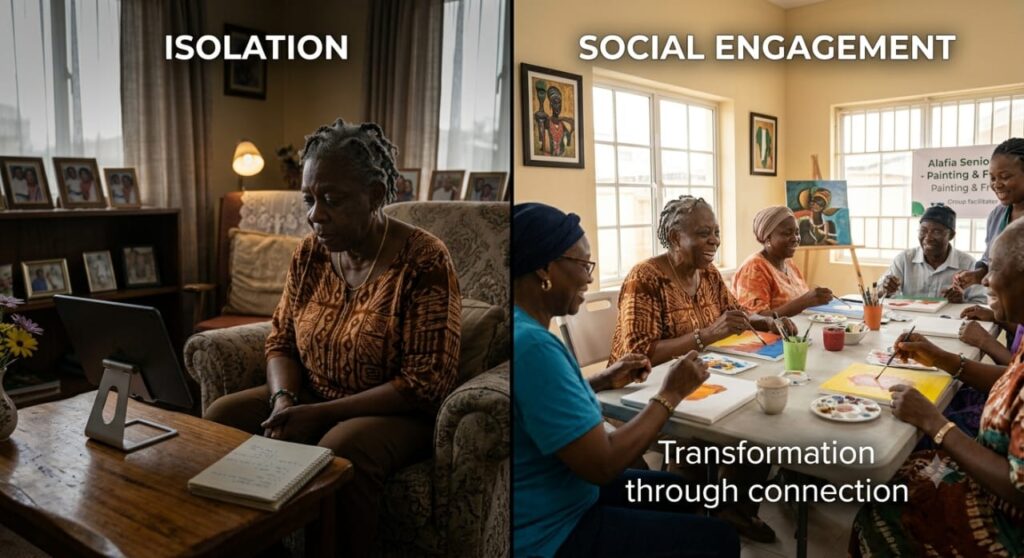
Technology can be a bridge, but it is not a replacement for human touch. My mother still needed someone in the room with her. I hired a companion who came twice a week to share a meal and talk. It was not medical care; it was a human connection. Those visits lifted her mood more than any medication ever could.
I also learned that social connection requires structure. Loneliness often peaks during unstructured time—evenings, weekends, holidays. Establishing a weekly rhythm of calls, visits, and small outings gives seniors something to look forward to and helps them orient themselves in time. I made it a habit to call every Sunday evening, not just to check in, but to hear about her week.
Community programs can also play a role. Many senior centers, religious organizations, and local nonprofits offer telephone reassurance programs, friendly visitor services, or small group activities specifically for homebound seniors. These services are often low-cost or free and can provide a consistent source of social contact.
I also learned that social connection is about giving as well as receiving. My mother had been a teacher, and she missed having a purpose. I arranged for her to read to a young child once a week through a virtual literacy program. She could not leave her apartment, but she could still contribute. That small role gave her a reason to get dressed in the morning and a sense that she still had something to offer.
As a family caregiver, I had to accept that I could not be my mother’s only source of connection. I needed help, and that was okay. Building a support network, family, friends, neighbors, and community services, distributed the responsibility and kept my mother connected to a wider world.
Social connection is not optional for seniors. It is essential. It protects against depression, supports cognitive function, and gives life meaning. If you are caring for an aging parent, do not wait for them to ask for help. Build connection into their daily life. Be intentional. Be creative. And remember that even the smallest acts of connection can have a profound impact on a person who feels forgotten.
There is so much more to learn about supporting seniors at home. Our website is filled with articles on companionship, community resources, and preventing isolation. Head over and explore, because connection is the heartbeat of healthy aging.
References
The Importance of Maintaining Social Connections for Seniors at Home: What *National Institute on Aging. (2024, July 10). *Loneliness and social isolation — Tips for staying connected*. https://www.nia.nih.gov/health/loneliness-and-social-isolation/loneliness-and-social-isolation-tips-staying-connected
JAMA Network. (2024, June 17). *Social isolation and loneliness in older adults*. https://jamanetwork.com/journals/jama/fullarticle/2819153
Cleveland Clinic. (2023, August 3). *Older adults and mental health: What to watch for and how to help*. https://health.clevelandclinic.org/depression-in-elderly
National Academies of Sciences, Engineering, and Medicine. (2020). *Social isolation and loneliness in older adults: Opportunities for the health care system*. National Academies Press.
Axén, A., et al. (2025, June 22). *The significance of social connections and health in relation to loneliness experienced by older adults living at home*.