
 Posted by
 My mother’s first nursing home had excellent clinical care. Her blood pressure was managed. Her medications were on time. Her wounds were dressed properly. But she was miserable. The staff called her “Room 204.” They woke her at 5 AM for a bath she didn’t want. They served her food she hated. They scheduled her day around their convenience, not her preferences.
I thought this was normal. I thought nursing homes were just like this. Then we moved her to a different facility, and I learned what person-centered care actually means.
Person-centered care treats the resident as a whole person, not a diagnosis or a room number. It starts with knowing who someone was before they entered the building. What did they do for work? What were their hobbies? What made them laugh? What frightened them? The staff at my mother’s new facility asked these questions before she even moved in.
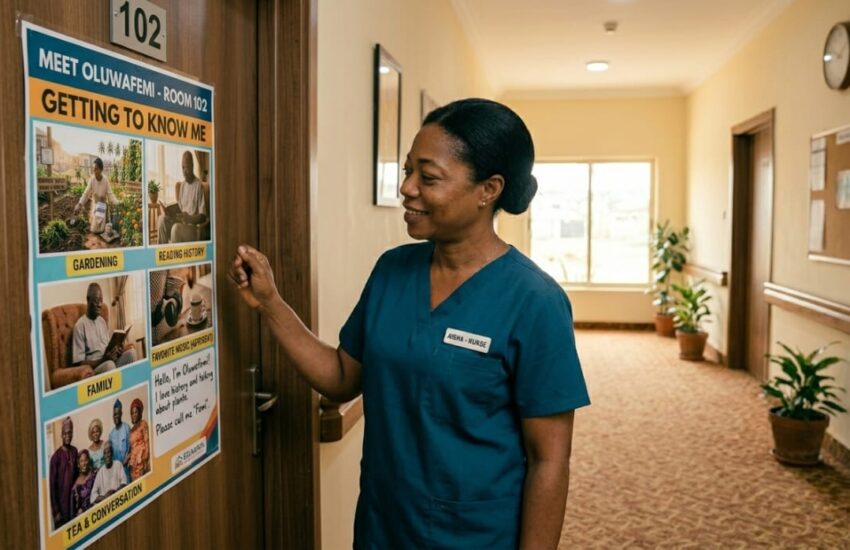
They learned that my mother had been a librarian. She loved quiet mornings, classical music, and strong tea. She hated being rushed. She was terrified of loud noises. The staff put this information in a “getting to know me” poster outside her door. Every aide, nurse, and volunteer read it. They knew her before they ever touched her.
The second facility also offered choices. Not fake choices, real ones. “Would you like to bathe this morning or after lunch?” “Would you prefer the dining room or your room?” “Do you want to join the gardening club or the book discussion?” My mother felt like an adult again, not a child being managed.
Schedules bent around residents, not the other way around. If my mother wanted to sleep until 8 AM, she slept until 8 AM. No one woke her for a shift change. If she wanted to eat lunch in her room with the door closed, staff respected that. The building existed to serve her, not the other way around.
The physical environment supported person-centered care, too. Long, sterile hallways were replaced by small “households” of ten to twelve residents. Each household had its own kitchen, living room, and dining area. Residents could watch TV, read, or visit without being herded into a central day room. My mother’s household felt like a home, not an institution.
Staff continuity was another critical piece. In the first facility, my mother saw a different aide every shift. In the second, the same small team worked with her consistently. They learned her moods, her preferences, her non-verbal cues. They could tell when she was in pain before she could. They knew she liked her pillow fluffed a certain way. That continuity created trust and reduced her anxiety dramatically.
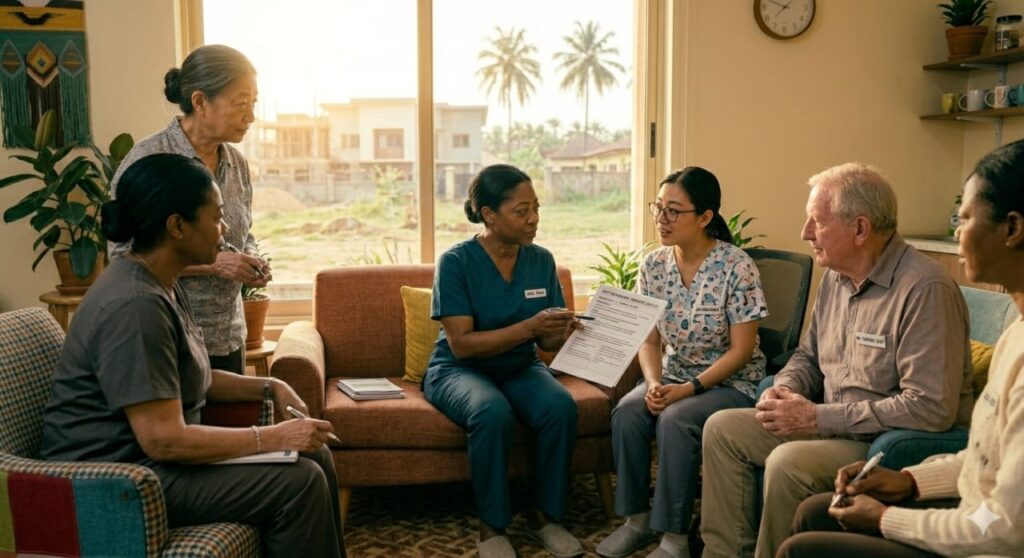
Person-centered care also meant involving family as partners, not visitors. The staff asked for my input. They invited me to care conferences and actually listened. They called me when my mother was having a bad day, not just during emergencies. I felt like part of the team, not an outsider peeking in.
The results were undeniable. My mother’s depression lifted. Her agitation decreased. She ate better, slept better, and even started smiling again. The staff didn’t cure her dementia, but they made her remaining years worth living.
If your loved one is in a nursing home, ask about person-centered care. Is there a “getting to know me” poster? Do staff know their history and preferences? Are there real choices throughout the day? Is the same team assigned consistently? Does the environment feel like a home or a hospital?
You can advocate for change even if your facility isn’t there yet. Start by sharing your loved one’s story. Write down their preferences and post them in their room. Request consistent staffing. Ask for choices in daily routines. Person-centered care isn’t a luxury. It’s a basic standard of dignity.
My mother died in that second facility. Her final years were not easy; dementia took so much from her. But she was known. She was respected. She was, as much as possible, still herself. That’s what person-centered care gave her. That’s what every resident deserves.
There’s so much more to learn about transforming nursing home culture. Our website is filled with articles on person-centered care, family advocacy, and finding the right facility. Head over and explore, because knowing the person changes everything.
References
Edvardsson, D., et al. (2016). *Person‑centered nursing home care in the United States and Sweden: A comparative review*. *Journal of the American Medical Directors Association, 17*(11), 1015–1021. https://pmc.ncbi.nlm.nih.gov/articles/PMC5102266
Hysing, A., et al. (2021). *Person‑centered care practices in nursing homes: Staff perceptions and suggestions for improvement*. *Journal of the American Medical Directors Association, 22*(11), 2205.e1–2205.e7. https://www.sciencedirect.com/science/article/pii/S0197457221003712
American Association of Colleges of Nursing. (2023). *Person‑centered care*. https://www.aacnnursing.org/5b-tool-kit/themes/person-centered-care
Centers for Medicare & Medicaid Services. (2023, August 13). *Person‑centered care*. https://www.cms.gov/priorities/innovation/key-concepts/person-centered-care
Morgan, S. S., & Yoder, L. H. (2012). *A concept analysis of person‑centered care*. *Journal of Holistic Nursing, 30*(1), 6–15. https://www.aacnnursing.org/5b-tool-kit/themes/person-centered-care