
 Posted by
 My mother loved games. Before dementia, she dominated every family card night. When she entered the nursing home, I hoped activities would bring her joy. Instead, they brought frustration. Bingo required tracking numbers. She couldn’t. Trivia required memory. She had none. Arts and crafts required fine motor skills her arthritic hands no longer had. She sat in the corner, watching others have fun, excluded not by cruelty but by poor design.
Inclusive recreational activities are designed for everyone, regardless of ability. They adapt the activity, not the person. They assume participation is possible, not that exclusion is inevitable.
The first inclusive activity my mother’s facility introduced was open music time. Not a formal sing-along with lyrics to remember. Just someone playing piano while residents gathered. Those who could sing, sang. Those who couldn’t hummed. Those who couldn’t hum tapped their feet. Those who couldn’t tap just listened. Everyone participated at their own level. My mother sat close to the piano every time. She couldn’t sing anymore, but she smiled.
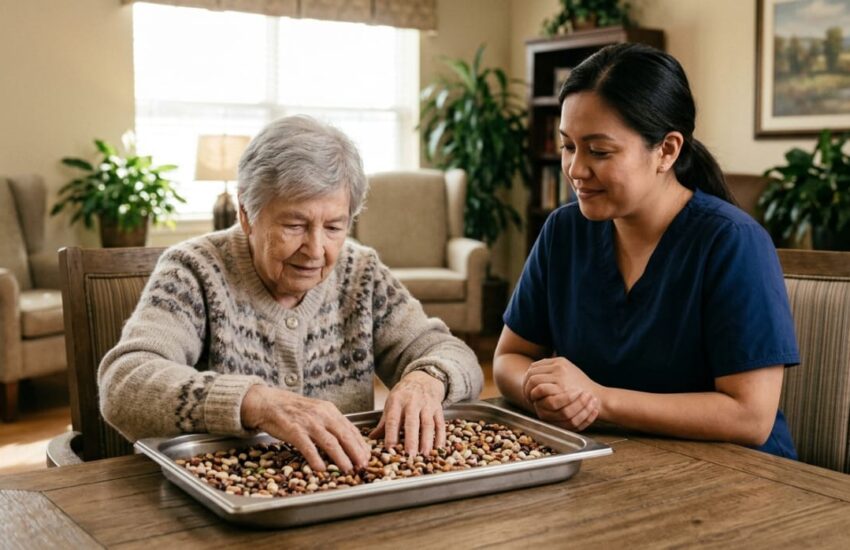
Sensory activities work for residents with advanced dementia. A basket of fabric squares in different textures. A tray of dried beans to run fingers through. A bowl of artificial flowers to arrange. These activities don’t require cognition. They require touch, sight, and presence. My mother spent twenty minutes sorting colorful scarves by shades she could still see. That was a successful activity for her.
Reminiscence therapy is naturally inclusive. Gather objects from a particular decade, fifties kitchen tools, sixties magazines, and old photographs. Residents don’t need to remember their own past to engage. They can hold a rotary phone, flip through a Life magazine, or smell vintage perfume. The objects themselves spark a connection. My mother couldn’t tell you her children’s names, but she could hold a 1950s cookbook and turn the pages for an hour.
Adapted games make classic activities accessible. Large-print bingo cards. Dice with raised dots. Card holders for arthritic hands. Bowling with a ramp instead of a swinging arm. My mother’s facility bought a set of “fidget blankets” sewn with zippers, buttons, and velcro strips. Residents who couldn’t hold a card could run a zipper back and forth. That was their game.
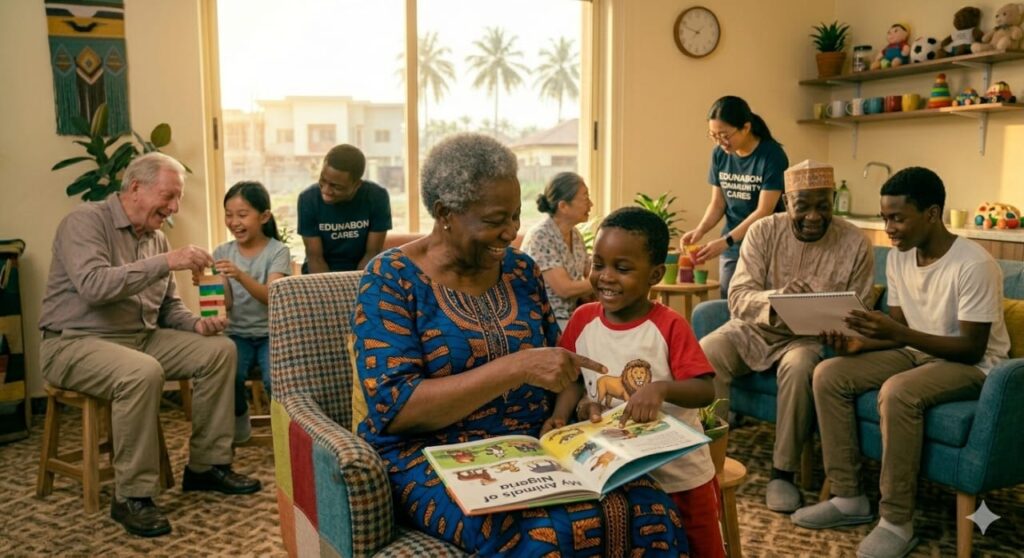
Intergenerational activities are powerfully inclusive. Preschoolers don’t care if a resident can’t remember their name. They just want someone to read to them or stack blocks with them. My mother’s facility hosted a weekly “story time” where children read picture books aloud. My mother couldn’t read along, but she could listen and point to pictures. The children didn’t notice her deficits. They only noticed her smile.
Pet therapy reaches residents who have withdrawn from everything else. A calm dog doesn’t demand conversation or memory. It just sits, offering warmth and fur. My mother hadn’t spoken in weeks when a volunteer brought in a golden retriever. The dog rested its head on her lap. My mother stroked its ears and whispered, “Good dog.” Those were the first words she’d spoken in days.
Gardening is adaptable to almost any ability level. Raised beds for wheelchair users. Large-handled tools for arthritic hands. Seeds that don’t require fine motor skills. My mother couldn’t plant individual seeds anymore, but she could pat down the soil and water with a squeeze bottle. She felt productive. She felt needed.
Evening activities are often forgotten. Many facilities empty out after dinner, leaving residents to stare at the television or sleep. Inclusive evening programming might include quiet music, hand massages, or simply sitting with a staff member who talks softly. Residents with sundowning, afternoon, and evening confusion benefit from calm, predictable activities. My mother’s facility started a “twilight club” with low lights, soft music, and warm drinks. Agitation decreased.
The key to inclusive activities is knowing each resident. What did they love before they declined? My mother had been a librarian. For her, sorting books by color on a cart was deeply satisfying. Another resident had been a carpenter. He spent hours sanding small blocks of wood. Not productively, he wasn’t building anything, but the sensory act of sanding calmed him.
Staff training matters enormously. Activity aides need to understand that engagement looks different for different residents. Some will smile. Some will make eye contact. Some will simply stop crying. All of those are successes. My mother’s favorite aide celebrated small victories. “She looked at the flowers for ten seconds today.” That aide understood inclusion.
If your loved one is in a nursing home, observe the activity program. Are residents with advanced dementia included or excluded? Are there options beyond bingo and trivia? Can your loved one participate at their own level? If not, advocate for change. Bring simple sensory items. Request adapted games. Share your loved one’s history. You know what might spark joy.
My mother never returned to competitive card games. Those days were gone. But she found other joys. The piano. The scarves. The dog. The gentle hands are sorting soil. Those were her activities. They were enough.
There is so much more to learn about enriching nursing home life. Our website is filled with articles on inclusive programming, dementia activities, and family advocacy. Head over and explore, because everyone deserves to play.
References
Jung, S., & Cimarolli, V. R. (2015). Personal and health-related factors associated with recreational activity preferences among nursing home residents. *Journal of Nursing Home Research Sciences, 2*, 1–8. https://www.jnursinghomeresearch.com/509-personal-and-health-related-factors-associated-with-recreational-activity-preferences-a
Brickyard Healthcare. (2022, September 19). *The importance of activities in a skilled nursing facility*. https://www.brickyardhc.com/2022/09/the-importance-of-activities-in-a-skilled-nursing-facility/
Creative Solutions in Healthcare. (2025, January 16). *10 activities for nursing home residents*. https://creativesolutionsinhealthcare.com/nursing-home-activities/
PlusS Communities. (2024, June 2). *68 fun and engaging activities for seniors in assisted living*. https://www.plusscommunities.com/blog/68-assisted-living-activities-for-seniors
U.S. News Health. (2026, June 1). *Innovative nursing home activities: Beyond bingo*. https://health.usnews.com/best-nursing-homes/articles/beyond-bingo-innovative-activities-at-todays-nursing-homes