
 Posted by
 When my mother developed a pressure ulcer on her heel during a brief hospital stay, I assumed the nursing home would handle it. She had been there for years. They knew her skin. I thought wound care was something that happened after a wound appeared. I learned that effective wound care starts long before any skin breaks down, and it requires a coordinated, proactive approach from every member of the care team.
Wounds are a major challenge in long-term care, with a significant majority of residents experiencing one or more chronic wounds during their stay . Approximately half of these are pressure wounds, with the remainder being soft tissue tears, ulcers, and surgical wounds. In elderly patients, wounds take significantly longer to heal and are more prone to complications than in younger people . Preventing wounds or reducing healing times provides significant value to both patients and facilities.
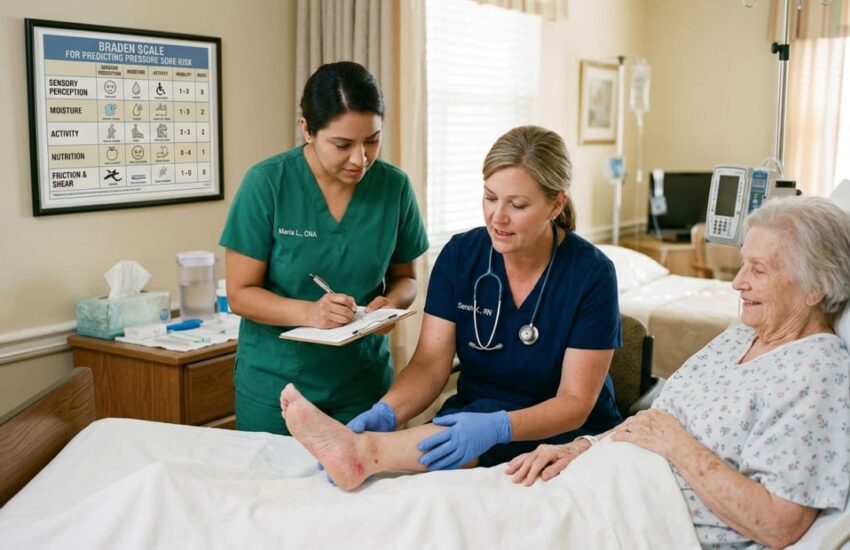
The first line of defense is prevention. Pressure ulcers develop due to prolonged pressure on the skin, particularly over bony areas such as the heels, sacrum, and elbows . Limited mobility, poor nutrition, incontinence, and chronic medical conditions all increase risk. Effective prevention starts with identifying residents at risk. Nursing homes must complete a skin integrity assessment for each resident within 24 hours of admission and on an ongoing basis according to the resident’s needs . Tools like the Braden Scale help assess risk by evaluating sensory perception, moisture exposure, activity level, mobility, nutrition, and friction or shear risk .
Repositioning is one of the most critical prevention strategies. Residents who remain in one position for too long are at the highest risk of developing pressure ulcers. Staff must strictly adhere to turning and repositioning schedules for residents at high risk for skin breakdown or those with active pressure injuries . A large multisite randomized clinical trial found no significant difference in pressure ulcer incidence when residents on high-density foam mattresses were turned at 2-hour, 3-hour, or 4-hour intervals, as long as repositioning was done consistently and skin was monitored . This finding has major implications for staffing and cost, suggesting that consistent repositioning, rather than frequency alone, may be key to prevention.
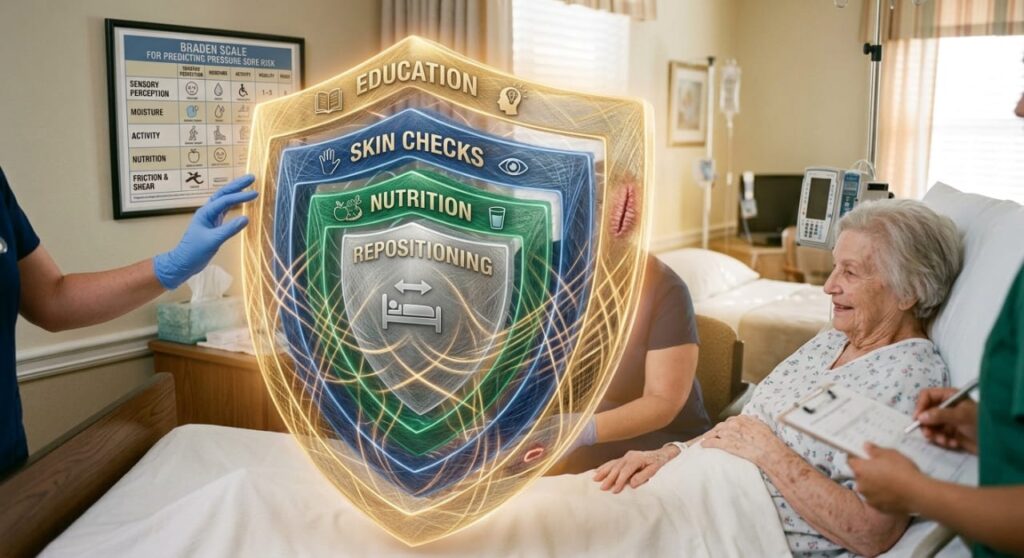
Prevention is not just the responsibility of nurses. Certified nursing assistants are on the frontline, performing daily skin checks, repositioning residents, managing incontinence care to keep skin dry, and encouraging small movements to promote circulation . Licensed nurses conduct comprehensive skin assessments, implement wound care plans, educate CNAs on prevention techniques, and coordinate with physicians and wound specialists . Dietitians assess nutritional risk and recommend high-protein diets, vitamins, and hydration plans to support skin health . Physical and occupational therapists support mobility and proper positioning, recommending support surfaces like pressure-relief mattresses or cushions . Administrators ensure adequate staffing, offer ongoing training, and maintain compliance with regulations .
When a wound does develop, timely and appropriate treatment is essential. Inadequate wound management is one of the most common clinical complaints in aged care . Common mistakes include failing to adequately document the wound assessment process, infrequent assessments, failure to update treatment plans, inadequate pain management, and not escalating a deterioration to the resident’s physician in a timely manner . A treatment plan should be developed for ongoing monitoring and management, including comprehensive wound treatment details, pain management strategies, and goals of treatment . If the wound is serious or not healing, providers should seek external support from a wound specialist .
Documentation is critical. Wound care documentation must be accurately completed, and care plans must be promptly updated when concerns are identified . Facilities should assign a manager to oversee daily dashboard recaps to flag high-risk areas . For facilities with electronic charting, this oversight helps ensure that no wound is overlooked.
Creating a “Wound Care Culture” elevates care quality and outcomes, supporting faster healing, better resident satisfaction, stronger staff engagement, and more efficient use of resources . This means prioritizing wound care education for all patient care staff, not just doctors and nurses . Everyone involved in patient care should be educated regarding potential issues so they can respond appropriately . The Ontario government is investing $3.74 million in skin and wound care training programs for 1,100 long-term care home staff, recognizing that enhanced clinical training helps staff provide better specialized support while reducing avoidable hospital visits .
Wound care in nursing homes is not simple, but it is essential. It requires a commitment to prevention, early detection, and evidence-based treatment. It requires every member of the care team to understand their role and to work together. My mother’s heel ulcer eventually healed, but it took weeks of careful treatment and monitoring. I wish I had known then what I know now: that the best wound care is the kind that prevents a wound from ever forming.
There is so much more to learn about protecting the health and dignity of nursing home residents. Our website is filled with articles on pressure ulcer prevention, staff training, and quality improvement. Head over and explore, because knowledge is the first step to better care.
References
Agency for Healthcare Research and Quality. (n.d.). *Preventing pressure ulcers in hospitals: A toolkit for improving quality of care*. https://www.ahrq.gov/patient-safety/settings/hospital/resource/pressureulcer/tool/index.html
Centers for Medicare & Medicaid Services. (n.d.). *42 CFR § 483.25: Quality of care*. https://www.ecfr.gov/current/title-42/chapter-IV/subchapter-G/part-483/subpart-B/section-483.25
National Pressure Injury Advisory Panel. (n.d.). *Prevention and treatment resources*. https://npiap.com/page/FreeMaterials
Skilled Wound Care. (2024, June 5). *Wound care in long-term care facilities*. https://www.skilledwoundcare.com/post/wound-care-in-long-term-care-facilities
National Center for Biotechnology Information. (2023, October 23). *Managing complex wounds in skilled nursing facilities (SNFs)*. *PubMed Central*. https://pmc.ncbi.nlm.nih.gov/articles/PMC10666797/