
 Posted by
 When my mother entered nursing home rehab after her stroke, I assumed the physical therapist would do all the work. I watched the PT guide my mother through exercises for thirty minutes each day. Then the therapist left, and my mother sat in her wheelchair for the next twenty-three and a half hours. She was not getting better. She was getting weaker. Then I met Rosa, the rehabilitation aide.
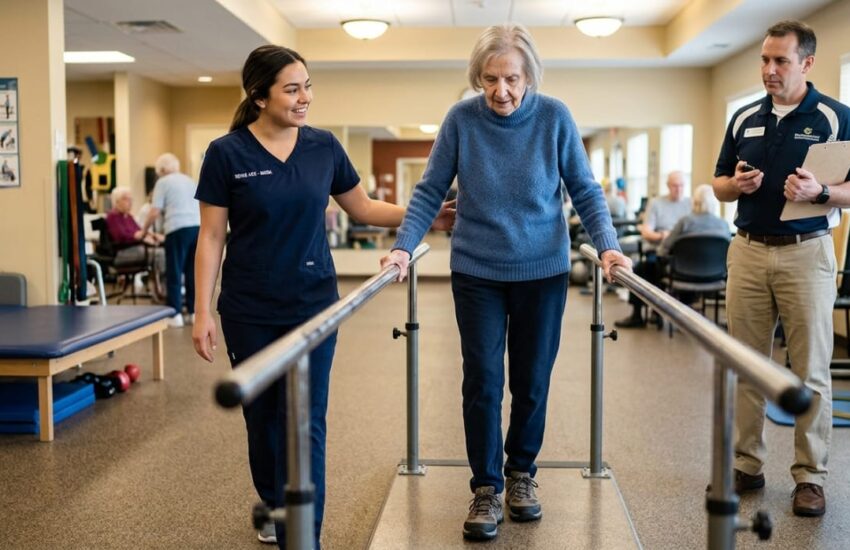
Rehabilitation aides, sometimes called rehab techs or therapy aides, are trained support staff who work under the supervision of licensed physical, occupational, and speech therapists. They do not evaluate or create treatment plans. They do implement the plans, supervise practice sessions, and provide the repetition that therapy requires.
Rosa’s job was to take the exercises my mother did with the PT and repeat them throughout the day. Ten minutes of leg lifts here. Five minutes of standing practice there. A walk to the bathroom instead of using the bedpan. These small sessions added up to hours of extra practice that my mother would not have done alone. She started improving. The PT set the goals. Rosa made them happen.
Rehabilitation aides are especially valuable for residents with dementia. My mother could not remember her exercises from one hour to the next. She needed someone to prompt her constantly. Rosa learned my mother’s rhythms. Morning was best for leg work. Afternoon was best for balance. Late afternoon was too tired for anything. Rosa adapted the plan to my mother, not the other way around.
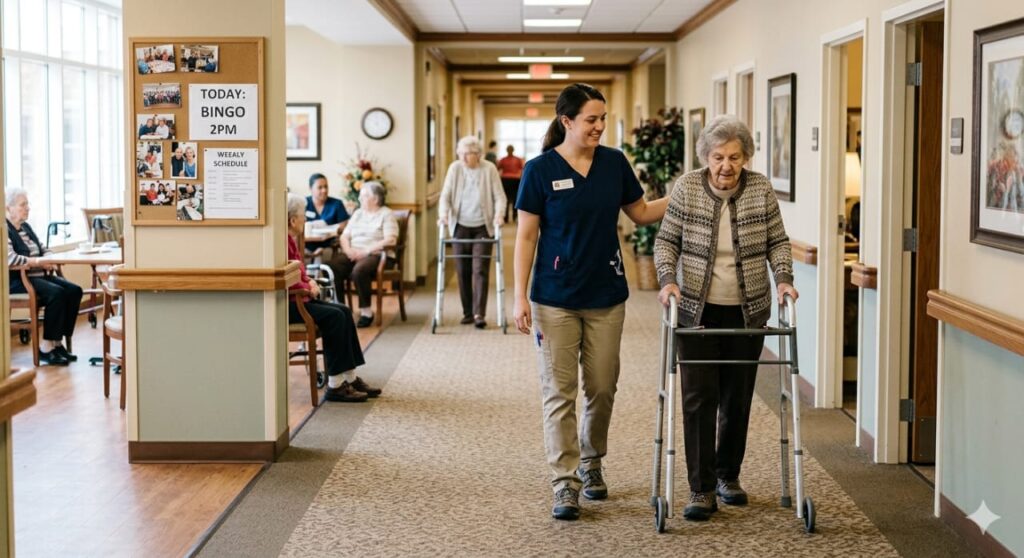
Rehabilitation aides also provide the emotional support that therapists often do not have time to give. My mother got frustrated easily. She cried. She refused. The PT had a schedule to keep. Rosa had time. She sat with my mother during the frustration, validated her feelings, and gently encouraged her to try again. “One more time, Mrs. Kim. Just one more.” That patience was therapy itself.
In many facilities, rehabilitation aides also help with transfers, moving residents from bed to chair, chair to toilet, chair to standing. Proper transfer technique prevents falls and protects staff backs. Rosa knew exactly how to support my mother’s weak side without lifting her entirely. She made transfers feel safe, not terrifying.
Group therapy sessions are often led or co-led by rehabilitation aides. A group of residents doing seated exercises together is more engaging than individual work. Rosa led a morning group that my mother actually looked forward to. The social connection motivated her to participate. She worked harder in the group than she ever worked alone.
Rehabilitation aides also maintain equipment, clean treatment areas, and manage supplies. This behind-the-scenes work ensures that therapists spend their time on treatment, not on logistics. When Rosa kept the walker properly adjusted and the therapy ball inflated, my mother’s sessions started on time and ended productively.
Documentation is another task that aides often support. They record how many repetitions the resident completed, how much assistance was needed, and how the resident tolerated the session. The therapist uses that data to adjust the plan. Rosa’s notes caught that my母亲 was consistently too tired for afternoon work. The PT moved her sessions to morning, and her progress accelerated.
Family members rarely meet rehabilitation aides. We see the therapists in their white coats. We do not see the aides who do the daily work. But I made a point to know Rosa. I thanked her. I brought her coffee. I told her supervisor how much she mattered. That recognition mattered to her, and her continued excellent care mattered to my mother.
Not every facility uses rehabilitation aides effectively. Some rely only on therapists, leaving residents without practice between sessions. If your loved one is in rehab, ask who is supervising their exercises outside of therapy hours. Is there a rehab aide? Are they trained? How often do they work with your family member? If the answers are vague, advocate for more support.
The research is clear. More therapy minutes lead to better outcomes. Rehabilitation aides are a cost-effective way to increase those minutes without burning out therapists. A good aide multiplies the impact of every therapy session.
My mother eventually walked again. Not far, not fast, not without a walker. But she walked to the dining room herself. That was Rosa’s victory as much as the PT’s.
There is so much more to learn about rehabilitation in nursing homes. Our website is filled with articles on therapy teams, recovery goals, and advocating for your loved one. Head over and explore, because the people doing the daily work deserve our attention and our thanks.
References
Centres of Excellence New Brunswick. (2022, November 30). *LTC Week: The role of a rehabilitation assistant and activity coordinator*. https://centresofexcellencenb.ca/health/?speaker_series=ltc-week-the-role-of-a-rehabilitation-assistant-and-activity-coordinator
OU Health. (n.d.). *Restorative Nursing Aide/Assistant (RNA)* [PDF]. https://www.ouhealth.com/documents/7.5-Role-of-Restorative-Nursing-Aides.pdf
Care Givers Florida. (2025, March 10). *Restorative aide*. https://caregiversflcareers.org/career/restorative-aide/
Department of Education. (2009). *51.2604 Rehabilitation Aide*. https://nces.ed.gov/ipeds/cipcode/cipdetail.aspx?y=55&cipid=89037
Hemingway, M., et al. (2005). The value of the role of the rehabilitation assistant. *Journal of Clinical Nursing, 14*(10), 1234–1240. https://pubmed.ncbi.nlm.nih.gov/16116384