
 Posted by
I knew the day would come. I had watched my father’s dementia progress for years. First the forgotten names. Then the misplaced keys. Then the wandering. Then the night he walked out of the house in his pajamas and we found him three blocks away, confused and shivering. That was the night I understood that home was no longer safe. He needed more than I could give him. He needed memory care.
Memory care facilities are specialized residential communities designed specifically for people living with Alzheimer’s disease and other forms of dementia. They are not the same as assisted living. Assisted living focuses on helping seniors with daily tasks so they can maintain independence. Memory care focuses on safety, structure, and specialized support for cognitive decline. The staffing ratios are higher. The staff are trained in dementia care. The environment is designed to reduce confusion and prevent wandering. The programming is tailored to the cognitive abilities of the residents.
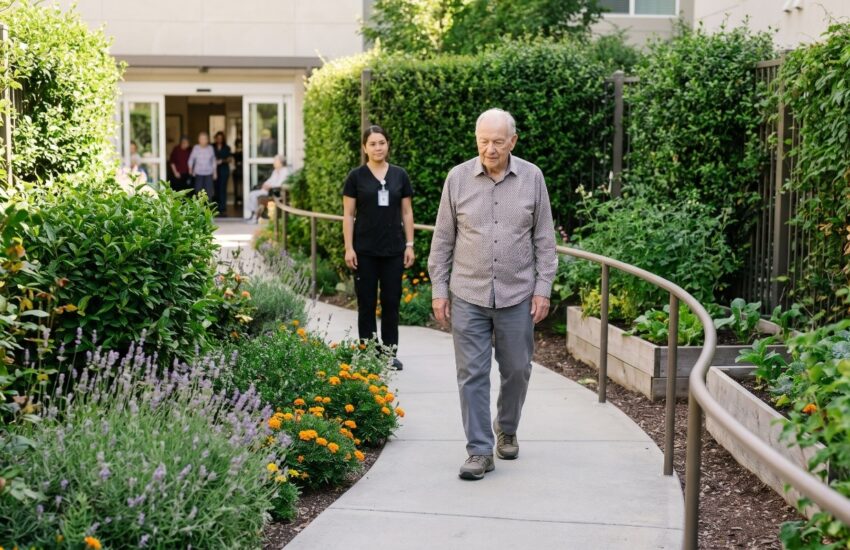
The first thing I learned is that not all memory care facilities are created equal. Some are dedicated units within larger assisted living communities. Some are freestanding buildings. Some are part of continuing care retirement communities. The quality varies enormously. I toured six before choosing one. I looked at the physical environment. Was it secure without feeling like a prison? Were there clear sightlines so staff could see residents? Was there a secure outdoor area where residents could walk safely? Were the hallways free of clutter and confusion? The best facilities felt calm, not chaotic. They felt like homes, not hospitals.
The second thing I learned is that staff training makes all the difference. Memory care requires a specific skill set. Staff need to understand dementia. They need to know how to communicate with someone who may not be able to communicate back. They need to know how to redirect agitation without confrontation. They need to know how to recognize pain and distress in someone who cannot articulate it. I asked every facility about their training. How many hours? What curriculum? How often is it refreshed? The facilities that took training seriously had calmer residents and lower staff turnover.
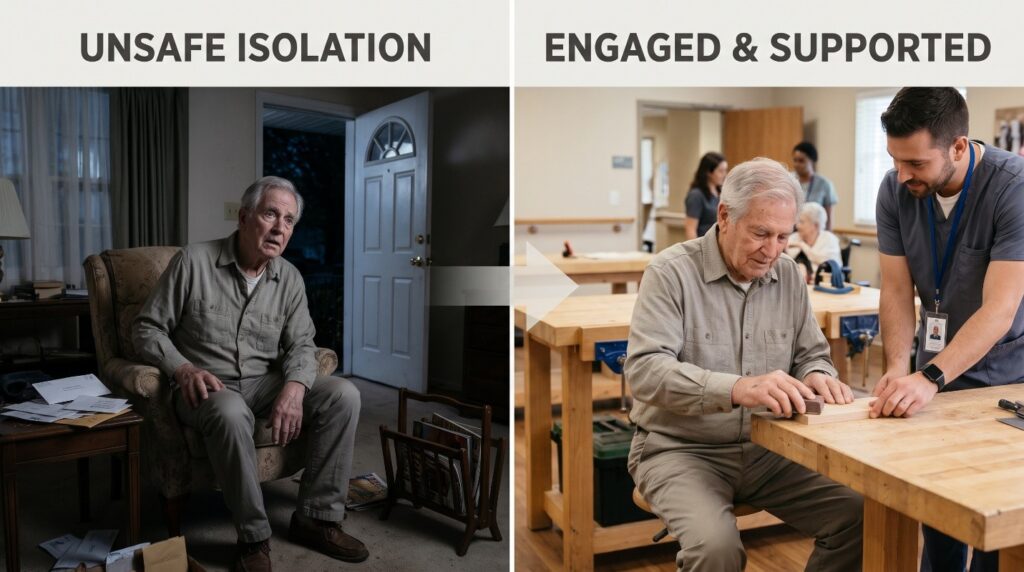
The third thing I learned is that programming matters. People with dementia need structure and engagement. They need activities that are meaningful to them, not just things to fill the time. My father had been a carpenter. The facility we chose had a woodworking shop and a staff member who understood how to adapt projects to his abilities. He made birdhouses. He could not do the intricate details anymore, but he could sand and hammer. He felt useful. He felt proud. That mattered more than any therapy session.
The fourth thing I learned is that safety is not just about locks. Wander prevention is critical, but it is not the only safety concern. Falls are common. Medication errors are common. Infections are common. A good memory care facility addresses all of these risks. It has a fall prevention program. It has a medication management system. It has infection control protocols. It has staff who are trained to notice changes in condition before they become emergencies.
The fifth thing I learned is that family involvement is encouraged, not tolerated. The best memory care facilities see families as partners. They invite us to care conferences. They share updates regularly. They ask about our loved one’s history, preferences, and routines. They understand that we are the experts on our person. They listen when we have concerns. They are transparent about what they can and cannot provide.
The sixth thing I learned is that the decision is never easy. I felt guilty when I moved my father into memory care. I felt like I was giving up. I felt like I was abandoning him. But I was not. I was choosing safety over sentiment. I was choosing specialized care over good intentions. I was choosing a place where he could live with dignity, even as his memory faded. That was not giving up. That was stepping up.
My father spent two years in memory care. He did not remember my name by the end. But he remembered the smell of sawdust. He remembered the feel of sandpaper in his hands. He remembered the birdhouses he made. And when I visited, he was safe. He was cared for. He was not wandering in the dark. That was enough. That was everything.
References
1.Harvard Health Publishing. (2024). *Memory care: A senior living option for those with dementia or Alzheimer’s disease*. [https://www.health.harvard.edu/mind-and-mood/memory-care-a-senior-living-option-for-those-with-dementia-or-alzheimers-disease](https://www.health.harvard.edu/mind-and-mood/memory-care-a-senior-living-option-for-those-with-dementia-or-alzheimers-disease)
2. Alzheimer’s Association. (n.d.). *Memory care certification*. [https://www.alz.org/help-support/caregiving/care-options/joint-commission](https://www.alz.org/help-support/caregiving/care-options/joint-commission)
3. Alzheimer’s Association. (n.d.). *Choosing a residential care community*. [https://www.alz.org/getmedia/2f238875-3f5d-447e-adcc-dd9fc07f828b/alzheimers-dementia-choosing-residential-care-ts.pdf](https://www.alz.org/getmedia/2f238875-3f5d-447e-adcc-dd9fc07f828b/alzheimers-dementia-choosing-residential-care-ts.pdf)