
 Posted by
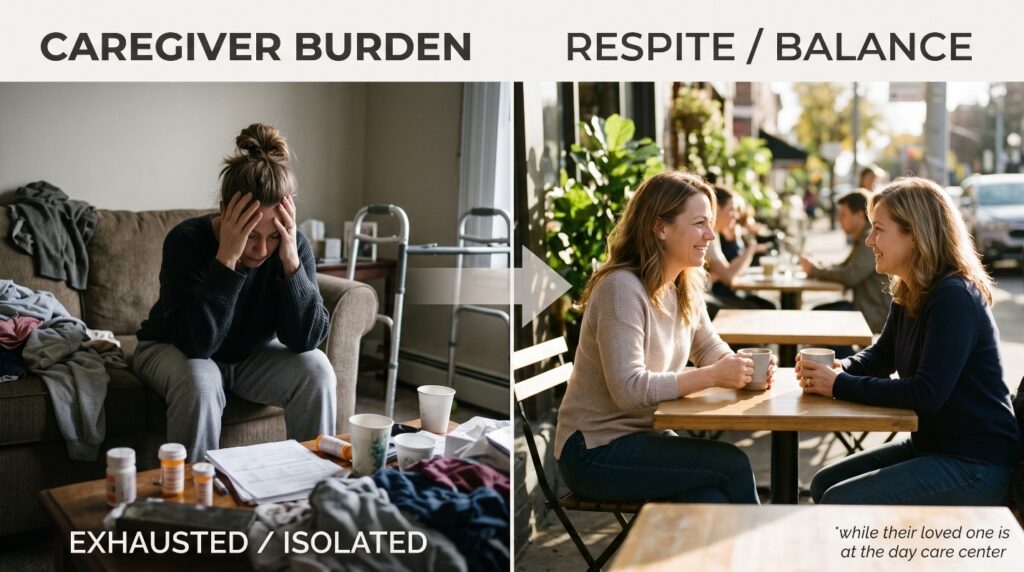
The first time I left my mother at an adult day care center, I cried in the parking lot. She had dementia, and I had been her sole caregiver for three years. I was exhausted, isolated, and running on empty. I knew I needed help. I did not know if I could trust strangers with her. I did not know if she would be okay. I did not know if I was making a mistake. I sat in my car for twenty minutes, fighting the urge to go back inside and take her home. Then I drove away. That decision changed both of our lives.
Adult day care centers are community-based programs that provide supervised care, social activities, and health services for older adults during daytime hours. They are designed for seniors who need some assistance but do not require round-the-clock care. They are also designed for caregivers who need a break, need to work, or simply need to breathe. The centers typically operate on weekdays and offer a structured schedule of meals, activities, exercise, and social interaction. Some also provide transportation.
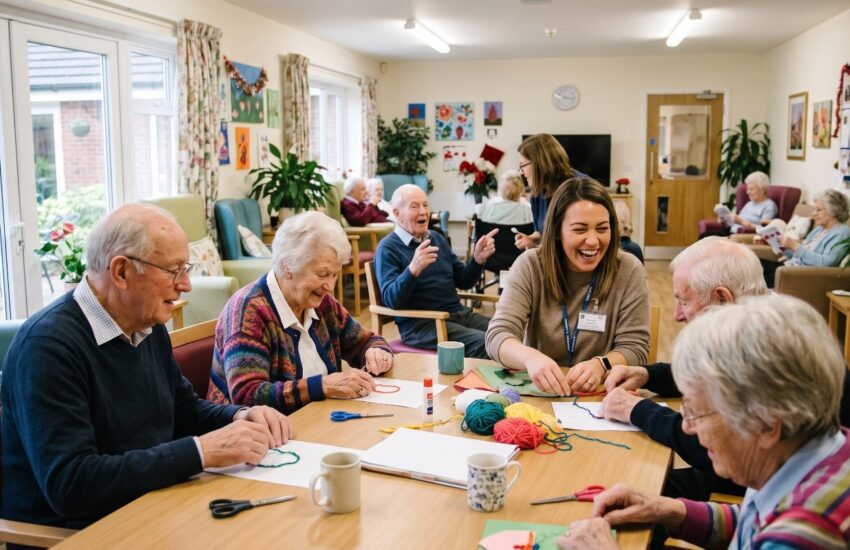
The first thing I learned is that adult day care is not just babysitting. The good centers are staffed by trained professionals. Nurses, social workers, activity directors, and certified nursing assistants. They provide medication management, health monitoring, and personal care. They also provide something less tangible but equally important. Purpose. My mother had been sitting in front of a television for months. At the day care center, she was doing crafts, listening to music, and talking to other people. She was engaged. She was alive.
The second thing I learned is that adult day care is not a nursing home. It is not residential. It is not permanent. It is a daytime program that allows seniors to return home in the evening. That distinction matters. My mother was not ready for a nursing home. She was not ready to leave her home. But she was ready for more stimulation and more social connection than I could provide. The day care center gave her that without taking her away from home.
The fourth thing I learned is that choosing the right center matters. Not all adult day care centers are created equal. I toured several before choosing one. I looked at the staff-to-participant ratio. I watched how staff interacted with participants. I asked about activities, meals, and medication management. I checked licensing and inspection reports. I asked if they had experience with dementia. I asked if I could visit unannounced. I asked for references from other families. The center I chose had a dementia-specific program, a secure outdoor area, and a staff that seemed genuinely warm. My mother thrived there.
The fifth thing I learned is that the first few days are the hardest. My mother did not want to go. She did not want to be with strangers. She did not want to be left. The staff understood. They welcomed her gently. They introduced her to one person at a time. They gave her a simple task, like folding napkins, which gave her a sense of purpose. By the end of the first week, she was asking when she could go back. That was the moment I knew I had made the right choice.
The sixth thing I learned is that adult day care is not a one-size-fits-all solution. Some seniors need more medical care than a day care center can provide. Some need more supervision. Some need a different kind of stimulation. It is important to be honest about what your loved one needs. If the center cannot meet those needs, it is not the right fit. That is not a failure. It is information.
The seventh thing I learned is that adult day care is expensive. The cost varies widely depending on location and services. Medicare does not cover it. Medicaid may cover it in some states. Long-term care insurance may cover it. Private pay is the most common. I learned to budget for it. I learned to ask about financial assistance. I learned to prioritize it because the alternative, my own burnout, was more costly in every way.
My mother spent two years at the adult day care center before she needed more care. Those two years were some of the best of her final decade. She made friends. She painted. She sang. She laughed. And I had time to be her daughter instead of just her caregiver. That was worth every dollar and every tear in the parking lot.
References
1.U.S. Department of Health and Human Services, Office of the Assistant Secretary for Planning and Evaluation. (2006). *Adult day services: A key community service for older adults*. [https://aspe.hhs.gov/reports/adult-day-services-key-community-service-older-adults-1](https://aspe.hhs.gov/reports/adult-day-services-key-community-service-older-adults-1)
2. U.S. Department of Health and Human Services, Office of the Assistant Secretary for Planning and Evaluation. (2005). *Regulatory review of adult day services: Final report*. [https://aspe.hhs.gov/reports/regulatory-review-adult-day-services-final-report-section-2-0](https://aspe.hhs.gov/reports/regulatory-review-adult-day-services-final-report-section-2-0)
3. Harvard Health Publishing. (2024). *Adult day care can benefit older adults and their caregivers*. [https://www.health.harvard.edu/healthy-aging-and-longevity/adult-day-care-can-benefit-older-adults-and-their-caregivers](https://www.health.harvard.edu/healthy-aging-and-longevity/adult-day-care-can-benefit-older-adults-and-their-caregivers)