
 Posted by
 The call came at midnight. My mother had fallen in the bathroom. She had been lying on the tile floor for two hours before a neighbor heard her calls. She was bruised, dehydrated, and terrified. She was also lucky. She did not break a hip. She did not hit her head. But the fall was a wake-up call. The home she had lived in for forty years had become dangerous, and I had not seen the signs.
Home is supposed to be a sanctuary. For many seniors, it becomes a minefield. Falls are the leading cause of injury-related death among older adults. Medication errors, burns, cuts, and delayed emergency response are also serious risks. Ensuring a loved one’s safety at home requires intention, observation, and ongoing adjustments. It is not a one-time task. It is a continuous process.
The first step is a thorough safety assessment of the home. I walked through every room with fresh eyes. I looked for loose rugs that could cause trips. I checked the lighting in hallways, stairwells, and bathrooms. I noticed that my mother’s favorite chair was too low, making it difficult for her to stand. I saw that her medications were scattered across three different cabinets. I realized that the bathroom had no grab bars and that the bathtub had a slippery surface. These were not minor details. They were accidents waiting to happen.
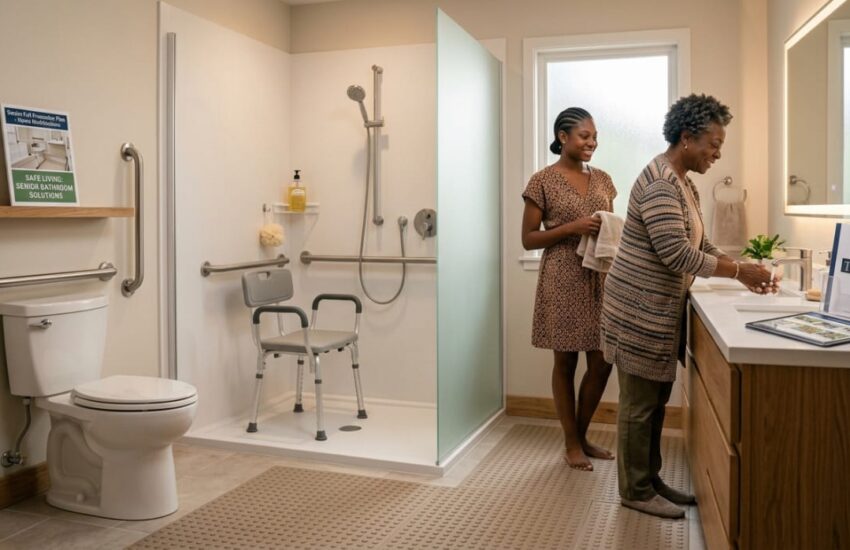
Fall prevention is the top priority. I secured loose rugs with double-sided tape or removed them entirely. I installed grab bars in the bathroom, including inside the shower and next to the toilet. I added a non-slip mat to the tub and a shower chair. I improved the lighting by adding night lights in the hallway and bathroom and replacing dim bulbs with brighter ones. I also rearranged furniture to create clear pathways.
I learned that the bathroom is the most dangerous room in the house. It combines water, hard surfaces, and slippery floors. I installed a handheld showerhead to make bathing easier. I added a raised toilet seat with armrests. I made sure the bathroom door opened outward, in case someone fell against it. I also placed a waterproof phone near the shower in case of emergencies.
The kitchen also needed attention. I moved frequently used items to lower shelves so my mother would not have to climb or reach. I installed a stove guard to prevent burns. I made sure her fire extinguisher was accessible and that the smoke detectors worked. I also placed a sturdy step stool with a handrail in the kitchen, though I preferred she ask for help rather than climb.
Medication management was another concern. My mother was taking seven prescriptions. Keeping them straight was overwhelming. I organized them into a weekly pill dispenser with compartments. I set up a medication reminder system on her phone. I also created a medication list and kept a copy on the refrigerator for emergency responders.
Emergency preparedness is often overlooked. I made sure my mother had a working phone within reach at all times. I programmed emergency numbers into speed dial. I installed a medical alert system with a wearable button she could press if she fell. I also created a file with her medical history, medications, and advance directives. I shared copies with family members and kept one in her home.
I learned that cognitive decline adds another layer of complexity. My mother began forgetting to turn off the stove and leaving the front door unlocked. I installed an automatic shut-off device on the stove. I added a keypad lock on the front door and a doorbell camera so I could see who came and went. I also created a simple daily routine chart to help her stay oriented.
Social connection is a safety issue too. Isolation increases the risk of falls, depression, and medical emergencies going unnoticed. I set up daily check-in calls. I arranged for a neighbor to stop by twice a week. I also connected my mother with a local senior center that offered transportation and social activities. Those connections gave me peace of mind and gave her something to look forward to.
Regular reassessment is essential. My mother’s needs changed over time. What worked in year one did not work in year three. I re-evaluated the home every six months and made adjustments as needed. I also involved her in the process. She did not want to feel like a patient in her own home. I framed the changes as ways to keep her independent, not as reminders of her limitations.
If you are caring for a senior loved one at home, start with a safety assessment today. Do not wait for a fall or a crisis. Involve your loved one in the conversation. Make changes gradually. And remember that safety does not mean wrapping them in bubble wrap. It means removing hazards so they can live as fully and independently as possible.
There is so much more to learn about supporting seniors at home. Our website is filled with articles on fall prevention, home modifications, and caregiving. Head over and explore—because the right preparation protects both safety and dignity.
References
AARP. (2024, August 21). *Home safety tips for older adults*. [https://www.aarp.org/caregiving/home-care/safety-tips/](https://www.aarp.org/caregiving/home-care/safety-tips/)
A Place for Mom. (2025, February 17). *Home safety for the elderly: Tips and checklist*. [https://www.aplaceformom.com/caregiver-resources/articles/home-safety-tips](https://www.aplaceformom.com/caregiver-resources/articles/home-safety-tips)
Stanford Medicine. (2025, June 16). *Reducing falls for older adults: What are the trouble spots in your home?* [https://med.stanford.edu/news/insights/2021/01/reducing-falls-for-older-adults-what-are-the-trouble-spots-in-your-home.html](https://med.stanford.edu/news/insights/2021/01/reducing-falls-for-older-adults-what-are-the-trouble-spots-in-your-home.html)
Caregiver Action Network. (2024, July 11). *Caregiver safety tips: At home and on the road*. [https://www.caregiveraction.org/caregiver-safety-tips/](https://www.caregiveraction.org/caregiver-safety-tips/)
AgingCare. (n.d.). *Fall prevention for seniors aging in place*. [https://www.agingcare.com/articles/prevent-falls-fractures-and-broken-bones-among-elderly-137785.htm](https://www.agingcare.com/articles/prevent-falls-fractures-and-broken-bones-among-elderly-137785.htm)
Caregiver California. (2021, October 19). *Home safety: 6 tips to keep your loved one safe*. [https://www.caregivercalifornia.org/2021/10/20/home-safety-6-tips-to-keep-your-loved-one-safe/](https://www.caregivercalifornia.org/2021/10/20/home-safety-6-tips-to-keep-your-loved-one-safe/)
Visiting Angels. (2022, February 12). *10 safety tips to fall-proof your aging parent’s home*. [https://www.visitingangels.com/articles/10-critical-safety-tips-to-fall-proof-your-aging-parents-home/305](https://www.visitingangels.com/articles/10-critical-safety-tips-to-fall-proof-your-aging-parents-home/305)