
 Posted by
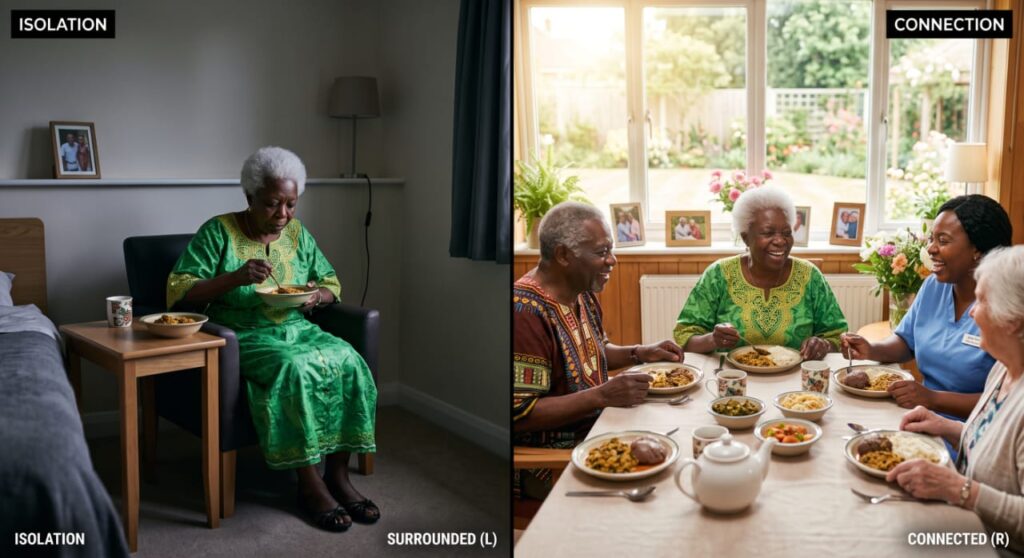
 When my mother moved into a nursing home, I thought she would be surrounded by people. I thought she would make friends, participate in activities, and finally feel less alone. Instead, she retreated to her room. She ate alone. She watched television alone. She spent hours staring at the wall. The staff were kind, but they were busy. The residents were there, but they were strangers. My mother had never been more surrounded and never felt more isolated.
Social connection is not a luxury. It is a biological necessity. For seniors in nursing homes, loneliness is one of the most dangerous threats to health and well-being. The research is clear: social isolation is as damaging to health as smoking 15 cigarettes a day. It increases the risk of heart disease, stroke, depression, cognitive decline, and premature death. Yet loneliness in nursing homes is endemic. Many residents have few visitors, limited mobility, and little opportunity for meaningful interaction. They are surrounded by people but feel utterly alone.
The first thing I learned is that connection requires intention. It does not happen automatically just because people are in the same building. My mother needed to be invited, not just told about activities. She needed familiar faces, not just friendly staff. She needed small, consistent interactions that built trust over time.
I started by visiting at the same time each week. I brought photos and shared stories. I asked her about her childhood, her favorite memories, her regrets. I did not try to fix her sadness. I just sat with her and listened. Those visits did not cure her loneliness, but they reminded her that she was still seen and loved.
I also learned that group activities are not always the answer. My mother was introverted. Large gatherings overwhelmed her. She needed smaller, quieter interactions. I worked with the activities director to find activities that matched her personality. She started attending a small book club and a weekly music session. Those groups had only a few people, but they were consistent, and they gave her a sense of belonging.
Family involvement is essential, but it is not always possible. I lived an hour away, and I could not visit every day. I enlisted other family members, friends, and volunteers to help. I also used technology. A simple video call once a week made a difference. I set up a digital photo frame that displayed family photos remotely. It was not a conversation, but it was a reminder that she was part of a larger family.
I also discovered the power of intergenerational programs. My mother’s facility started a program with a local preschool. The children visited once a week to read stories and do crafts. My mother did not talk much, but she smiled when the children were there. She lit up in a way that no medication could replicate. Those visits gave her a reason to get dressed in the morning.
The staff are essential partners in maintaining social connections. I developed relationships with the aides and nurses who worked with my mother. I thanked them for their care and shared information about my mother’s preferences. When they knew her as a person, not just a room number, they were more likely to engage with her meaningfully.
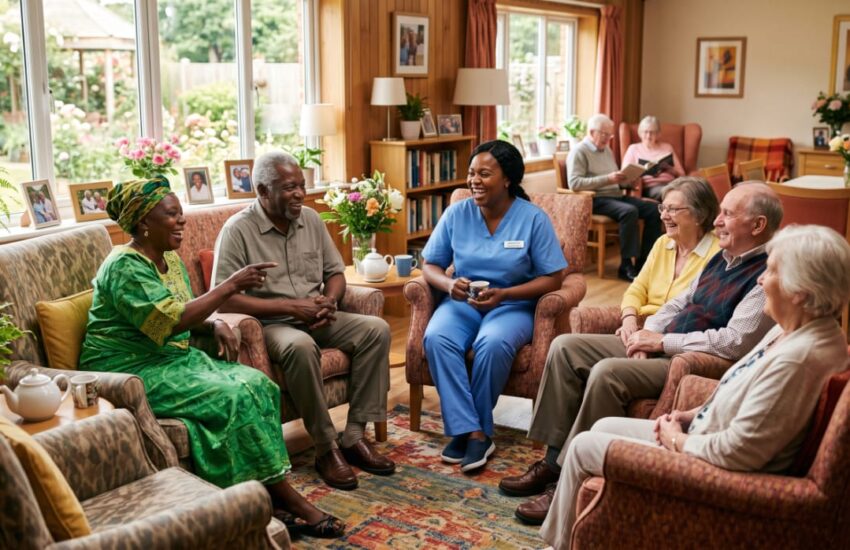
I also learned that socialization requires a safe, welcoming environment. The physical space matters. A facility that feels like an institution discourages connection. A facility that feels like a home encourages it. I chose a facility with common areas that were comfortable and inviting. Residents could sit together, share a meal, or simply watch the world go by. Those spaces became the backdrop for relationships.
If your loved one is in a nursing home, do not assume they are socializing just because they are surrounded by people. Ask them. Observe them. Are they eating with others? Do they participate in activities? Do they have friends? If the answer is no, advocate for change. Ask the activities director for more opportunities. Volunteer to lead a small group. Bring a friend or grandchild to visit. Small gestures can create meaningful connections.
Loneliness is not inevitable. It is a problem that can be addressed with intention, creativity, and persistence. My mother never became the social butterfly she had been in her youth. But she stopped eating alone. She started joining the music group. She smiled when the children visited. She was still lonely sometimes, but she was no longer alone.
There is so much more to learn about supporting the emotional health of nursing home residents. Our website is filled with articles on resident engagement, family involvement, and combating isolation. Head over and explore, because connection is the heartbeat of care.
References
Gibson, A., Holmes, S., & McDermott, C. (2021). Social isolation among older adults in long-term care: A scoping review. *Gerontology and Geriatric Medicine*. [https://pmc.ncbi.nlm.nih.gov/articles/PMC8236667/](https://pmc.ncbi.nlm.nih.gov/articles/PMC8236667/)
Hoben, M., et al. (2020). Social connection in long-term care homes: A scoping review of published research. *Journal of the American Medical Directors Association*. [https://pmc.ncbi.nlm.nih.gov/articles/PMC9186333/](https://pmc.ncbi.nlm.nih.gov/articles/PMC9186333/)
Hoben, M., et al. (2021). Social connection and physical health outcomes among long-term care residents: A scoping review. *Journal of the American Medical Directors Association*. [https://pmc.ncbi.nlm.nih.gov/articles/PMC8683818/](https://pmc.ncbi.nlm.nih.gov/articles/PMC8683818/)
National Institute on Aging. (2019, April 22). *Social isolation and loneliness in older people pose health risks*. [https://www.nia.nih.gov/news/social-isolation-loneliness-older-people-pose-health-risks](https://www.nia.nih.gov/news/social-isolation-loneliness-older-people-pose-health-risks
O’Rourke, H. M., et al. (2024). Addressing loneliness and social isolation through the involvement of family caregivers in nursing homes: A systematic review. *BMC Geriatrics*. [https://pmc.ncbi.nlm.nih.gov/articles/PMC11197341/](https://pmc.ncbi.nlm.nih.gov/articles/PMC11197341/)