
 Posted by
 When my mother’s doctor first suggested acupuncture, I laughed. Not out of disrespect, but disbelief. Needles? For chronic back pain? For mobility issues? It sounded more like a wellness retreat than practical care for an elderly woman navigating her own home. I assumed physical therapy and medication were the only serious options. I was wrong.
Acupuncture is an ancient form of Chinese medicine that involves inserting thin needles into specific points on the body to restore the flow of energy and promote healing. For seniors, especially those receiving care at home, it offers a surprisingly practical and effective approach to managing the challenges of aging. The evidence is mounting, with large-scale studies demonstrating real, measurable benefits that can transform daily life.
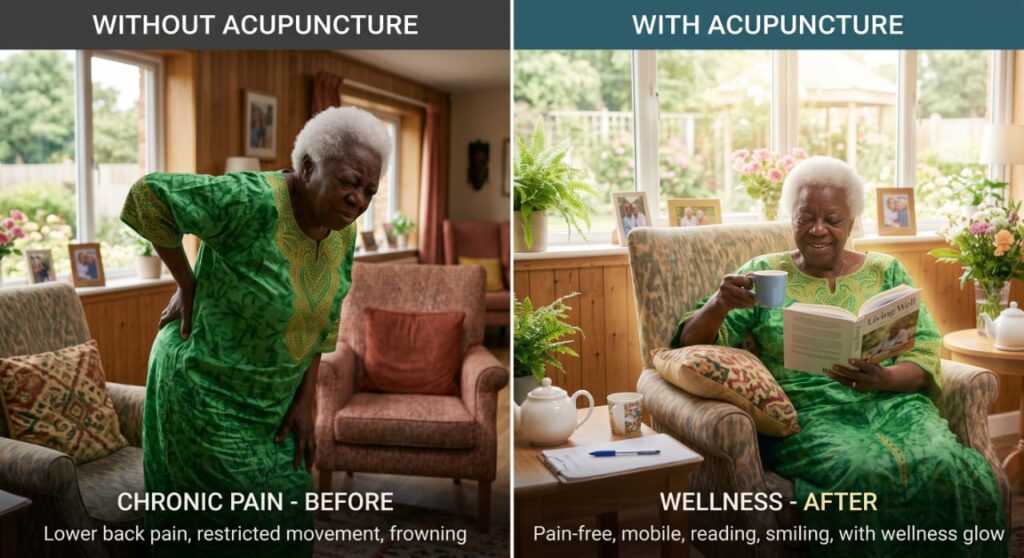
The first thing I learned was just how well acupuncture addresses chronic pain in older adults. A major randomized clinical trial called BackInAction, involving over 800 participants aged 65 and older, found that acupuncture significantly improved back pain and disability. Participants who received acupuncture reported greater reductions in pain and pain-related disability compared to those who received usual care alone. These improvements were sustained for up to a year. Another study found that trigger point acupuncture combined with exercise was significantly more effective than exercise alone for chronic low back pain in older adults.
The benefits go beyond just pain relief. Acupuncture also improves quality of life and daily functioning. One randomized controlled trial focused on elderly patients with hypertension and impaired physical mobility receiving home health care. Participants who received acupuncture combined with antihypertensive drugs showed significant improvements in quality of life, activities of daily living, and mental health compared to those receiving drugs alone. For my mother, who struggled with the basics of daily life, that improvement was everything.
I also discovered that acupuncture is remarkably safe for seniors. Research highlights that acupuncture offers a less invasive option with a better safety profile than many common treatments for back pain in older adults. This was crucial for my mother, who was already managing multiple conditions and was sensitive to medication side effects. The needles are thin and sterile, and adverse events are rare.
What surprised me most was the cost-effectiveness of acupuncture. An economic evaluation of the BackInAction trial found that enhanced acupuncture reduced annual back pain-related healthcare costs by an average of $491 per participant compared to usual care alone. The savings were driven by a significant reduction in other healthcare utilization, meaning acupuncture helped people manage their pain so effectively they needed fewer other services. This makes it a practical option for home care, even for families on a budget.
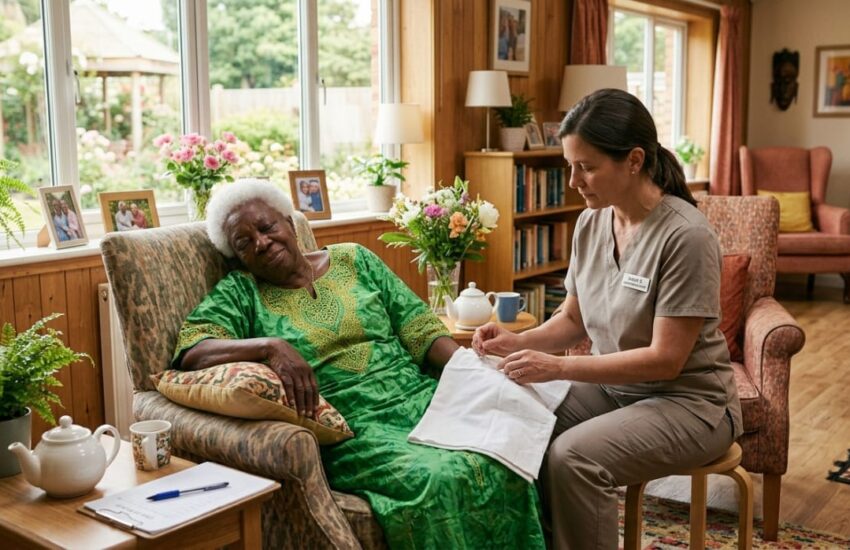
Implementing acupuncture for a senior at home is also more feasible than I expected. While my mother couldn’t easily travel to a clinic, a licensed acupuncturist made home visits. This home-based model is supported by research, including a Korean study that found a home-based integrative program combining acupuncture, counseling, and medical supplies improved pain and quality of life in elderly women with mobility impairment. A case report even described how home-based acupuncture helped manage distressing symptoms like skin rash, constipation, and dyspnea in an elderly patient with Parkinson’s disease during end-of-life care.
Of course, acupuncture is not for everyone. Some seniors may not be comfortable with needles, and it may not be appropriate for those with active infections or bleeding disorders. But for my mother, who had tried standard treatments and failed to find much relief, it was definitely worth trying.
If you are considering acupuncture for a senior at home, my advice is simple. Consult a licensed acupuncturist who has experience working with elderly patients. Ask about home visits, and discuss your loved one’s specific health conditions. Start with a clear plan and track the results. Acupuncture is not a cure-all, but for my mother, it was a lifeline that brought back comfort and mobility to her final years at home.
There is so much more to learn about integrative approaches to senior care. Our website is filled with articles on pain management, home health, and aging in place. Head over and explore, because the right care at home can make all the difference.
References
Vickers, A. J., Cronin, A. M., Maschino, A. C., Lewith, G., MacPherson, H., Foster, N. E., Sherman, K. J., Witt, C. M., & Linde, K. (2012). Acupuncture for chronic pain: Individual patient data meta-analysis. *Archives of Internal Medicine, 172*(19), 1444–1453. [https://doi.org/10.1001/archinternmed.2012.3654](https://doi.org/10.1001/archinternmed.2012.3654)
Vickers, A. J., et al. (2025). Acupuncture for chronic low back pain in older adults: A randomized clinical trial. *JAMA Network Open*. [https://pmc.ncbi.nlm.nih.gov/articles/PMC12432643/](https://pmc.ncbi.nlm.nih.gov/articles/PMC12432643/)
Zhang, J., et al. (2017). Safety of acupuncture: Overview of systematic reviews. *Scientific Reports, 7*, 3369. [https://doi.org/10.1038/s41598-017-03272-3](https://doi.org/10.1038/s41598-017-03272-3)
McDonald, J., Cripps, K., Smith, M., & Johnson, R. (2025). A mixed-methods systematic review of the effectiveness, acceptability, and safety of self-acupuncture. *Complementary Therapies in Medicine*.
Dierickx, K., et al. (2022). Use of acupuncture for adult health conditions, 2013 to 2021: A systematic review. *JAMA Network Open, 5*(11), e2243662. [https://doi.org/10.1001/jamanetworkopen.2022.43662](https://doi.org/10.1001/jamanetworkopen.2022.43662)