
 Posted by
 My mother had dementia. She couldn’t tell me when she was in pain. She couldn’t point to where it hurt or describe what she was feeling. Instead, she became agitated. She stopped eating. She refused to get out of bed. The staff thought she was having a bad day. I thought she was declining. No one thought about pain.
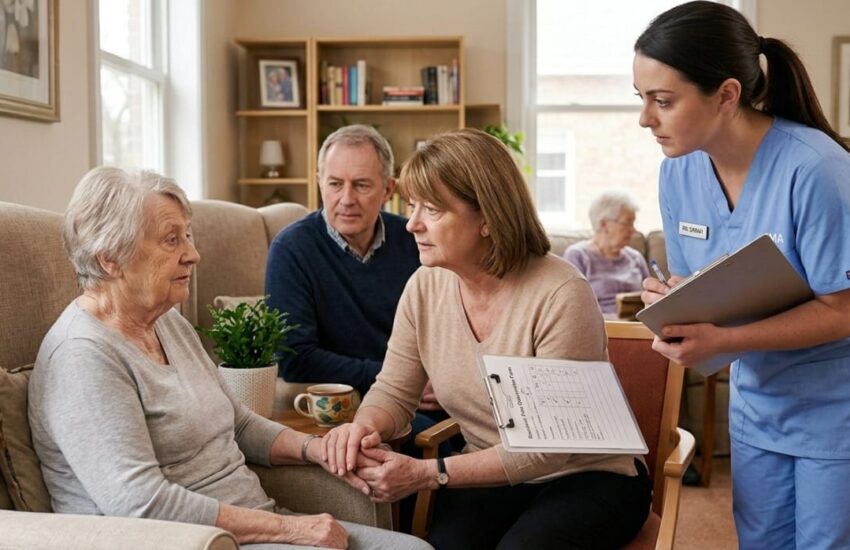
Then a hospice nurse visited and asked a simple question: “When was her last pain assessment?” I didn’t know there was such a thing. The nurse watched my mother for five minutes. She noticed the way my mother guarded her left side, the grimace that appeared when she shifted in bed, and the shallow breathing. “She’s in pain,” the nurse said. We tried a low dose of acetaminophen. Within hours, my mother was calmer. Within days, she was eating again.
I learned that pain management in nursing homes is often inadequate, especially for residents who can’t speak for themselves. Chronic pain affects up to eighty percent of nursing home residents, yet it’s frequently undertreated. The consequences are devastating: depression, falls, weight loss, aggression, hospitalization, and a dramatically reduced quality of life.
The first problem is assessment. Residents with dementia can’t complete a standard pain scale. They can’t say “it hurts on a scale of one to ten.” Staff need specialized tools that observe behavior. Grimacing, guarding, restlessness, changes in sleep or appetite, these are pain behaviors. But staff must be trained to recognize them. Many are not.
I started asking every day: “Has anyone done a pain assessment?” At first, the staff looked confused. Then they started using a validated pain scale for dementia residents. They documented her behaviors. They treated her pain proactively, not just when she cried out.
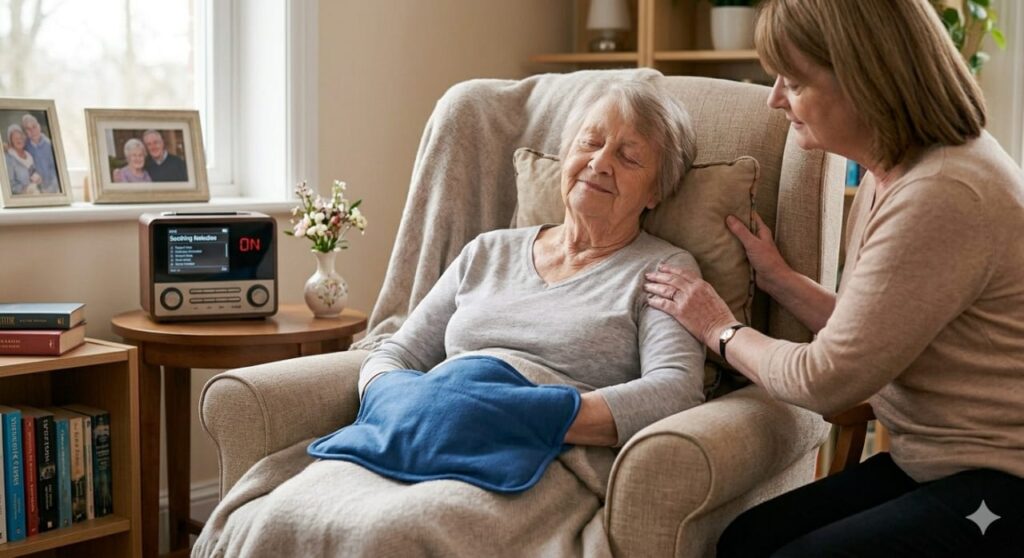
The second problem is undertreatment. Many nursing homes rely on as-needed medications, meaning residents get pain relief only after they’re already suffering. The better approach is scheduled, around-the-clock pain management for chronic conditions. My mother’s acetaminophen was given every eight hours, not just when she “asked.” Her pain stayed manageable instead of spiking between doses.
The third problem is fear of opioids. Narcotics have risks, especially for elderly residents. Constipation, falls, and cognitive side effects are real concerns. But those risks can be managed. Constipation can be treated. Fall precautions can be implemented. The risk of unrelieved pain, suffering, depression, and immobility is often worse. A good facility uses a balanced approach: non-pharmacological treatments first, then the lowest effective dose of medication.
Non-pharmacological options are underused. Heat and cold therapy. Positioning changes. Gentle massage. Music therapy. Physical therapy. Relaxation techniques. None of these carries drug side effects. My mother responded well to warm packs on her arthritic hands. The staff could do this easily, once someone suggested it.
I also learned about the pain-medication cascade. Constipation from opioids causes abdominal pain, which leads to more medication, which worsens constipation. Respiratory depression from high doses can cause anxiety, which gets misinterpreted as agitation, leading to antipsychotics. A good pain management plan anticipates these problems and prevents them.
Families play a crucial role. If your loved one can’t communicate, you become their voice. Learn the pain behaviors. Watch for grimacing, guarding, moaning, withdrawal, changes in sleep or appetite. Report what you see. Ask what medications are scheduled and what non-drug treatments are offered. Request a pain management consult if the current plan isn’t working.
When I became more vocal, the facility responded. They added a non-pharmacological pain protocol. They trained staff on dementia pain assessment. They scheduled medications consistently. My mother’s final months were comfortable in ways her earlier years hadn’t been.
Not every facility does this well. When we briefly moved my mother to another nursing home, the pain management was terrible. They refused scheduled medications, insisted on as-needed only, and dismissed my concerns about her grimacing. I moved her back within two weeks. You can advocate for better care, and you can also vote with your feet. Pain is not a normal part of aging. Arthritis is common, but suffering is optional. Dementia doesn’t make pain less real. It makes it harder to detect. That’s our job, to detect it, to treat it, to advocate relentlessly for comfort.
If your loved one is in a nursing home, ask for a pain assessment today. Ask what’s scheduled, not just offered as needed. Ask about non-pharmacological options. Watch for pain behaviors. Be the voice your loved one can’t use for themselves.
There’s so much more to learn about comfort care in nursing homes. Our website is filled with articles on pain management, dementia care, and family advocacy. Head over and explore, because no one should suffer in silence, especially when they can’t speak.
References
NursingHome411. (2023). *Pain management in nursing homes* [Fact sheet]. https://nursinghome411.org/wp-content/uploads/2023/01/Fact-Sheet-Pain-Management.pdf
Kelley, S. P., & Morrison, R. S. (2020). Pain management in nursing home residents. *Clinics in Geriatric Medicine, 36*(3), 439-449. https://pmc.ncbi.nlm.nih.gov/articles/PMC12280650
Weiner, D. K., & Rudy, T. E. (1995). Pain evaluation and management in the nursing home. *Annals of Internal Medicine, 123*(9), 681-687. https://www.acpjournals.org/doi/10.7326/0003-4819-123-9-199511010-00007
Temel, J. S., et al. (2026, March 1). *Pain management in nursing homes: Analgesic prescribing tips*. Fast Facts and Concepts. https://www.mypcnow.org/fast-fact/pain-management-in-nursing-homes-analgesic-prescribing-tips/
Registered Nurses’ Association of Ontario. (n.d.). *Assessment and management of pain in the elderly: Learning package for long-term care* [PDF]. https://rnao.ca/sites/rnao-ca/files/Assessment_and_Management_of_Pain_in_the_Elderly_-_Learning_Package_for_LTC.pdf