
 Posted by
 For the first three months my mother was in a nursing home, I was a visitor. I showed up, sat with her, chatted with the staff, and left. I thought I was doing enough. Then a social worker pulled me aside. “You’re here a lot,” she said. “But you’re not really involved. Do you want to be part of her care team?” I didn’t know that was an option.
Family involvement in nursing home care isn’t just about visiting. It’s about partnering with staff to ensure your loved one thrives. When I finally understood this, everything changed for my mother and for me.
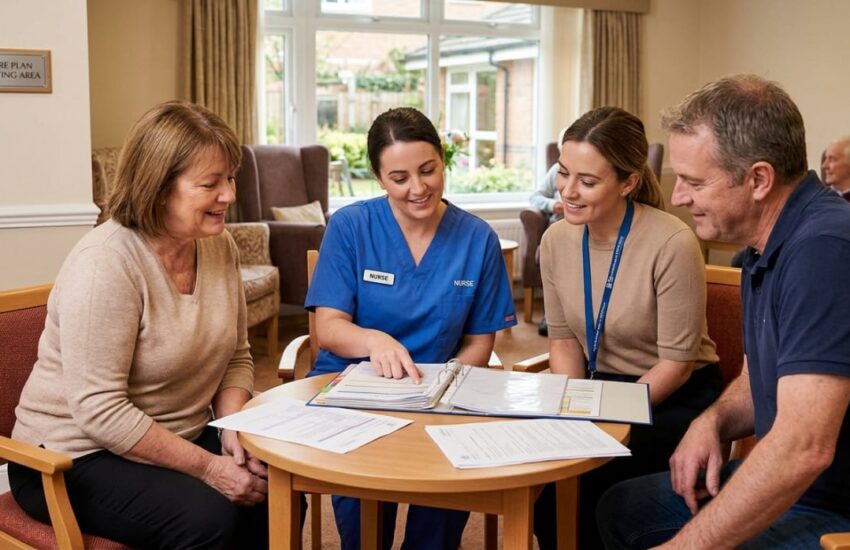
The first shift was attending care conferences. These meetings happen quarterly and include the nurse, social worker, activities director, and sometimes the doctor. I’d been skipping them, assuming they were routine. They’re not. This is where goals are set, problems identified, and care plans adjusted.
When I started attending, I could share what I observed during visits. Mom seemed more withdrawn in the afternoons. She wasn’t eating breakfast. She loved music but never made it to sing-alongs. The staff listened. They adjusted her schedule. They started offering her favorite breakfast foods. An aide began walking her to activities. Small changes, but they made her days better.
The second shift was building relationships with staff. Not just the nurses, but the certified nursing assistants who provided most of her daily care. I learned their names, their children’s names, and their coffee orders. I brought donuts on Friday mornings. I wrote thank-you notes. When they felt seen and appreciated, they paid more attention to my mother. Not because I bribed them, but because we were partners now.
I also learned to communicate effectively. Criticism shut people down. Requests opened conversations. Instead of “You never answer her call light fast enough,” I started saying, “Mom gets anxious when she waits. Is there a way to check on her more often during the busy afternoon shift?” The same problem, framed as a partnership. Staff responded completely differently.
Family involvement also meant monitoring care without hovering. I varied my visit times, mornings, afternoons, evenings, weekdays, and weekends. I saw different shifts, different staff, different rhythms. When I noticed that evening care was consistently rushed, I asked about staffing levels. The social worker was honest: evenings were understaffed. I joined the family council, and we advocated together for more evening hours. Change was slow, but it happened.
I also learned to watch for subtle changes. I knew my mother’s baseline better than anyone. When she seemed quieter than usual, I mentioned it. When she wasn’t eating her favorite foods, I flagged it. Twice, those observations caught urinary tract infections before they caused serious illness. Staff can’t know what “normal” looks like for every resident. Families provide that critical information.
Bringing pieces of home-made a difference too. I brought her favorite quilt, photos of our family, and a small radio playing her station. These weren’t just decorations. They were anchors to her identity. Staff used them as conversation starters. The quilt comforted her during difficult moments. Her room felt like hers, not just a bed.
I also involved the extended family. My nieces visited and painted my mother’s nails. My brother brought his guitar and played old songs. My aunt called every Sunday. The nursing home became part of our larger family rhythm, not a separate place we visited out of obligation.
When problems arose, and they did, I learned to escalate appropriately. Start with the aide. Then the nurse. Then the social worker. Then the administrator. Going straight to the top without giving frontline staff a chance to fix damaged relationships. Working the chain of command showed respect and got better results.
I also learned when to let go. Not every complaint needed action. Not every request could be honored. I picked my battles. Did it matter if her sheets were changed on Tuesday or Wednesday? Not really. Did it matter if she was left in a wet brief for an hour? Absolutely. Focusing on what truly affected her quality of life preserved my energy and my relationships with staff.
The family council was my greatest resource. Other families understood exactly what I was going through. We shared tips, recommended which administrators to trust, and advocated together for facility-wide improvements. Together, we got better visiting hours, improved food options, and more transparent communication about staffing shortages.
Family involvement also meant taking care of myself. I couldn’t show up as a good partner if I were burned out. I took breaks. I let other family members cover visits. I went to therapy. The nursing home wasn’t abandoning my mother; it was allowing me to be her daughter instead of her full-time caregiver.
My mother’s final years were not easy. But they were better because I was involved, really involved, not just present. Staff knew her name, her story, her preferences. They caught changes early. They laughed with her and comforted her. When she died, aides who’d cared for her came to the funeral. They cried too.
If you have a loved one in a nursing home, don’t just visit. Get involved. Attend care conferences. Build relationships. Communicate respectfully. Watch for changes. Bring it home with you. Advocate wisely. Join the family council. And take care of yourself. Your loved one’s quality of life depends on it.
There’s so much more to learn about being an effective family advocate. Our website is filled with articles on care conferences, building staff relationships, and navigating concerns. Head over and explore, because your voice matters.
References
Hovenga, N., Landeweer, E., Zuidema, S., & Leget, C. (2022). Family involvement in nursing homes: An interpretative synthesis of literature. *Nursing Ethics*. Advance online publication. https://doi.org/10.1177/09697330221085774
Temkin-Greener, H., Meiners, M. R., & Gruenberg, L. (1984). Role of the family in nursing home care. *American Journal of Nursing, 84*(11), 1382–1385. https://pubmed.ncbi.nlm.nih.gov/6437198/
National Center for Biotechnology Information. (2021). *Family involvement in residential long-term care: A review*. https://pmc.ncbi.nlm.nih.gov/articles/PMC8821144/
Guardian Care Nursing. (2024, November 11). *The essential role of family support in nursing home care*. https://guardiancarenursing.com/the-essential-role-of-family-support-in-nursing-home-care/
Manor Barn Nursing Home. (2025, April 28). *What role does family play in residential care?* https://manorbarncarehome.co.uk/what-role-does-family-play-in-residential-care