
 Posted by
 My grandmother was always the life of every gathering. She told stories that made strangers feel like family, remembered everyone’s birthday, and could turn a simple coffee date into an hours-long conversation. When she moved into a senior apartment after my grandfather died, I assumed she’d thrive. She’d be surrounded by peers, activities, company. What could go wrong? Plenty, as it turned out.
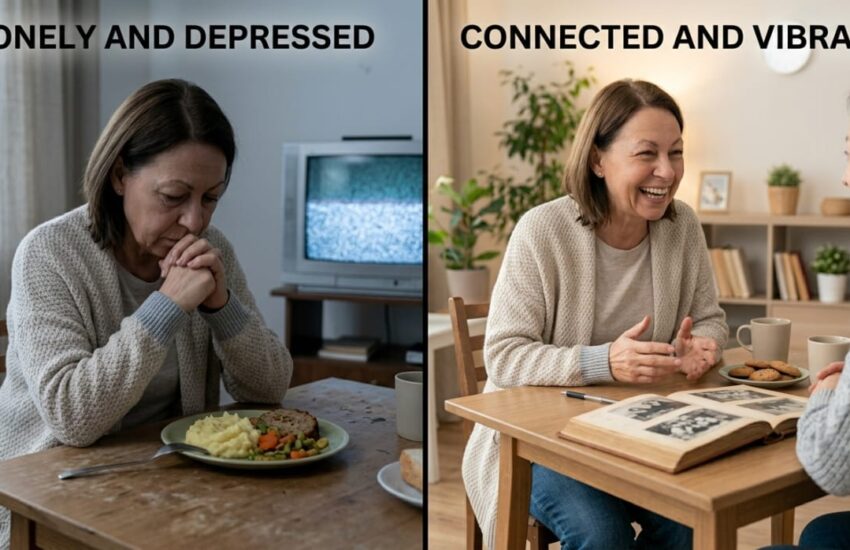
The building was nice. Her one-bedroom apartment was cozy. But she ate most meals alone in her room. She declined invitations to bingo and movie nights. The friends she’d had for decades were now an hour away, and driving at night made her nervous. Week after week, her world shrank. The woman who once held court at family gatherings became quiet, withdrawn, almost invisible.
Her doctor called it depression. Her cardiologist noticed her blood pressure creeping up. I called it loneliness. And watching her fade taught me something I’ll never forget: socialization isn’t a nice add-on for seniors. It’s as essential as medication, as vital as exercise, as protective as any medical intervention.
The research backs this up. Socially connected seniors have lower rates of depression, slower cognitive decline, better cardiovascular health, stronger immune function, and even longer lifespans. Isolation, by contrast, is as dangerous as smoking fifteen cigarettes a day. It increases the risk of dementia by fifty percent. It raises blood pressure, weakens the immune system, and fuels inflammation that drives nearly every chronic disease. My grandmother wasn’t just lonely. She was getting sicker because she was lonely.
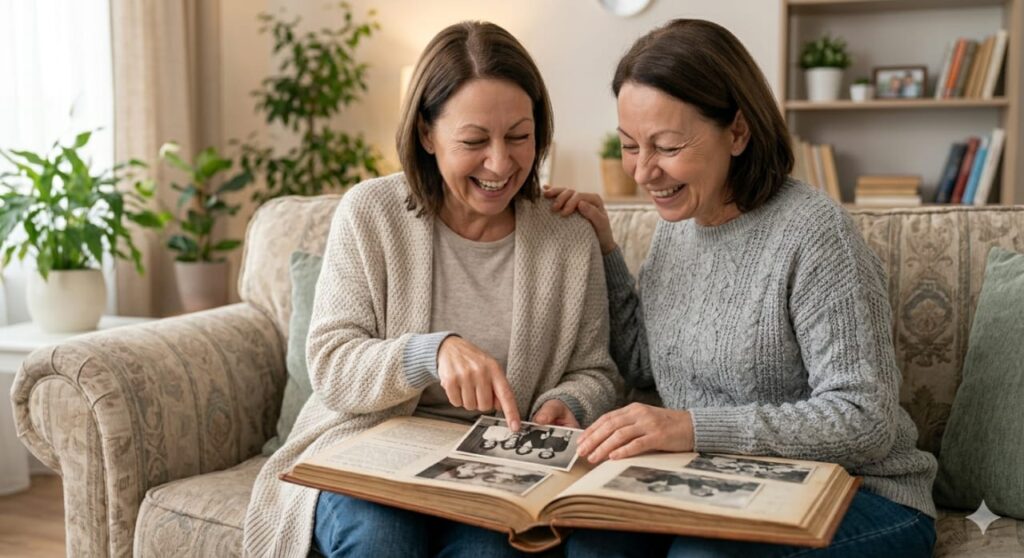
What I learned is that socialization for seniors isn’t about filling a calendar with activities. It’s about meaningful connection. Bingo with strangers who don’t know your name isn’t the same as coffee with a friend who remembers your daughter’s wedding. Being in a room full of people isn’t the same as being seen.
The best interventions create opportunities for genuine relationship. Small group dinners where people actually talk. Book clubs that read books seniors care about. Walking groups that move at a pace that works for everyone. Intergenerational programs that bring young children into senior spaces, the magic of a toddler’s laugh can reach places medicine cannot.
For my grandmother, the turning point came when a neighbor knocked on her door. Not staff, not family, just another resident who’d noticed she wasn’t coming to meals. The neighbor didn’t lecture or push. She just sat on the couch and asked about the photos on the wall. That small act of attention, someone seeing her, wanting to know her story, began to thaw something.
They started having coffee together every morning. Then breakfast. Then they joined the building’s gardening club together. My grandmother still wasn’t the social butterfly she’d once been, but she wasn’t invisible anymore. Someone knew her name. Someone saved her a seat. Someone noticed when she wasn’t feeling well.
That’s the heart of it. Socialization isn’t about activities; it’s about belonging. For families trying to support seniors, the challenge is real. Visits aren’t always possible. Friends move away or pass on. Driving becomes difficult. The barriers to connection are real, but they’re not insurmountable.
Technology can help, but it’s not a complete solution. My grandmother could never master video calls, the screen confused her, the lag frustrated her. But she could listen to voicemails. She could receive photos printed and mailed. She could talk on the phone, even if she couldn’t see the person on the other end. The key was meeting her where she was, not where we wished she was.
Senior centers and adult day programs offer structured socialization, but quality varies wildly. I toured several before finding one where staff actually sat with participants, learned their names, engaged them in conversation. The best programs didn’t just supervise; they connected. They created communities, not just crowds.
Volunteering is another powerful avenue. Seniors who volunteer report higher well-being, lower depression, and a stronger sense of purpose. My grandmother started reading to children at a local elementary school once a week. The kids called her Grandma. She bought new books with her own money. She had somewhere to be, someone to prepare for, something to contribute. That sense of purpose was medicine.
Religious or spiritual communities often provide built-in social networks. Even seniors who aren’t particularly devout may find connection through services, study groups, or simple coffee hours. The regular rhythm of weekly gathering provides structure and predictability that anxious minds crave.
What doesn’t work is forced fun. Mandatory activities, pressure to participate, guilt about staying in her room, these only made my grandmother retreat further. She needed invitation, not obligation. She needed someone to sit with her in her quiet until she was ready to emerge.
The role of family is critical but can be overwhelming. I couldn’t visit every day. I couldn’t be her only friend. What I could do was facilitate connections, arranging rides for a friend to visit, setting up a regular phone call with her sister, and finding a volunteer companion through a local program.
I wasn’t abandoning her; I was building a village around her. If you have a senior loved one, pay attention to their social world. Who do they see? Who do they talk to? Who knows their name? If the answer is “no one,” that’s a medical emergency. Isolation kills. Connection heals.
The good news is that small interventions make a big difference. A regular phone call. A weekly visit. An invitation to a meal. A ride to a gathering. These aren’t grand gestures, but they’re lifelines. My grandmother never fully returned to the vibrant woman she’d been.
But she stopped fading. She started eating again. She laughed at a joke, finally. She had someone to save her a seat. Socialization isn’t a luxury for seniors. It’s a necessity. And protecting it, building it, nurturing it, fighting for it, is one of the most important things we can do for the people we love.
There’s so much more to learn about supporting senior mental health. Our website is filled with articles on loneliness, community building, and practical strategies for staying connected across distance. Head over and explore, because no one should have to fade away unseen.
References
World Health Organization. (2025, October 8). *Mental health of older adults*. https://www.who.int/news-room/fact-sheets/detail/mental-health-of-older-adults
Centers for Disease Control and Prevention. (2020, August 18). *Social isolation and loneliness in older adults*. National Center for Emerging and Zoonotic Infectious Diseases. https://pmc.ncbi.nlm.nih.gov/articles/PMC7437541
Newman, M. G., &tol, N. (2020). The value of maintaining social connections for mental health in older adults. *Journal of Health and Social Behavior*, *61*(4), 409–424. https://pmc.ncbi.nlm.nih.gov/articles/PMC7261393/
Gao, D., et al. (2024). The impact of social activities on mental health among older adults. *Frontiers in Public Health*, *12*, Article 1422246. https://www.frontiersin.org/journals/public-health/articles/10.3389/fpubh.2024.1422246/full
Atlantis Press. (2025, August 30). *Social isolation, ageism, and mental health in older adults*. In *Proceedings of the International Conference on Mental Health, Education and Human Development* (MHEHD-25). https://www.atlantis-press.com/proceedings/mhehd-25/126015507