
 Posted by
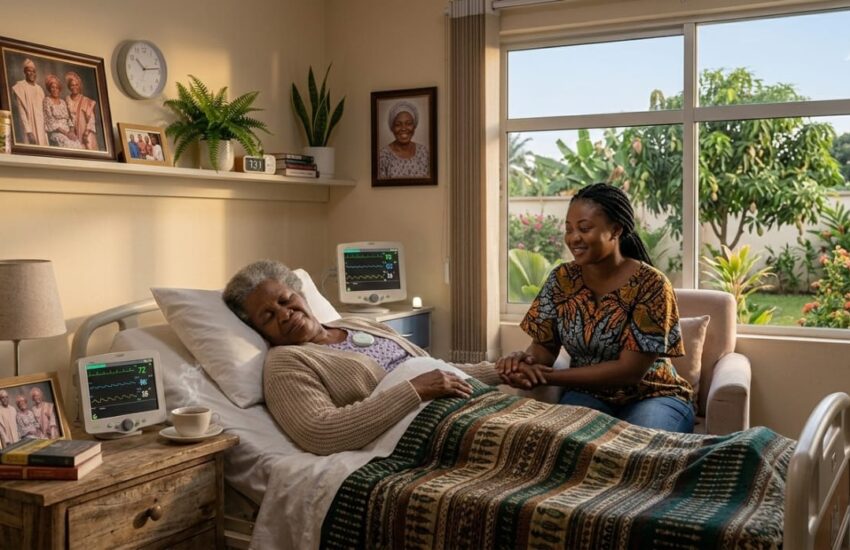
 The call came at 2 AM. My mother’s heart rate had dropped unexpectedly. The nursing home staff had already checked on her, adjusted her position, and were monitoring her closely. By the time I arrived, she was stable, resting comfortably, and the doctor was already reviewing the data from the device she’d been wearing for months.
I didn’t panic. Not because I wasn’t worried, I was, but because the system had worked. The technology had caught something before it became an emergency. And that was the moment I fully understood the power of utilizing remote patient monitoring in nursing homes.
Let me back up. When my mother moved into long-term care, I was terrified of what I couldn’t see. I visited daily, but there were twenty-three hours I wasn’t there. What if something happened in those hours? What if she fell? What if her heart acted up? What if an infection was brewing and no one noticed until it was serious?
Her facility was one of the first in our area to implement remote patient monitoring, and I was skeptical at first. More technology didn’t necessarily mean better care. But the program they showed me was different. It wasn’t about replacing human attention. It was about enhancing it.
Remote patient monitoring uses wearable devices, sensors, and other technology to track vital signs and activity patterns continuously. Heart rate, blood pressure, oxygen levels, temperature, sleep patterns, even movement. The data flows to a central monitoring station where trained staff watch for patterns and alerts. When something changes, a heart rate that drops, oxygen that dips, a resident who hasn’t gotten out of bed, the system flags it, and someone checks in person.
For my mother, that meant problems caught early. The nighttime heart rate episode was caught within minutes. A urinary tract infection that would have progressed to delirium was identified early when her temperature rose just half a degree and her activity level changed. A medication side effect that was causing dangerous blood pressure drops was adjusted before it caused a fall.
The technology didn’t replace human caregivers. It made them more effective. Instead of taking vital signs once a day and hoping nothing changed in between, they had continuous data. Instead of waiting for symptoms to become obvious, they could intervene early, when interventions are easier and outcomes are better.
The devices themselves were unobtrusive. My mother wore a small patch on her chest that tracked heart rate and respiratory rate. There were sensors under her mattress that monitored her movement and sleep. A smart scale tracked her weight daily, a critical measure for heart failure patients. She barely noticed them after a few days, and she quickly forgot they were there.
For residents with dementia, this non-invasiveness is crucial. They can’t be expected to remember to put on a device or charge a battery. The best systems work passively, gathering data without demanding anything from the resident.
The results at her facility were dramatic. Hospitalizations dropped by nearly forty percent in the first year. Falls decreased. Infections were caught earlier. Staff reported feeling less anxious, more informed, more confident. Families reported greater peace of mind.
I experienced that peace of mind firsthand. I could call the monitoring center anytime and get a report on my mother’s status. I could see that she’d slept well, that her vitals were stable, that she’d been up and moving. When I couldn’t be there in person, I could still know she was okay.
But remote monitoring isn’t magic. It works best when integrated into a comprehensive care system. The data is only useful if someone is watching and responding. The technology is only effective if it’s part of a culture that prioritizes early intervention. My mother’s facility didn’t just install devices; they trained staff, established protocols, and created a response system that ensured alerts led to action.
Privacy concerns are real, and they need to be addressed thoughtfully. Residents and families need to understand what data is being collected, who has access, and how it’s being used. The best facilities are transparent about their monitoring programs, get consent, and use the data only for care purposes. When done right, the benefits far outweigh the privacy trade-offs.
Not all remote monitoring is created equal. When evaluating a facility’s program, I learned to ask specific questions. What parameters are being monitored? How is the data transmitted and reviewed? What happens when an alert is triggered? Who responds? How quickly? How is family notified? What’s the track record, how many hospitalizations prevented, how many falls reduced?
The answers told me whether the facility was using monitoring as a marketing tool or as a genuine care enhancement. My mother’s facility had the numbers. They could tell me how many early interventions they’d made, how many hospital transfers they’d avoided, how families had benefited. They were proud of the program and happy to share results.
Cost is always a consideration. Remote monitoring systems require investment, in devices, in software, in staff training, in monitoring personnel. Some facilities pass these costs along to residents; others absorb them as part of their care model. We were fortunate that my mother’s facility included monitoring in their standard care; it wasn’t an add-on that only some residents received. Universal adoption meant the benefits were distributed across the community.
For families who are evaluating facilities or advocating for better care in their current one, remote monitoring is worth asking about. It’s not a replacement for good staffing or compassionate care. But it’s a powerful tool that can catch problems early, reduce crises, and give everyone, residents, families, staff, greater peace of mind.
My mother never knew she was being monitored. The patches and sensors were just part of her routine, like her morning coffee and her afternoon walk. But I knew. And knowing meant I could sleep through the night without the phone ringing in panic. It meant I could visit as a daughter, not just as a watchdog. It meant that when something did go wrong, as it inevitably would, we caught it early and handled it calmly.
The technology didn’t change the course of her illness. She eventually declined, as all of us will. But the quality of her time, the stability, the predictability, the absence of crises, was better because of remote monitoring. And for that, I’m grateful.
If you’re navigating nursing home care for someone you love, consider asking about remote monitoring. It’s not a cure-all, but it’s a tool that can make a real difference. And in a world where we can’t be there for every moment, it helps us be present for the ones that matter most.
There’s so much more to learn about technology and care in nursing homes. Our website is filled with resources on remote monitoring, safety innovations, and advocating for quality care. Head over and explore, because peace of mind matters as much as anything else.
References
Centers for Medicare & Medicaid Services. (n.d.). *Remote patient monitoring services*. https://www.cms.gov/medicare/payment/fee-schedules/physician-fee-schedule/remote-patient-monitoring
Agency for Healthcare Research and Quality. (2022, May 15). *Remote patient monitoring*. Patient Safety Network. https://psnet.ahrq.gov/perspective/remote-patient-monitoring
Majumder, S., Mondal, T., & Deen, M. J. (2024). A systematic review of the impacts of remote patient monitoring (RPM) interventions on safety, adherence, quality-of-life and cost-related outcomes. *npj Digital Medicine*, *7*, Article 198. https://pmc.ncbi.nlm.nih.gov/articles/PMC11258279
U.S. Department of Health and Human Services, Office of the National Coordinator for Health Information Technology. (n.d.). *Telehealth and remote patient monitoring: Getting started*. Telehealth.HHS.gov. https://telehealth.hhs.gov/providers/best-practice-guides/telehealth-and-remote-patient-monitoring/getting-started
Health Recovery Solutions. (2025). *The complete guide to chronic care management*. https://www.healthrecoverysolutions.com/the-complete-guide-to-chronic-care-management