
 Posted by
 In the communal world of a nursing home, the greatest danger can sometimes come from within. This is my journey in learning to see the subtle signs and build a culture of safety to prevent resident-to-resident aggression. I remember the incident that changed my entire perspective on care. It was not a fall or a medication error. It was a quiet, simmering tension in the dining room that erupted when one resident, let us call him Mr. Henderson, suddenly shouted and shoved his tray toward the woman sitting across from him. The trigger was seemingly trivial: she had been slowly eating the Jell-O he believed was his. The staff responded quickly, de-escalating the situation, but the woman was left trembling and in tears. In the aftermath, as we filed the incident report, a seasoned nurse said something that has stayed with me for years. She said, “That was not the problem. That was the symptom. The problem started this morning when Mr. Henderson’s chair was moved for cleaning, and he spent the entire day feeling disoriented and invaded.” In that moment, I understood that resident-to-resident aggression is rarely a simple act of malice. It is often the final, visible eruption of a deep, unmet need, a communication of pain, fear, or frustration from individuals who have lost other ways to express themselves.
The first and most critical step in prevention is learning to recognize the subtle precursors to aggression. This requires a shift from simply providing care to actively observing the emotional climate of the community. I learned to look beyond the obvious signs of agitation and to see the more nuanced signals. A resident who was typically social suddenly becoming withdrawn and irritable could be in physical pain or feeling socially threatened. Pacing, restlessness, or verbal outbursts that seemed unprovoked were often rooted in a delusion or a misperception. For residents with dementia, aggression was frequently a response to a perceived invasion of their personal space or a catastrophic reaction to an overstimulating environment. I remember a resident, Mrs. Gable, who would become combative during bathing. We discovered it was not the water she feared, but the loss of control and the unfamiliarity of the aide. By allowing her daughter to be present and using a familiar, gentle soap, the aggression melted away. Identifying these triggers is detective work. It means understanding that a resident hoarding items in their room might be feeling insecure, or that a person accusing others of stealing might be trying to articulate their own memory loss and confusion.
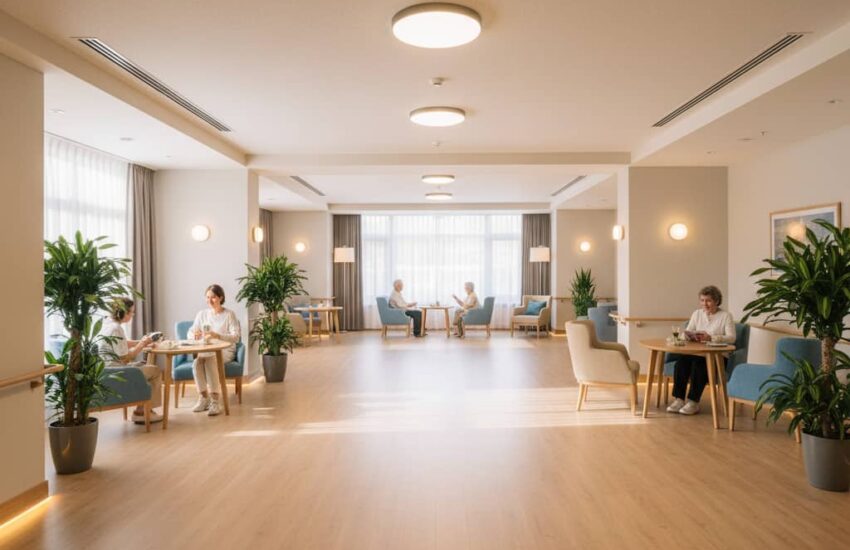
This deep understanding of individual residents is the foundation for proactive environmental and programmatic design. We cannot simply react to aggression; we must build a habitat that minimizes its likelihood. This begins with the physical space. We learned to create clear pathways to reduce confusion and congestion in hallways. We designated quiet areas where residents overwhelmed by the noise and activity of the common living room could retreat. We paid meticulous attention to personal territory, ensuring bedrooms were respected as private sanctuaries. But the physical environment is only half the battle. The social and programmatic environment is equally vital. A bored resident is often an agitated resident. We moved beyond generic activities and developed personalized life enrichment plans. For a former farmer, we arranged for him to pot plants in a small greenhouse. For a former teacher, we gave her the task of “reading” picture books to a small group. These purposeful engagements restored a sense of identity and competence, reducing the frustration that often fuels aggression. We also learned the power of structured social interaction. Simply placing cognitively impaired residents together without guidance could lead to conflict. Instead, staff-facilitated small group activities, like a simple music session or a reminiscence group, provided a safe and structured framework for positive social connection.

Ultimately, the most powerful tool for prevention is a culture of communication and a standardized response protocol. Every staff member, from the nurse to the housekeeper, must be trained to see themselves as a guardian of the community’s emotional well-being. We implemented a system where any staff member who noticed a potential trigger—a change in a resident’s mood, a new room assignment causing tension, a missing personal item—could log it in a shared communication book. This allowed the care team to see patterns and intervene long before a situation escalated to physical aggression. Furthermore, we trained all staff in non-threatening de-escalation techniques. This meant using a calm tone, giving residents space, validating their feelings, and redirecting their attention. The goal was never to win a confrontation, but to help the resident feel heard and safe. When an incident did occur, we moved away from a blame-oriented approach. Instead, we conducted a “root cause analysis,” asking not “Who is at fault?” but “What in our environment, our communication, or our care plan failed this resident?” This shifted our mindset from punishment to prevention.
My journey taught me that resident-to-resident aggression is a complex tapestry woven from threads of cognitive decline, personal history, environmental stress, and unmet human needs. It cannot be solved with medication or isolation alone. The answer lies in building a community that is not just safe, but also humane, engaging, and deeply respectful of the individuals within it. It is about seeing the person behind the behavior, listening to the message within the outburst, and having the compassion and the skill to respond not with force, but with understanding. We are not just caring for bodies; we are stewarding fragile minds and wounded spirits. And in that sacred responsibility, preventing aggression is one of our most profound duties.
References:
Rosen, T., Nemerovski, C., & Lachs, M. S. (2008). Resident-to-resident aggression in long-term care facilities: An understudied problem in elder mistreatment research. *Journal of Elder Abuse & Neglect*, 20(3), 201-215. https://pmc.ncbi.nlm.nih.gov/articles/PMC2741635/
Canadian Agency for Drugs and Technologies in Health. (2010). Programs to manage aggressive behaviour in long-term care patients: Clinical and cost-effectiveness review. https://pmc.ncbi.nlm.nih.gov/articles/PMC3411134/
Long-Term Care Ombudsman Program. (2022). Preventing and responding to resident-to-resident aggression in nursing homes: In-service training manual. https://ltcombudsman.org/uploads/files/issues/rrm-in-service-training-may-2022.pdf
Yan, E., et al. (2023). Resident-to-resident aggression in long-term care facilities: A systematic review. *Journal of the American Geriatrics Society*, 71(5), 1354-1364. https://agsjournals.onlinelibrary.wiley.com/doi/10.1111/jgs.18175
Innovate Aging. (2023). Identifying and preventing resident-to-resident aggression: Proceedings from a symposium. https://academic.oup.com/innovateage/article/7/Supplement_1/44/7487272