
 Posted by
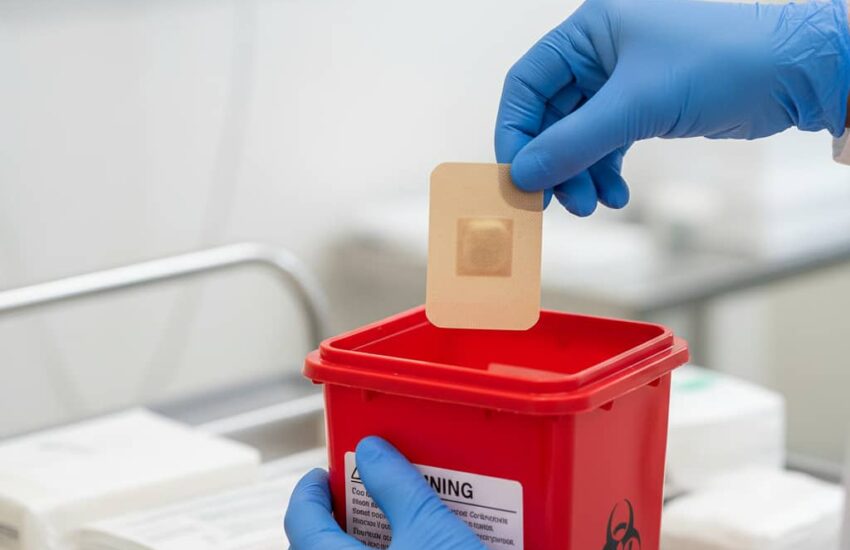
 From the nursing home medicine cart to the cabinet under our own sink, hazardous materials are a silent part of daily life. This is my reflection on the profound importance of handling their disposal with care, for the sake of our health, our safety, and our shared environment. I will never forget the first time I saw a nurse in the nursing home where I worked prepare to dispose of a used medication patch. She did not simply toss it in the trash. She placed it carefully into a small, bright red, sealable container labeled with a glaring biohazard symbol. When I asked her about the procedure, her answer was simple and direct. “This fentanyl patch still contains enough medication to be lethal,” she explained. “In the wrong hands, or leaching into the groundwater, it is a poison.” That moment was a stark revelation. I had always thought of hazardous waste as an industrial problem, something that belonged to factories and labs. I failed to see it in the everyday, in the very tools we use to provide care and maintain our homes. That nurse’s meticulous action opened my eyes to a critical, often invisible responsibility: the proper disposal of hazardous materials is not just a bureaucratic rule; it is a fundamental act of protection for our loved ones, our caregivers, and the world we all share.
In the structured environment of a nursing home, hazardous waste disposal is a matter of rigorous protocol and legal compliance. The sheer volume and potency of the materials are immense. We managed several distinct streams of waste, each with its own color-coded container and strict handling procedure. Sharp objects like needles and lancets went into rigid, puncture-proof sharps containers to protect our staff and housekeeping from accidental sticks and potential bloodborne pathogen exposure. Biohazardous waste, soiled dressings, and anything saturated with bodily fluids were bagged in red bags for incineration or specialized treatment, breaking the chain of infection. The most eye-opening for me was pharmaceutical waste. This was not just about narcotics. It included expired antibiotics, chemotherapy drugs, and even partially used vials of insulin. The environmental consequence of flushing these down the drain is devastating. They can pass through water treatment plants unaltered, entering our rivers and streams and harming aquatic life, and potentially cycling back into our drinking water. The professional disposal service we used ensured these substances were rendered inert through high-temperature incineration. This structured system is a non-negotiable pillar of professional healthcare, a silent, daily commitment to public and environmental health.
The challenge, I soon realized, does not disappear when care moves from an institution to a private home; it simply becomes more personal and less guided. In my own home, caring for my father after his surgery, I was suddenly the director of my own miniature hazardous waste facility. The bathroom cabinet held a collection of potential dangers: expired prescription painkillers, used insulin syringes, and soiled wound dressings. My first instinct with the old pills was to flush them, an action I now know is ecologically reckless. I thought of that red bin from the nursing home and felt a wave of responsibility. I learned that most pharmacies offer take-back programs for unused medications, and many communities hold household hazardous waste collection days. For the syringes, I purchased an FDA-approved sharps container from the pharmacy. When full, I could mail it back through a designated program or drop it at a designated collection site. This was not merely about tidiness; it was about ensuring these items never ended up in the hands of a curious child, injured a sanitation worker, or poisoned the local watershed. Managing this waste at home is a quiet, profound act of civic duty.

Beyond medical waste, our homes are filled with common chemical hazards we often overlook. The gallon of old paint in the garage, the half-empty bottle of weed killer in the shed, the collection of cleaning solvents under the kitchen sink—these are all hazardous materials. For years, I would pour leftover paint thinner down the drain, thinking it would just dilute and disappear. I was wrong. These chemicals are toxic to the microorganisms that treat our wastewater, and they can contaminate soil and groundwater. The proper disposal of these items requires a small but conscious effort. I now consolidate these products and mark my calendar for my community’s next hazardous waste roundup. It is a small inconvenience that carries immense weight. It is a choice to protect the sanitation workers who handle our trash, the water we drink, and the soil that grows our food.
That single used medication patch, handled with such deliberate care by my colleague, taught me that safety is a continuum. It does not end at the front door of a facility or the edge of a property. The principles of protecting human health and preserving our environment are the same, whether applied to a 100-bed nursing home or a single-family residence. Proper disposal is an act of respect. It is respect for the people who manage our waste streams, for the fragility of our ecosystems, and for the well-being of future generations. It is the understanding that our personal choices, when multiplied by millions of households, create a collective impact that is either profoundly destructive or powerfully protective. I now see that red biohazard bin not as a symbol of danger, but as a symbol of responsibility, a responsibility we all share, one careful disposal at a time.
References:
CPD Online. (2025, January 14). Waste disposal in hospitals: Different types and methods. https://cpdonline.co.uk/knowledge-base/care/waste-disposal-hospitals/
U.S. Environmental Protection Agency. (2025, May 14). Household hazardous waste (HHW). https://www.epa.gov/hw/household-hazardous-waste-hhw
Michigan Technological University. (2025). Storage and handling of hazardous materials. https://www.mtu.edu/biological/research/safety/ch6/
Federal Republic of Nigeria Official Gazette. (2021). Regulations on healthcare waste management. https://faolex.fao.org/docs/pdf/NIG208179.pdf
World Health Organization. (2024). Health-care waste management. https://www.who.int/news-room/fact-sheets/detail/health-care-waste
Nigeria Environmental Standards and Regulations Enforcement Agency (NESREA). (2025). National environmental healthcare waste control regulations. https://nesrea.gov.ng/wp-content/uploads/2025/05/Healthcare_Waste_Regulation.pdf
Janik-Karpinska, E. (2023). Healthcare waste – A serious problem for global health. *International Journal of Environmental Research and Public Health*, 20(2), 1023. https://pmc.ncbi.nlm.nih.gov/articles/PMC9858835/