
 Posted by
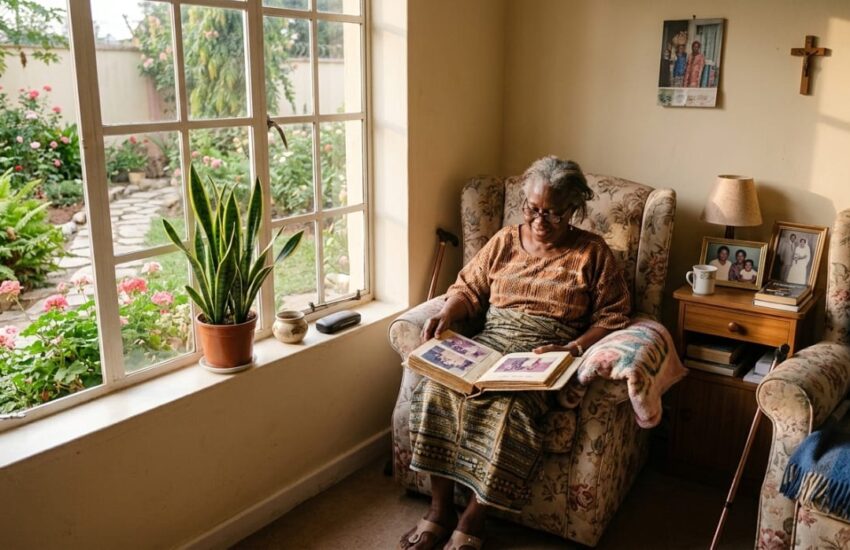
 My grandmother spent her last years in a nursing home with a list of chronic conditions that filled two pages. Heart disease. Diabetes. Chronic obstructive pulmonary disease. Osteoporosis. Hypertension. Arthritis. The list went on, each diagnosis adding another medication, another specialist, another restriction. By the time she moved in, we’d stopped thinking about what she could do and started thinking only about what she couldn’t.
The staff at her facility were competent. They managed her blood sugar, monitored her heart, adjusted her oxygen. They kept her alive, stable, safe. But somewhere in that careful management, we lost sight of something essential: my grandmother herself. She was more than a collection of conditions. She was a woman who loved gardening, who played piano, who made the best apple pie I’ve ever tasted. And we were so focused on managing her diseases that we forgot to help her live.
That experience taught me something crucial about managing chronic conditions in nursing homes. The goal isn’t just to manage the diseases. The goal is to help the person live as fully as possible within the constraints of those diseases. And that requires a different approach than most facilities provide by default.
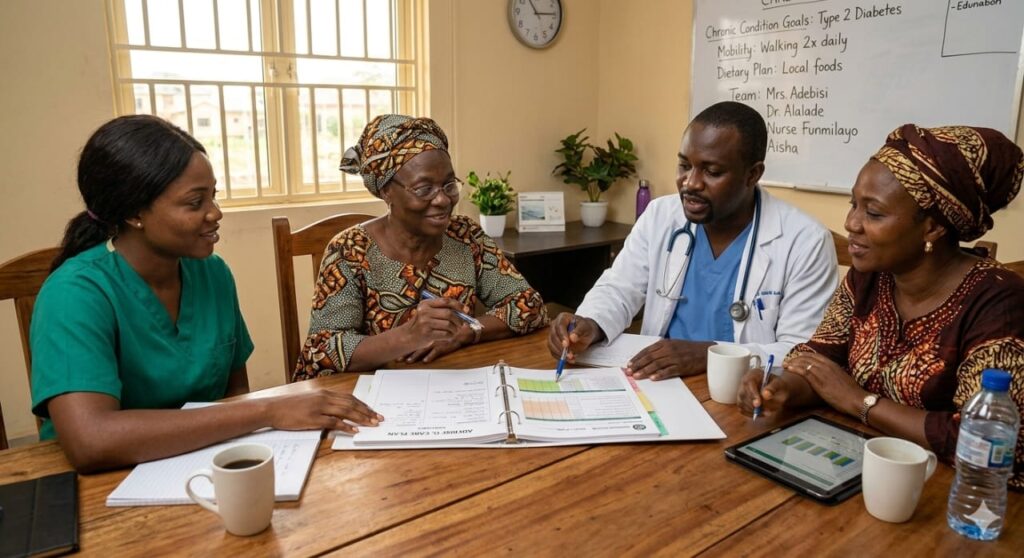
Chronic condition is often fragmented. One specialist handles the heart, another the lungs, another the diabetes. Medications are prescribed by different doctors, sometimes with conflicting effects. The primary care physician oversees everything, but often from a distance. The nursing staff implements orders but may not see the whole picture. And the resident, who lives with these conditions every day, is rarely asked how it all feels.
The first thing I learned to advocate for was integrated care. Not just a list of specialists, but someone, ideally the primary care physician, supported by a nurse practitioner or clinical pharmacist, who looked at the whole picture. Who asked not just “Is her blood sugar controlled?” but “How does she feel? What side effects is she experiencing? Is there a simpler regimen that could achieve the same results?”
When my grandmother’s facility finally did this review, they discovered that several of her medications were working against each other. One drug that helped her heart made her arthritis worse. Another that controlled her diabetes contributed to her fatigue. By simplifying her regimen and coordinating care across specialties, they improved her comfort and her energy levels. She still had the same conditions, but she felt better. That was the goal.
Medication management is the cornerstone of chronic condition care, but it’s often handled poorly in nursing homes. Residents are frequently over-medicated, with drugs prescribed to manage side effects of other drugs, creating a cascade of interventions. I learned to ask hard questions: Is this medication still necessary? Could the dose be lowered? Are there non-pharmaceutical alternatives? What would happen if we stopped this one?
The answers sometimes surprised us. Some medications my grandmother had taken for years were no longer needed. Others had been started in the hospital for acute issues that had long since resolved. Each time we simplified, she became more alert, more engaged, more herself. Less medicated didn’t mean less cared for; it meant more present.
Pain management is another critical piece. Chronic pain is endemic in nursing homes, but it’s often undertreated or treated only with medications that have significant side effects. My grandmother’s arthritis pain was managed with a combination of medication, gentle exercise, heat therapy, and positioning changes that made her more comfortable than any single intervention could. The facility that took a multimodal approach to pain kept her mobile and engaged longer than the one that just prescribed pills.
Nutrition matters enormously for chronic conditions. Diabetes requires careful carbohydrate management. Heart disease often means sodium restriction. COPD patients may need smaller, more frequent meals because breathing takes so much energy. But the best dietary plan is worthless if the resident won’t eat it. My grandmother’s facility learned to work with her preferences, finding low-sodium versions of foods she loved, timing meals around her energy levels, offering snacks that fit her diabetic needs but still tasted good. She maintained her weight and her dignity.
Mobility is often sacrificed in the name of safety. Residents with arthritis or heart disease or COPD are encouraged to stay in bed or use wheelchairs because moving is harder and falls are a risk. But immobility creates its own cascade of problems, muscle loss, joint stiffness, constipation, depression. The facilities that manage chronic conditions best are the ones that prioritize mobility. They find safe ways for residents to move, to walk, to garden, to dance. They understand that a fall risk is also a living risk, and living is worth some risk.
For residents with cognitive decline alongside physical conditions, the management becomes even more complex. My grandmother’s dementia meant she couldn’t always tell us when she was in pain or what was bothering her. The staff learned to read her behavior, restlessness, withdrawal, agitation, as communication. They learned that pain might show up as aggression before it showed up as complaints. This behavioral awareness, this willingness to look beneath the surface, made her last years far more comfortable than they would have been otherwise.
Family involvement is essential to good chronic condition management. We knew my grandmother in ways no chart could capture. We knew what normal looked like for her, what signs indicated trouble, what comfort measures actually worked. The best facilities treat families as partners, not visitors. They invite us into care conferences, ask our observations, listen to our concerns. We caught problems earlier because we knew her baseline. We advocated for changes that improved her quality of life.
But I also learned that family involvement needs to be balanced with professional expertise. I wanted to manage everything myself at first, convinced that no one could care for her as well as I could. But nursing home staff have skills I don’t have. They know medications, they know disease progression, they know what to watch for. The best approach is partnership, me bringing my knowledge of her as a person, them bringing their clinical expertise, together making better decisions than either could alone.
Palliative care principles apply to chronic condition management, not just end-of-life care. The goal is comfort, function, quality of life, not just extending life at any cost. When my grandmother’s heart failure worsened, we faced hard choices about interventions. Would a feeding tube improve her quality of life? Would more aggressive treatment just mean more time in the hospital, more procedures, more discomfort? The facility that asked these questions, that involved us in the conversation, that centered my grandmother’s values, that facility helped us make choices we could live with.
Ultimately, managing chronic conditions in nursing homes is about balance. Balance between treating disease and treating the person. Balance between safety and quality of life. Balance between professional expertise and family knowledge. Balance between doing everything and doing what matters.
My grandmother died on a Tuesday morning, in her room, with a window open to the garden she could no longer tend. She was comfortable. She was not alone. And in her final weeks, she’d eaten apple pie, not the low-sugar version, but real apple pie, made by her granddaughter, full of sugar and butter and love. Her diabetes didn’t care, but she did. And that, I’ve come to believe, was the right choice.
Managing chronic conditions in nursing homes will never be easy. The diseases are real, the limitations are real, the losses are real. But the person is real, too. And if we can remember that, if we can manage the conditions without losing sight of the human being, then we’ve done something worth doing.
There’s so much more to learn about advocating for quality care in nursing homes. Our website is filled with resources on chronic condition management, family advocacy, and choosing the right facility. Head over and explore, because your loved one deserves to live fully, not just safely.
References
Centers for Medicare & Medicaid Services. (2026, January 19). *Chronic care management for complex conditions*. https://www.cms.gov/medicare/payment/fee-schedules/physician-fee-schedule/chronic-care-management-complex-conditions
Centers for Medicare & Medicaid Services. (2025, November 6). *Nursing homes*. https://www.cms.gov/medicare/provider-enrollment-and-certification/guidanceforlawsandregulations/nursing-homes
Centers for Disease Control and Prevention. (2025, September 21). *Living with a chronic condition*. https://www.cdc.gov/chronic-disease/living-with/index.html
Centers for Disease Control and Prevention. (2024, June 30). *CMS requirements*. National Healthcare Safety Network. https://www.cdc.gov/nhsn/cms/index.html
Temkin-Greener, H., & Campbell, L. (2020). Chronic disease management models in nursing homes: A scoping review. *BMJ Open*, *10*(2), Article e032316. https://pmc.ncbi.nlm.nih.gov/articles/PMC704488