
 Posted by
 My mother had been declining for months when the nursing home made an announcement that seemed, at first, completely unrelated to her care. They were partnering with a local daycare center to bring preschoolers into the facility three times a week. The children would visit, play, do activities, and generally “interact with residents.” I nodded politely, secretly skeptical. My mother could barely hold a conversation anymore. What was she supposed to do with a bunch of toddlers?
The first visit, I happened to be there. A group of four-year-olds tumbled into the common room like a small, noisy wave. They carried crayons and picture books and an energy that seemed almost foreign in that space of slow motion and soft voices. The residents watched from their chairs, some curious, some bewildered, some seemingly indifferent.
Then one little boy, maybe three years old, wandered over to my mother. He didn’t say anything. He just stood there, looking at her. And my mother, who hadn’t initiated a conversation in weeks, looked back. Slowly, she reached out her hand. He put his small hand in hers. They sat like that for twenty minutes, not talking, just holding hands while the chaos of preschooler activity swirled around them.
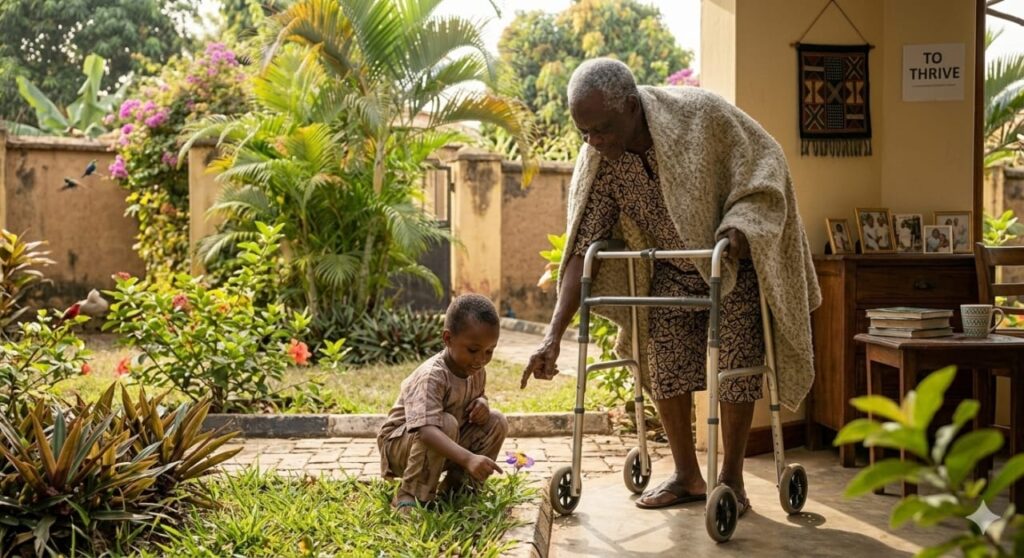
When the visit ended and the children lined up to leave, that little boy turned back and waved. My mother waved back. And then she smiled, a real smile, the first I’d seen in months.
That moment was my introduction to the power of incorporating intergenerational programming in nursing homes. What I’ve learned since is that these programs aren’t just nice diversions. They are therapeutic interventions that benefit everyone involved in ways that medication cannot replicate.
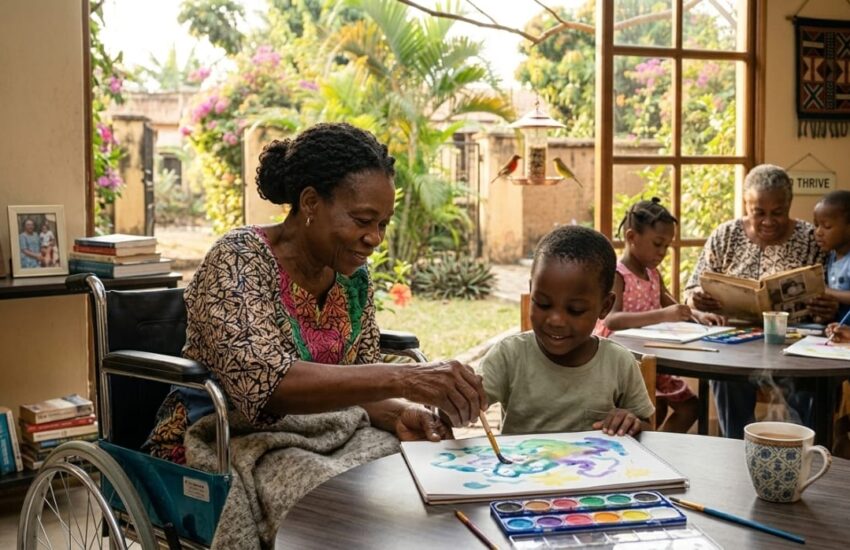
Let me start with what intergenerational programming actually looks like. It’s not just occasional visits from polite school groups singing songs. The best programs are integrated, regular, and meaningful. Children and residents engage in activities together, reading, art, music, gardening, cooking, simple games. They build relationships over time, not just once. They come to know each other as individuals, not as “the residents” or “the kids.”
The benefits for residents are profound and well-documented. Social isolation is one of the greatest threats to nursing home residents’ well-being. Depression is rampant. Meaning and purpose often feel lost. Children cut through all of that. They don’t care about diagnoses or disabilities. They don’t see wheelchairs and oxygen tubes. They see people. And that unconditional acceptance is healing in ways that are hard to quantify but impossible to miss.
For residents with dementia, the effects can be particularly striking. Children operate in the present moment, which is exactly where dementia residents live. A child doesn’t demand that you remember yesterday or plan for tomorrow. They just want to be with you now. This alignment creates connections that bypass the damaged parts of the brain and speak directly to the emotional core that remains intact long after memory fails.
I watched a resident with advanced dementia, a woman who rarely spoke and seemed lost in her own world, light up when a little girl brought her a dandelion. She took that weed like it was a bouquet of roses. She held it carefully, looked at it, smelled it, and then handed it back with a smile. For that moment, she was present, connected, alive. No medication could have done that.
The children benefit too, in ways that may last a lifetime. They learn that old age is not something to fear or avoid. They develop empathy for people who are different from them. They absorb comfort with disability, with frailty, with the realities of aging. They gain grandparents they might not otherwise have, especially children whose own grandparents live far away or are no longer living. These relationships shape how they see the world and their place in it.
One little boy, maybe five, became devoted to a resident named George who used a wheelchair and had limited speech. The boy would find George every visit, show him things, tell him stories, just sit with him. George’s face, usually blank, would animate when that child appeared. When George died, the staff worried about telling the boy. But his mother handled it beautifully, explaining that George had been very old and very sick and that the boy had made his last months happier. The boy seemed to understand. He drew a picture and asked them to put it in George’s room, wherever George was now. That’s not trauma; that’s education in love and loss, delivered gently, at the right time.
For staff, intergenerational programming brings energy and joy to their work. Nursing home work is hard, physically demanding, emotionally draining, often underappreciated. Watching children interact with residents reminds everyone why this work matters. It lifts the whole atmosphere. Staff smile more. They tell stories about the visits. They feel part of something larger than the daily tasks.
Families benefit too. Visiting a nursing home can be heavy, sad, guilt-laden. Walking in and seeing your loved one engaged with a child, laughing, present, that lightens the load. It gives families something positive to hold onto, a bright spot in an otherwise difficult journey. I know it did for me.
Implementing these programs takes intention and resources. It means partnering with schools or daycare centers that are willing and able to visit regularly. It means training staff on both sides, nursing home staff need to understand child development and safety, childcare staff need to understand aging and dementia. It means creating spaces and activities that work for both populations. It means managing logistics like transportation, schedules, and health precautions.
But the facilities that do it well say the benefits far outweigh the challenges. They report reduced agitation and depression among residents. They report higher staff morale. They report families who are more engaged and satisfied. They report a community that feels more like home and less like an institution.
Some programs go beyond visiting. The best ones integrate intergenerational contact into daily life. Shared gardens where children and residents plant together. Shared mealtimes where they eat together. Shared celebrations for holidays and birthdays. When the boundary between “us” and “them” dissolves, everyone belongs.
During the pandemic, when many of these programs had to pause, the absence was palpable. Residents who had thrived on children’s visits became withdrawn. Staff noticed the quiet, the flatness, the missing spark. Everyone counted the days until the children could return. When they finally did, months later, the joy was overwhelming. Residents who hadn’t smiled in weeks lit up. The building felt alive again.
If you’re involved with a nursing home, as a family member, a professional, or a community member, consider what intergenerational programming could look like. Maybe it starts small: a story hour once a month. Maybe it grows into something more. The key is consistency and genuine connection, not performance.
My mother died two years after that first visit from the little boy who held her hand. In her final months, the children kept coming. She couldn’t talk to them anymore, but she watched them. Her eyes followed their movement. Sometimes she reached out, and sometimes a child reached back. Those moments were not sad. They were full.
I think about that little boy sometimes, now probably eight or nine years old. I wonder if he remembers my mother. I wonder if he knows what he gave her, not just that day, but every day he showed up and saw her, really saw her, as a person worth sitting with. I hope someone tells him someday that he mattered. That he was part of something beautiful.
Incorporating intergenerational programming in nursing homes isn’t just a nice idea. It’s a recognition that human beings need each other across all ages. That connection doesn’t stop when you enter a facility. That children and elders have something to give each other that no one else can. That joy is possible, even at the end, even in the hardest places.
There’s so much more to learn about creating vibrant communities within nursing homes. Our website is filled with resources on programming, staff development, and family engagement. Head over and explore, because every resident deserves a life that includes laughter, connection, and the occasional visit from a child who sees only the person, not the patient.
References
Krzeczkowska, A., Callaghan, J. E., & Stapley, S. (2024). Intergenerational programs may be especially engaging for aged care residents with cognitive impairment. *Australasian Journal on Ageing*, *43*(2), 285–293. https://doi.org/10.1111/ajag.13278
Pillemer, K., Filippini, D., & Robison, J. (2024). A pilot study of an intergenerational program for people in residential aged care with cognitive impairment. *Australasian Journal on Ageing*, *43*(3), 456–463. https://doi.org/10.1111/ajag.13300
Teater, B., & Zimmerman, J. (2022). The delivery of intergenerational programmes in the nursing home setting and impact on adolescents and older adults: A mixed studies systematic review. *Health & Social Care in the Community*, *30*(6), 1843–1860. https://doi.org/10.1111/hsc.13845
Sheridan College. (2024, March 31). *Intergenerational programming in long-term care homes*. https://source.sheridancollege.ca/swfahcs_projects_social_community_development_poster/14/
University of North Dakota. (2024). *An intergenerational program approach to support successful aging and decrease social isolation in nursing home residents* [Capstone project]. https://commons.und.edu/ot-grad/626/