
 Posted by
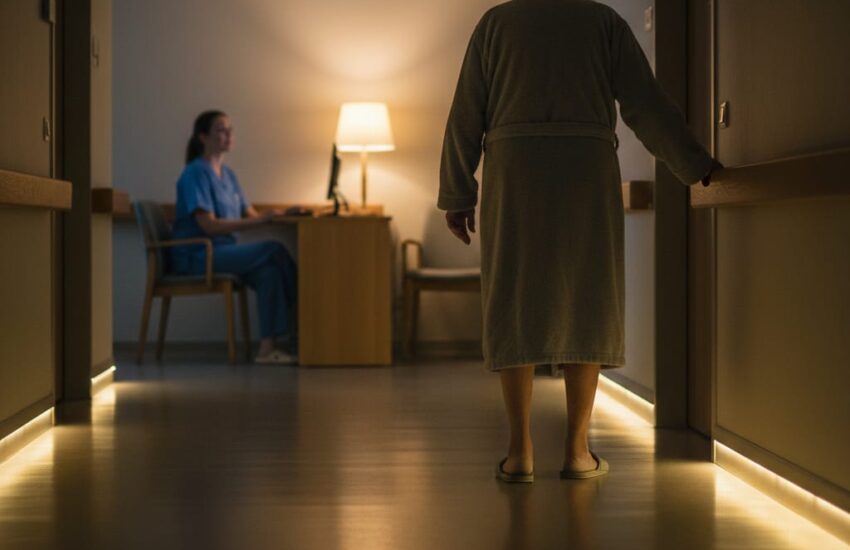
 The phone rang at 2:47 AM. I knew before I answered that it was the nursing home. You develop a sixth sense for these calls after a while, a dread that sits in your chest whenever the phone rings outside normal hours. My father had fallen. He was okay, they rushed to assure me, just a bruise, just a scare, just another reminder that gravity is merciless when you’re eighty-seven and your legs stopped trusting you years ago.
I hung up, heart pounding, and lay awake until dawn asking myself the same question: How does this keep happening? The answer, I learned, is complicated. But the most important thing I discovered in the months that followed was this: falls in nursing homes are not inevitable.
They are not simply the price of aging. With the right approach, an evidence-based falls prevention program, most falls can be prevented. And the difference between a facility that prevents falls, and one that just responds to them is literally the difference between life and death.
Let me start with the scope of the problem, because I had no idea until I started researching. According to the Centers for Disease Control, about three-quarters of nursing home residents fall each year. That’s not a small number. That’s nearly everyone.
And falls are the leading cause of both fatal and non-fatal injuries among older adults. A single fall can mean a broken hip, a traumatic brain injury, a cascade of decline that ends with a hospital stay the resident never fully recovers from.
But here’s what the facilities that do this well understand: falls are rarely random events. They are the predictable result of identifiable risk factors. And when you systematically address those risk factors, you systematically reduce falls.
Implementing an evidence-based falls prevention program in nursing homes starts with one deceptively simple step: knowing who is at risk. Not guessing, not assuming, but using validated assessment tools to evaluate every single resident upon admission and at regular intervals thereafter.
These tools look at the history of falls, medications that increase fall risk, mobility and gait problems, cognitive impairment, incontinence, and a dozen other factors that stack the deck against safety. When my father’s facility finally got serious about falls prevention, they started with this assessment.
They discovered things about him that we, his family, hadn’t fully connected to his falls. His blood pressure medication, which he’d taken for years, was dropping his pressure too low when he stood up quickly. His new sleeping aid left him groggy and disoriented when he got up to use the bathroom at night.
The slight shuffle in his walk, which we’d dismissed as just getting older, was actually a neurological change that needed attention. Once you know the risks, you can address them. This is where evidence-based programs shine. They don’t rely on one intervention, there’s no magic bullet, but on a bundle of strategies tailored to each resident.
For my father, that meant a medication review that led to changes in both the type and timing of his drugs. It meant a physical therapy referral to strengthen his legs and improve his balance. It meant new footwear with nonslip soles and a bedside commode so he didn’t have to navigate the dark hallway to the bathroom at night. It meant staff actually checking on him hourly during his highest-risk periods.
None of these interventions was revolutionary on its own. Together, they were transformative.
But individual interventions only work if the environment supports them. Implementing an evidence-based falls prevention program in nursing homes also requires a hard look at the physical space. Are hallways clear of clutter? Are floors nonslip, even when wet? Is lighting adequate, especially during night hours? Are bed rails used appropriately, they can actually increase injury risk in some cases, and are beds at the right height for safe transfers?
I walked through my father’s facility with the director of nursing after they revamped their program, and I saw details I’d never noticed before. The way the bathroom door swung open, creating an obstacle. The slight lip on the threshold to the shower. The placement of the call light, just out of easy reach for someone with limited mobility. These weren’t failures of care; they were failures of design. And once identified, they were fixable.
Staff training is another essential piece. A program is only as good as the people implementing it, and in nursing homes, that means everyone, not just nurses, but aides, housekeepers, activities staff, even volunteers. Everyone needs to understand fall risk factors, know how to identify residents at high risk, and feel empowered to act when they see something unsafe. The best programs create a culture where safety is everyone’s responsibility, where speaking up is encouraged, and where small concerns are addressed before they become big incidents.
I saw this culture shift in my father’s facility. A housekeeper noticed that a new resident was trying to stand up from a low sofa in the common area, struggling to get leverage. She mentioned it to a nurse, who assessed the situation and arranged for a higher, firmer chair to be moved into the space. That’s prevention in action, not glamorous, not dramatic, but effective.
Technology can help, too. Bed and chair alarms alert staff when a high-risk resident is getting up without assistance. Motion sensors can trigger lights along the path to the bathroom. Wearable devices can detect falls and automatically alert staff. But technology is a tool, not a solution. It works best when integrated into a comprehensive program, not used as a substitute for human attention.
Perhaps the most important lesson I learned is that falls prevention is not a one-time fix. It’s an ongoing process. Risks change as residents change. A new medication, a recent illness, a decline in cognition, all of these can alter the fall risk equation. The best programs reassess regularly, adjust interventions as needed, and never assume that what worked yesterday will work today.
After my father’s 2:47 AM fall, the facility didn’t just treat his bruise and move on. They did a root cause analysis. They looked at what happened, why it happened, and what could be done differently. They adjusted his care plan. They added a night check specifically for him. They involved our family in the conversation, asking us what we noticed during visits, what concerns we had. For the first time, I felt like we were partners in his safety, not just passive recipients of whatever care happened to be provided.
He never fell again. Not once in the two years he remained there.
If you have a loved one in a nursing home, or if you’re considering placement, ask about falls prevention. Ask to see their data, how many falls, how many injuries, how they compare to state and national averages. Ask about their assessment process, their interventions, their staff training. Ask how they involve families. Ask what happens after a fall, not just in the moment but in the days and weeks that follow. The answers will tell you everything about the facility’s commitment to safety.
Falls are not inevitable. They are preventable. And the facilities that do prevention well aren’t just protecting residents from injury. They’re protecting their dignity, their independence, and their lives. My father’s 2:47 AM fall was terrifying, but it was also a turning point. It forced a conversation, sparked a change, and ultimately made his final years safer than they would have been otherwise.
If you’re navigating this journey yourself, know that you have the power to ask for better, to advocate for evidence-based care, and to demand that the people you love are protected from harm. There’s so much more to learn about keeping our elders safe, and if you’re hungry for that knowledge, our website is filled with articles just like this one, practical, compassionate, and grounded in real experience. Head over and explore; the more we know, the better we can advocate for the people who matter most.
References
Schoberer, D., et al. (2022). *Fall prevention in hospitals and nursing homes: Clinical practice guideline*. *Worldviews on Evidence-Based Nursing, 19*(4), 317–326. https://doi.org/10.1111/wvn.12571
Montero-Odasso, M., et al. (2022). *World guidelines for falls prevention and management for older adults: A global initiative*. *Age and Ageing, 51*(9), afac205. https://doi.org/10.1093/ageing/afac205
National Council on Aging. (2023, November 30). *Evidence-based falls prevention programs for older adults*. Retrieved from https://www.ncoa.org/article/evidence-based-falls-prevention-programs/
Lee, I.-H., et al. (2025). *Fall risk assessment and prevention strategies in nursing homes: A narrative review*. *Journal of Clinical Medicine, 14*(3), Article 551. https://doi.org/10.3390/jcm14030551
Agency for Healthcare Research and Quality. (n.d.). *The Falls Management Program: A quality improvement initiative for nursing facilities*. Retrieved from https://www.ahrq.gov/patient-safety/settings/long-term-care/resource/injuries/fallspx.html