
 Posted by
 Discover how telehealth improves healthcare access in nursing homes. Learn about virtual specialist consults, remote monitoring, and enhanced infection control for better resident outcomes.
Imagine a 90-year-old nursing home resident with complex heart failure. A decade ago, a routine specialist appointment meant a grueling half-day ordeal: coordinating ambulance transport, bundling the anxious resident for travel, and risking exposure to hospital germs, all for a 15-minute consultation.
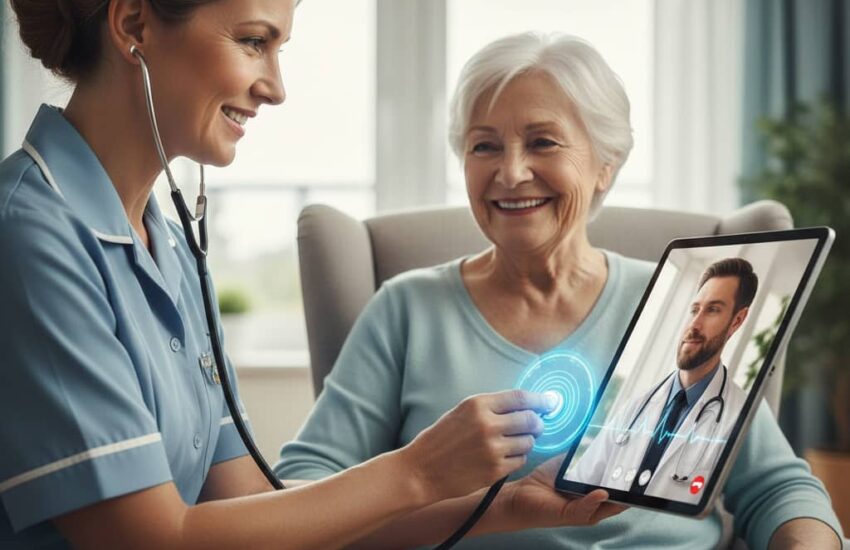
Today, that same resident can have a comprehensive, face-to-face visit with a cardiologist without ever leaving her comfortable chair. This is the promise of telehealth realized, not as a futuristic concept, but as a practical, transformative tool that is fundamentally reshaping the delivery of care in nursing homes, enhancing quality, safety, and dignity for our most vulnerable seniors.
The most immediate and powerful application of telehealth in nursing homes is bridging the specialist gap. Rural and suburban facilities often struggle with limited access to neurologists, psychiatrists, wound care specialists, and geriatricians. Telehealth erases these geographic barriers.
Using secure, HIPAA-compliant video platforms, a resident can consult with a specialist hundreds of miles away. The facility nurse is present to facilitate the exam, using peripheral devices like digital stethoscopes, high-resolution cameras for skin inspections, and otoscopes that can be guided remotely by the doctor.
This not only improves clinical outcomes through timely expert intervention but also eliminates the physical and emotional trauma of unnecessary transfers. For behavioral health, where shortages are acute, regular virtual psychiatry and therapy sessions can stabilize moods and reduce the inappropriate use of antipsychotic medications, a persistent challenge in long-term care.
Beyond scheduled consults, telehealth enables proactive remote patient monitoring, shifting care from reactive to predictive. Wearable devices and in-room sensors can continuously track a resident’s vital signs, sleep patterns, mobility, and even subtle weight changes.
This data stream creates a sophisticated baseline for each individual. Algorithms can flag early deviations, a slight uptick in heart rate, a change in respiratory rhythm, reduced movement, that may signal an impending urinary tract infection, heart failure exacerbation, or fall risk.
The nursing team receives an alert, allowing them to intervene before a minor issue becomes a crisis requiring hospitalization. This model of continuous, data-driven vigilance is a quantum leap beyond traditional spot-check vital signs, empowering staff to practice truly preventative medicine.

The infection control benefits of telehealth, starkly highlighted during the COVID-19 pandemic, remain a critical advantage. Minimizing external exposure is paramount in congregate settings. Every outside medical trip poses a risk of bringing pathogens back into the facility.
Telehealth eliminates this vector for both residents and staff. Furthermore, when a resident shows signs of a contagious illness, an on-demand virtual visit with a physician or advanced practice provider can lead to a rapid diagnosis and treatment plan without exposing others in a clinic waiting room. This capability is essential for effective outbreak management, allowing for swift isolation and treatment while keeping the resident in their familiar environment.
Successful implementation requires more than just technology; it demands workflow integration and staff empowerment. The nursing staff are the essential on-the-ground partners. They must be trained not just to operate the equipment, but to become adept at facilitating a virtual exam, positioning cameras, and communicating clinical observations effectively to the remote provider.
The technology must be user-friendly and reliable, integrated into the facility’s electronic health records to avoid double documentation. Perhaps most importantly, leadership must foster a culture where telehealth is viewed as a tool that augments and supports the care team, not as a replacement for human touch.
When seamlessly woven into daily operations, telehealth becomes a force multiplier. It allows nurses to spend less time on logistical coordination and more time on direct, hands-on care, while ensuring every resident has immediate access to the specialized medical expertise they need and deserve.
References
Centers for Medicare & Medicaid Services. (2020). *COVID-19 nursing home telehealth toolkit*. U.S. Department of Health and Human Services. Retrieved from https://www.cms.gov/files/document/covid-19-nursing-home-telehealth-toolkit.pdf
Rural Health Information Hub. (2025, December 2). *Implementation considerations for telehealth programs serving older adults*. Retrieved from https://www.ruralhealthinfo.org/toolkits/telehealth/4/specific-populations/older-adults
Prelude Services. (2025, July 10). *How to provide telehealth in nursing homes*. Retrieved from https://www.preludeservices.com/blog/how-to-provide-telehealth-in-nursing-homes/
MedBridge. (2025, February 13). *6 steps for implementing telehealth practice for skilled nursing facilities*. Retrieved from https://www.medbridge.com/blog/6-steps-for-implementing-telehealth-practice-for-skilled-nursing-facilities
American Medical Association. (2026, January 1). *Telehealth implementation playbook: Planning*. Retrieved from https://www.ama-assn.org/practice-management/digital-health/telehealth-implementation-playbook-planning