
 Posted by
 Discover why regular, adapted exercise is crucial for seniors in nursing homes. Learn how physical activity improves mobility, mood, cognition, and overall quality of life. The image of exercise in a nursing home might seem limited, perhaps a few gentle arm raises from a chair. But the reality of a well-designed program is far more dynamic and profoundly impactful. Physical activity is not an optional add-on to care; it is a core component of comprehensive well-being for aging adults. In an environment where the risks of sedentary life are amplified, muscle wasting, falls, isolation, and depression, regular, adapted exercise serves as a powerful countermeasure. It is a catalyst that transforms passive care into active living, fostering independence, igniting social connection, and protecting both physical and cognitive health.
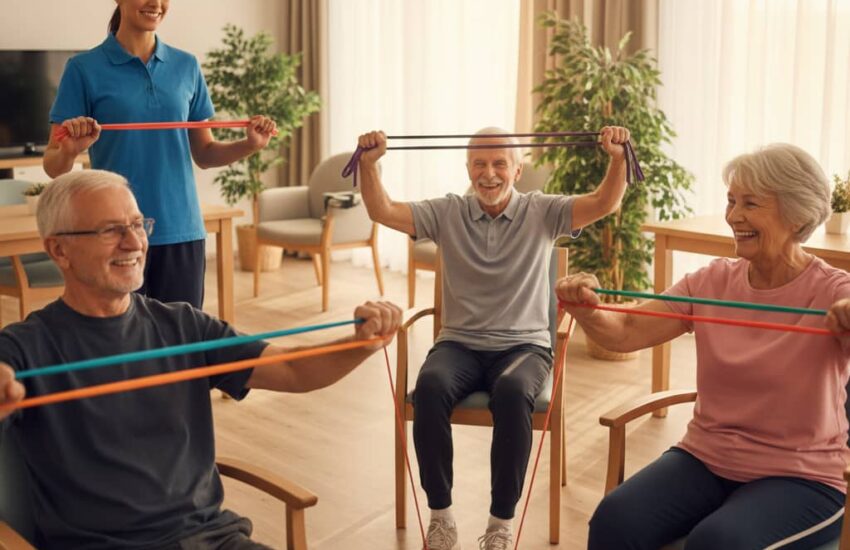
The most immediate and visible benefits of exercise are physical. A targeted program combats the natural sarcopenia, or loss of muscle mass and strength, that comes with age and inactivity. Simple resistance exercises using bands or light weights help residents maintain the strength needed for essential daily tasks: rising from a chair, walking to the dining hall, or getting in and out of bed. This preserved strength is the primary defense against falls, the leading cause of injury among seniors. Furthermore, activities that improve balance, like tai chi or seated yoga, and those that maintain joint flexibility are critical for safe, confident mobility. This physical empowerment directly translates to greater independence and a reduced reliance on staff for basic movements, preserving dignity and self-efficacy.
The key to success is adaptation and inclusivity. An effective exercise program in a nursing home is not one-size-fits-all. It must be tailored to a vast range of abilities, from those who are ambulatory to those who are bedbound. A comprehensive regimen might include chair aerobics for cardiovascular health, gentle stretching for flexibility, supervised standing exercises for balance, and even virtual reality experiences that encourage reaching and turning. The focus is on ability, not disability. It’s about what each resident *can* do and building from there. Staff encouragement and participation are essential, transforming the activity from a clinical task into an engaging, social event that residents look forward to.
Ultimately, integrating regular exercise into nursing home culture is an investment in a higher quality of life. It shifts the paradigm from merely preventing decline to actively promoting vitality. When residents feel stronger, more balanced, and socially connected, their entire outlook improves. They are more likely to engage in other activities, interact with others, and experience moments of genuine joy. Exercise is not just about adding years to life, but about adding life to years. By prioritizing movement, nursing homes do more than provide care; they champion resilience, empower residents, and create an environment where every individual has the opportunity to thrive.
References
Centers for Disease Control and Prevention. (2024, November 6). *Physical activity benefits for adults 65 or older*. U.S. Department of Health and Human Services. Retrieved from https://www.cdc.gov/physical-activity-basics/health-benefits/older-adults.html
de Labra, C., Guimaraes-Pinheiro, C., Maseda, A., Lorenzo, T., & Millán-Calenti, J. C. (2015). Effects of physical exercise interventions in frail older adults: A systematic review of randomized controlled trials. *BMC Geriatrics, 15*, Article 154. https://doi.org/10.1186/s12877-015-0155-4(Referenced in taskforce guidelines for long-term care)
Ministry of Health. (2013). *Guidelines on physical activity for older people (aged 65 years and over)*. Government of New Zealand. Retrieved from https://www.health.govt.nz/system/files/2013-01/guidelines-on-physical-activity-older-people-jan13-v3.pdf
National Health Service. (2025, February 25). *Physical activity guidelines for older adults*. Retrieved from https://www.nhs.uk/live-well/exercise/physical-activity-guidelines-older-adults/
Franco, M. R., Tong, A., Howard, K., Sherrington, C., Ferreira, P. H., Pinto, R. Z., & Mehta, P. (2016). Older people’s perspectives on participation in physical activity: A systematic review and thematic synthesis of qualitative literature. *British Journal of Sports Medicine, 50*(16), 944-953. https://doi.org/10.1136/bjsports-2015-095459(Applied to nursing home contexts)