
 Posted by
 My brother Mark was twenty-eight when the accident happened. A construction worker, young and strong, the kind of guy who could fix anything and never sat still. He fell from a ladder, just twelve feet, not even that high, but he landed wrong. Traumatic brain injury, the doctors said. Severe. They didn’t know if he’d wake up, and if he did, they didn’t know who would be there.
He woke up. But the brother who came back was not the brother who fell. He could walk again, eventually, with a cane and a limp. He could talk, though the words came slower and sometimes got lost on the way from brain to mouth. His memory was patchy, his impulse control unreliable, his emotions unpredictable. He couldn’t work, couldn’t live alone, couldn’t return to any version of the life he’d had.
When he was stable enough for discharge, the hospital social worker started talking about nursing homes. I recoiled. Nursing homes were for old people, for the end of life, not for my thirty-year-old brother with his whole future stolen. But we had no choice. He needed round-the-clock supervision, help with medications, therapy, structure. We couldn’t provide that at home. So into a nursing home he went.
What followed was an education I never wanted but desperately needed about providing care for residents with traumatic brain injuries in nursing homes, and about how most facilities are utterly unprepared for this population.

Lets begin with the fundamental problem: nursing homes are designed for the frail elderly, not for brain injury survivors. The average resident is eighty-five, declining gradually, with predictable needs. Mark was thirty, physically strong, cognitively impaired, and prone to behaviors that the staff had never seen. He wandered. He got angry. He made inappropriate comments to female residents. He tried to leave constantly. The staff, who were excellent with dementia patients, had no idea how to handle a young man whose brain injury made him act out in completely different ways.
The first year was a disaster. Mark was overmedicated to control his behavior, which left him sedated and depressed. He was isolated because he frightened other residents. He had no meaningful activities because the facility’s programming assumed residents wanted bingo and sing-alongs, not the active engagement a young person needs. He deteriorated, not physically, but in every other way. He lost hope.
That’s when I started researching what proper care for TBI survivors should look like. I learned that providing care for residents with traumatic brain injuries requires a fundamentally different approach, one that most nursing homes are not equipped to provide without significant training and commitment.
The first essential element is understanding the brain injury itself. TBI is not dementia. It’s not a progressive decline; it’s a static injury with which the person must learn to live. The brain can rewire itself to some extent, neuroplasticity, it’s called, but only with the right stimulation and support. Residents need therapies that challenge them, not just maintain them.
They need speech therapy that focuses on cognitive communication, not just swallowing. They need physical therapy that builds strength and coordination, not just maintains mobility. They need occupational therapy that helps them relearn the skills of daily living, cooking, cleaning, managing money, not just basic self-care.
Mark’s facility had therapists, but they were spread thin and focused on the general population. Getting him the intensive, specialized therapy he needed required constant advocacy. I learned to push for more sessions, for different approaches, for therapists who understood brain injury specifically. When I found a speech therapist who had experience with TBI, I requested her specifically and fought to keep her on his caseload.
Behavioral management is another critical piece. TBI survivors often have what’s called frontal lobe damage, the part of the brain that controls impulse, judgment, and emotional regulation. Mark wasn’t being difficult on purpose; his brain literally couldn’t inhibit inappropriate responses. Punishing him didn’t work; it just made him more confused and angry. What worked was structure, predictability, and redirection. Staff needed training in de-escalation techniques, in understanding that his behavior was symptom, not choice. They needed to respond with calm consistency, not frustration.
The environment matters enormously. Traditional nursing homes are often chaotic, noisy, and overstimulating, the worst possible setting for someone with brain injury. Mark needed calm, predictable spaces where he could retreat when overwhelmed. He needed clear routines posted visually. He needed staff who would remind him gently of the schedule instead of expecting him to remember. He needed outdoor access where he could walk off restless energy safely.
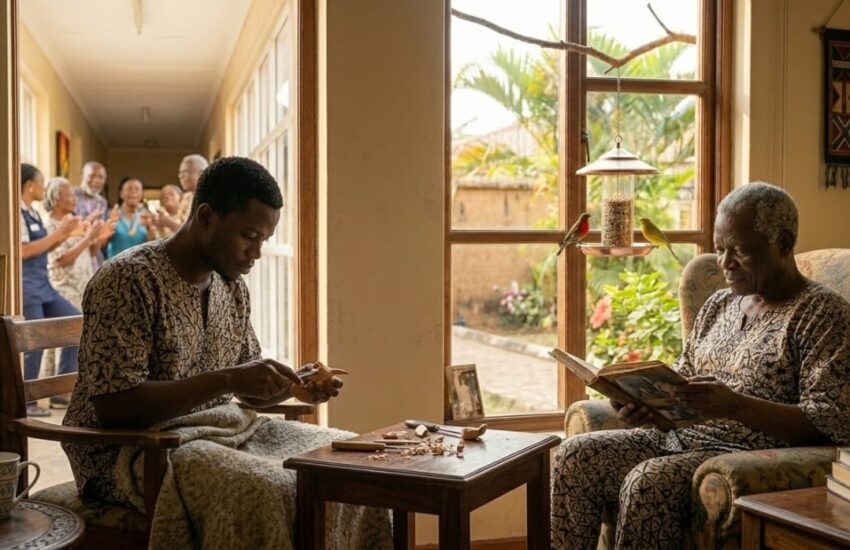
Activities are not optional for TBI survivors; they’re essential. Without meaningful engagement, residents deteriorate cognitively and emotionally. But the activities can’t be generic. Mark needed things that matched his age and interests, sports on TV, simple woodworking projects, current events discussions, outings to community events when possible. I worked with the activities director to create options that would engage him, and I recruited volunteers, friends, young people, anyone, to spend time with him doing things he enjoyed.
Family involvement is perhaps the most important factor in quality of life. I visited constantly, not just to monitor care but to be his connection to who he’d been. I brought photos, told stories, reminded him of his life before. I advocated at every care conference, built relationships with every aide, and made myself a presence the staff couldn’t ignore. When families are visible and engaged, care improves. It’s not fair, but it’s true.
Social connection with other TBI survivors is invaluable if it can be arranged. Mark was isolated among the elderly, but when we found one other younger resident with brain injury, something shifted. They couldn’t have deep conversations, but they could watch games together, share a meal, exist in the same space without judgment. That small connection reduced his loneliness enormously.
Over time, with better care, Mark stabilized. He never returned to who he’d been, that person was gone forever. But he found a new version of himself, someone who could experience moments of peace, even joy. He developed a relationship with a kind aide who treated him like a person, not a problem. He looked forward to my visits and remembered them afterward. He laughed sometimes, genuinely laughed. It wasn’t the life anyone wanted for him, but it was a life.
The nursing home learned from him too. By the time he’d been there three years, the staff had developed expertise in TBI care they hadn’t had before. They trained new hires differently. They adjusted their approach to other residents with similar needs. Mark, in his difficult way, had been a teacher.
If you have a loved one with TBI entering a nursing home, here’s what I want you to know. First, visit constantly. Your presence is advocacy, connection, and accountability all at once. Second, educate yourself about brain injury so you can educate the staff. Bring articles, ask questions, request specific approaches. Third, build relationships with every level of staff, aides especially, because they provide the most direct care. Fourth, push for appropriate therapy and activities.
Don’t accept “this is how we do things here” as an answer. Fifth, look for opportunities to connect your loved one with other TBI survivors, even if it means reaching beyond the facility. And finally, take care of yourself. Loving someone with brain injury is a marathon, not a sprint. The grief is real and ongoing. Find support for yourself so you can keep showing up for them.
My brother died five years after his accident, not from the brain injury directly, but from complications that his compromised body couldn’t fight. I held his hand at the end, just as I had at the beginning. And I was grateful, despite everything, for the years we’d had. They were hard years, but they were his years. He deserved to live them with dignity, and eventually, with the right care, he did.
There’s so much more to learn about supporting people with brain injury and other complex conditions in long-term care. Our website is filled with resources on advocacy, specialized care, and family support. Head over and explore, because every resident deserves care that sees them fully.
References
National Academies of Sciences, Engineering, and Medicine. (2022). *Rehabilitation and long-term care needs after traumatic brain injury*. National Academies Press. https://www.ncbi.nlm.nih.gov/books/NBK580075/
Nebraska Department of Health and Human Services. (2023). *Supported residential living and assisted living service handbook: Traumatic brain injury (TBI) waiver services*. https://dhhs.ne.gov/DD%20Documents/TBI%20Supported%20Residential%20Living%20and%20AD%20Assisted%20Living%20Service%20Handbook.pdf
North Carolina Department of Health and Human Services. (2023). *North Carolina state action plan for people with traumatic brain injury*. https://www.ncdhhs.gov/tbistateactionplan2023final-1/download
Tompary, A., Tinetti, M. E., & Ouellet, J. (2023). Traumatic brain injury and risk of long-term nursing home entry among older adults. *Journal of the American Geriatrics Society*, 71(4), 1200–1210. https://pmc.ncbi.nlm.nih.gov/articles/PMC10162579/
Whyte, J., Nakase-Richardson, R., & Arenth, P. M. (2008). The population of patients with traumatic brain injury (TBI) in rehabilitation and nursing home settings. *NeuroRehabilitation*, 23(3), 201–207. https://pmc.ncbi.nlm.nih.gov/articles/PMC6274633/
Spaulding Rehabilitation Network. (2024, September 14). *Brain injury rehabilitation* (including long-term acute care and post-acute services). https://spauldingrehab.org/conditions-services/brain-injury