
 Posted by
 Fire safety takes on a special urgency for seniors living at home. Physical limitations, medications, and the natural aging process can make responding to a fire more challenging. A few simple precautions, however, can dramatically reduce risk and provide life-saving seconds during an emergency. Protect yourself or your loved ones with these crucial fire safety tips for seniors. Learn about prevention, preparation, and emergency planning for older adults living independently. The goal is not to live in fear, but to live with confidence, knowing that you have created a safe environment and a clear plan.
Prevention is the most powerful tool. The kitchen is a primary area of concern. Never leave cooking unattended on the stovetop. If you must leave the kitchen, turn off the burner. Keep flammable items like oven mitts, wooden utensils, and paper towels well away from the heat source. For those with memory concerns, consider using automatic shut-off devices for stoves and kettles. Throughout the home, be mindful of electrical safety. Do not overload outlets and check cords regularly for fraying or damage. Space heaters need space; keep them at least three feet away from anything that can burn, including curtains, furniture, and bedding, and always turn them off when leaving the room or going to sleep. If you smoke, do so outside, and use deep, sturdy ashtrays. Never smoke in bed or when you are feeling drowsy.
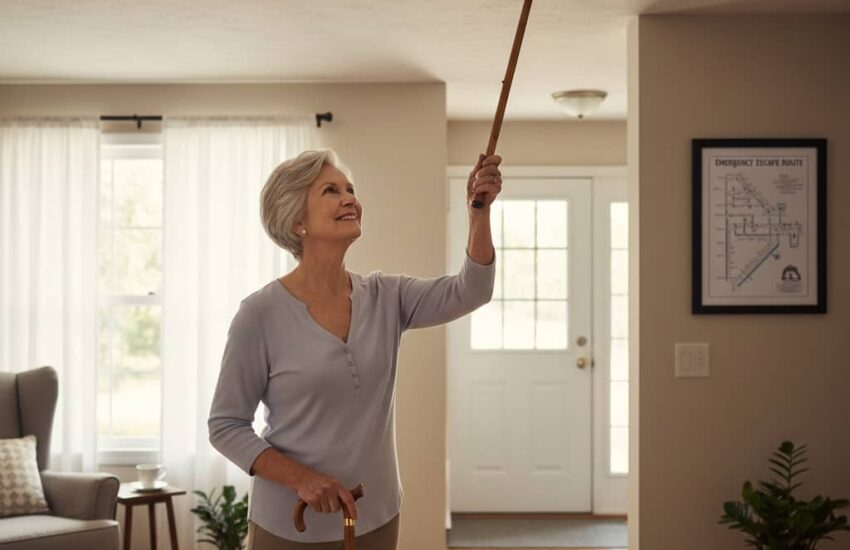
Early warning is critical, making working smoke alarms your first line of defense. Install smoke alarms in every bedroom, outside each sleeping area, and on every level of your home, including the basement. Test them monthly by pressing the test button to ensure they are functioning. The piercing sound can be uncomfortable, but it is a sound that saves lives. Replace the batteries at least once a year, a task a family member, caregiver, or neighbor can easily assist with if it is difficult for you. If your alarms are more than ten years old, replace the entire unit. For those who are deaf or hard of hearing, invest in alarms that use strobe lights and bed shakers in addition to a loud alarm.
Preparation goes beyond prevention. Every household needs a well-practiced escape plan. Identify two ways out of every room, usually a door and a window. Ensure all exits are clear of clutter and that windows can be opened easily. If you use a walker or wheelchair, check that all escape paths are wide enough to navigate quickly. Practice your escape plan twice a year, both during the day and at night. Decide on a safe meeting place a safe distance outside your home, such as a neighbor’s driveway or a specific tree. This allows you to account for everyone and tell firefighters that people are safe. Keep a phone, your eyeglasses, and a flashlight near your bed at night. In an emergency, you may have only seconds to grab these essential items before you escape.
Finally, consider your unique needs. If you have mobility issues, a phone in your bedroom is essential for calling for help. Speak with your family, building manager, or local fire department about your capabilities. They can help you plan for the best ways to stay safe. Many fire departments offer home safety assessments and can even help install smoke alarms. Being proactive about fire safety is an act of self-care and independence. By taking these steps, you are not just preventing a disaster; you are ensuring that if one occurs, you have the knowledge and tools to respond effectively, protecting the home you have worked so hard to create.
References
Karemaker, M. (2021). Elderly about home fire safety: A qualitative study into behaviors and underlying determinants. *Safety Science*, 140, 105267. https://doi.org/10.1016/j.ssci.2021.105267
Tawfik, E. H. (2019). The effect of a home fire safety program on knowledge and practices of older adults. *Egyptian Journal of Health Care*, 10(1), 114-124. https://ejhc.journals.ekb.eg/article_267726_94760e5e705ecb2748478c44a11057d2.pdf
National Fire Protection Association. (2025). Safety tips for older adults. Retrieved from https://www.nfpa.org/education-and-research/home-fire-safety/older-adults
Cassidy, P. (2021). The older adult: Associated fire risks and current prevention initiatives. *Fire Technology*, 57(3), 1349-1365. https://doi.org/10.1007/s10694-021-01107-z
Karel, M. J., Mitchell, S. L., & Carey, T. S. (2025). Fire risk and safety for people living with dementia at home. *Journal of Geriatric Psychiatry*, 13(6), 712-719. https://www.ncbi.nlm.nih.gov/pmc/articles/PMC12171083/