
 Posted by
 I thought I could do it all. I was organized, patient, and determined. I read every book on Alzheimer’s disease. I attended caregiver workshops. I rearranged my life around my mother’s needs. I was proud of how well I was managing. Then I found myself crying in the pantry, hiding from my mother, who had asked me the same question five times in five minutes. I was not managing. I was drowning. I realized that I needed to ask for help. That realization saved both of us.
Caring for a loved one with Alzheimer’s disease at home is one of the most demanding roles a person can take on. The disease is progressive and unpredictable. It affects memory, behavior, personality, and physical function. It requires constant vigilance and patience. Trying to do it alone leads to burnout, depression, and health problems for the caregiver. It also compromises the quality of care for the person with Alzheimer’s. Support is not a luxury. It is a necessity.
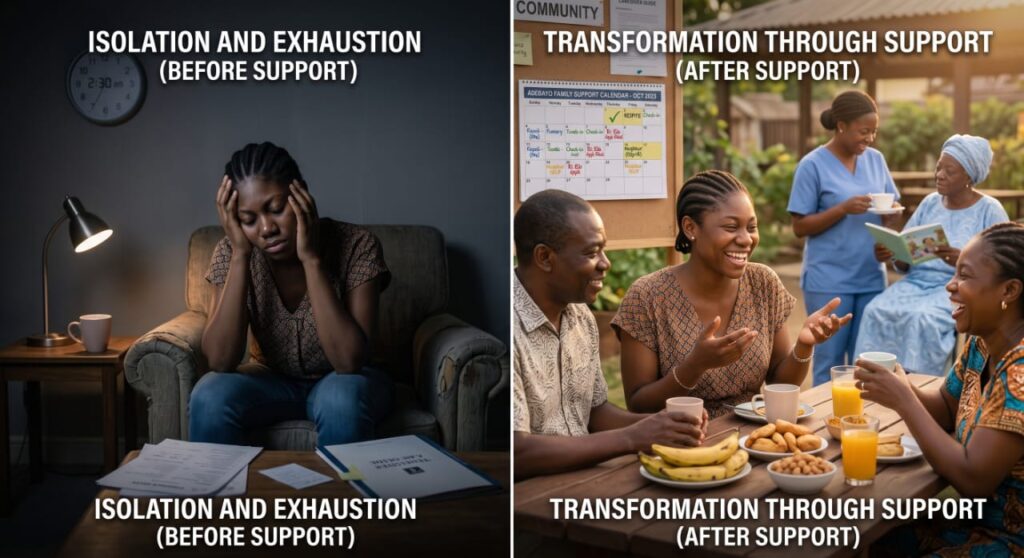
The first source of support I found was the Alzheimer’s Association. Their 24/7 helpline connected me with a trained specialist who listened without judgment and provided practical advice. They helped me understand what to expect as the disease progressed. They connected me with local resources I did not know existed. They also offered support groups, both in-person and online. Sitting in a room with other caregivers who understood what I was going through was a relief. I was no longer alone.
The second source was respite care. I learned that respite care provides short-term relief for primary caregivers. It can be arranged for just a few hours or for several days. I was reluctant to leave my mother with anyone else. I worried that no one could care for her as well as I could. But I was exhausted, and I was becoming resentful. Respite care gave me permission to rest, to see friends, to sleep. When I returned, I was a better caregiver. I found respite care through a local agency that specialized in dementia care. They sent a trained companion who engaged my mother in activities she enjoyed. My mother did not even notice I was gone, and I came back renewed.
The third source was adult day programs. These programs provide structured activities and socialization for people with dementia in a safe environment. They also give caregivers a break during the day. I enrolled my mother in a program three days a week. She participated in music therapy, art, and gentle exercise. She made friends. She came home tired and happy. I used those hours to work, run errands, or simply rest. It was a win-win.
The fourth source was in-home care. I hired a caregiver to help with personal care, meals, and supervision. This allowed me to focus on the things only I could do, like managing medications and communicating with doctors. It also gave me the flexibility to leave the house without worrying. I learned to screen caregivers carefully. I asked about their training, their experience with dementia, and their approach to challenging behaviors. I found a wonderful caregiver who became a trusted partner in my mother’s care.
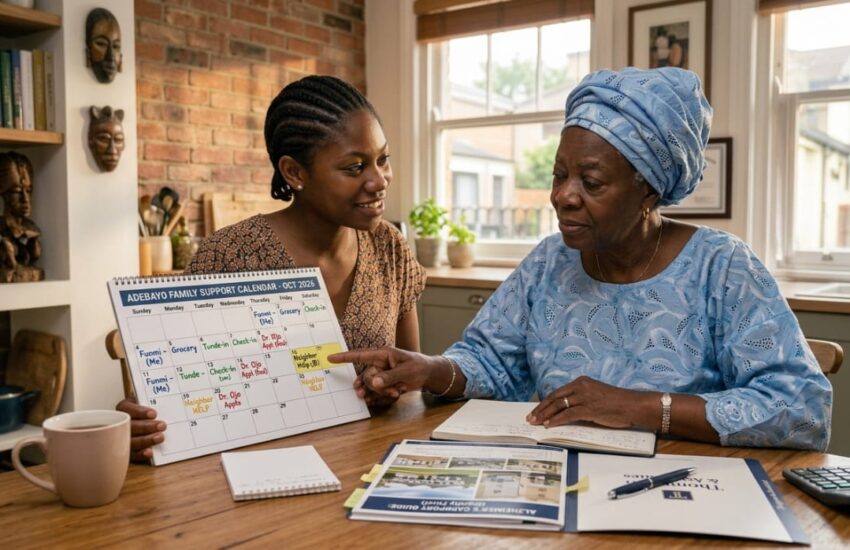
The fifth source was my family. I had been trying to protect my siblings from the burden. I thought I was being noble. I was actually isolating myself and depriving them of the opportunity to help. When I finally asked for help, they stepped up. My brother took over weekend visits. My sister managed the finances. My niece ran errands. We created a shared calendar so everyone knew what was needed. The burden was lighter because we carried it together.
The sixth source was my mother’s medical team. I built a relationship with her neurologist and primary care physician. I attended appointments with her and asked questions. I learned about medications that could slow the progression of the disease and manage behavioral symptoms. I also learned about clinical trials and research opportunities. The medical team became my partners in care.
The seventh source was technology. I used a shared calendar app to coordinate family visits and medical appointments. I set up medication reminders on my mother’s phone. I installed a doorbell camera so I could check on her from work. These tools did not replace human connection, but they made caregiving more manageable.
If you are caring for a loved one with Alzheimer’s at home, please know that asking for help is not a sign of weakness. It is a sign of wisdom. You cannot pour from an empty cup. Your loved one needs you healthy and whole. Start with the Alzheimer’s Association. Explore respite care and adult day programs. Build a team. You do not have to do this alone.
There is so much more to learn about supporting families affected by Alzheimer’s. Our website is filled with articles on caregiver support, respite care, and dementia resources. Head over and explore, because no one should have to face this journey alone.
References
National Institute on Aging. (2024, June 27). *Getting help with Alzheimer’s caregiving*. [https://www.nia.nih.gov/health/alzheimers-caregiving/getting-help-alzheimers-caregiving](https://www.nia.nih.gov/health/alzheimers-caregiving/getting-help-alzheimers-caregiving)
Alzheimer’s Association. (n.d.). *Alzheimer’s & dementia caregiver support*. [https://www.alz.org/help-support/caregiving](https://www.alz.org/help-support/caregiving)
Alzheimer’s Association. (n.d.). *24/7 helpline*. [https://www.alz.org/help-support/resources/helpline](https://www.alz.org/help-support/resources/helpline)
Alzheimers.gov. (2025, April 1). *Resources for caregivers of people with Alzheimer’s disease and related dementias*. [https://www.alzheimers.gov/life-with-dementia/resources-caregivers](https://www.alzheimers.gov/life-with-dementia/resources-caregivers)
American Academy of Family Physicians. (2020, February 19). *Caregiver resources*. [https://www.aafp.org/family-physician/patient-care/care-resources/cognitive-care/caregiver-resources.html](https://www.aafp.org/family-physician/patient-care/care-resources/cognitive-care/caregiver-resources.html)
Alzheimer’s Association. (n.d.). *Patient and caregiver resources*. [https://www.alz.org/getmedia/6d483c75-4e40-4197-9fcd-aa3a88e574db/patient-caregiver-resources.pdf](https://www.alz.org/getmedia/6d483c75-4e40-4197-9fcd-aa3a88e574db/patient-caregiver-resources.pdf)