
 Posted by
 The first time I searched for a nursing home for my mother, I thought the process was simple. Find a location, check the star rating, and hope for the best. I did not know that some nursing homes have specialized units for specific conditions and others do not. I did not know that the wrong facility could make her symptoms worse. I learned the hard way that finding the right fit requires research, persistence, and knowing what questions to ask.
The first place to start is the official government resources. The Centers for Medicare & Medicaid Services (CMS) provides a tool called Care Compare, where you can search for Medicare-certified nursing homes based on location and compare their quality of care. This tool also allows you to search for short-term care, such as rehabilitation from surgery and other forms of specialized care. It is free, objective, and the most reliable starting point.
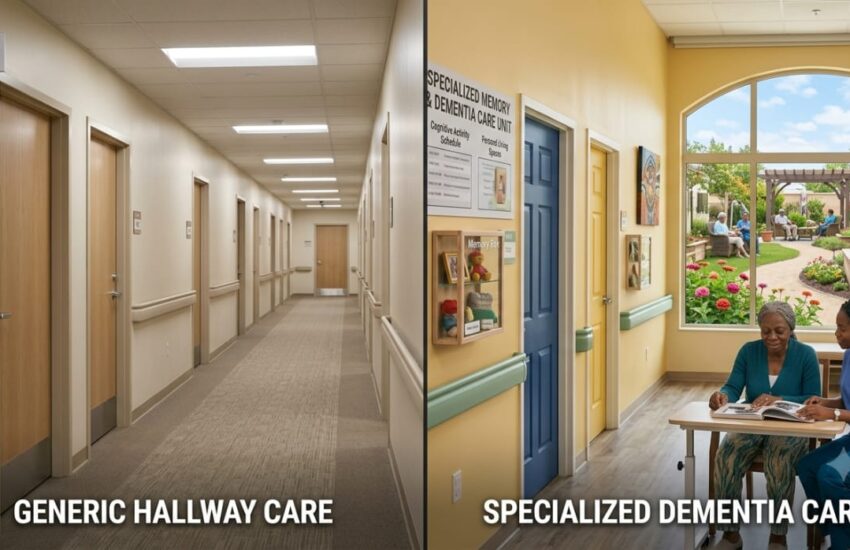
Once you have a list of potential facilities, the next step is understanding which ones actually offer specialized care for your loved one’s condition. A specialized care unit is a designated area within a nursing home that is designed to serve individuals with specific health care needs, such as dementia, mental illness, or other chronic organic disorders. These units have environments adapted to the residents’ needs for security and appropriately staffed programs tailored to their higher care requirements. Some nursing homes have specialized units for a range of conditions. These can include Alzheimer’s disease and dementia care, bariatric care, behavioral care, dialysis on site, hospice care, intensive rehabilitation, respiratory care, skin and wound care, spinal cord injury care, and traumatic brain injury care.

Dementia specialty care units, which exist in nearly fifteen percent of U.S. nursing homes, are often characterized by features such as locked doors, distinctive doorways and colors, wander gardens, shadow boxes outside residents’ rooms, specialized activities, and staff who are always present on the unit. Some units emphasize personalized music, communal dining, and outdoor access, which can be beneficial for residents with cognitive impairment. Nonprofit nursing homes tend to have higher star ratings for quality compared to for-profit nursing homes that operate dementia specialty care units. If your loved one has dementia, you should ask whether the facility has a dementia specialty care unit and what specific features and staff training it offers.
For other complex conditions, some nursing homes focus on particular health needs such as neurological conditions, brain injuries, multiple sclerosis, Parkinson’s disease, Huntington’s disease, or motor neurone disease. Facilities that specialize in these areas often have registered nurse teams highly skilled and trained to deliver specialist nursing care, with experience in tracheostomy care, PEG feeding, wound management, and end-of-life care. They may also offer dedicated training for staff in ventilation, tracheostomy, catheterization, and other complex procedures. Not every nursing home will have these capabilities, and a general facility may not be equipped to manage your loved one’s needs safely.
When you call a facility, ask specific questions. Do you have a specialized unit for my loved one’s condition? What training does your staff receive for this condition? What is the staff-to-resident ratio on that unit? Can I see the unit? What therapies or activities are offered specifically for residents with this condition? Do you have experience managing the medications and symptoms associated with this condition? Answers that are vague or evasive are red flags.
Visiting the facility in person is essential. If possible, make an unannounced visit to see the unit on a normal day. Watch how staff interact with residents. Observe whether the environment feels calm or chaotic. Ask to speak with a family member of another resident on the same unit. Their experience can tell you more than any brochure.
Finally, do not hesitate to seek professional guidance. Some independent care advisors offer consultations to help families identify facilities that meet specific needs. They can help you create a shortlist of homes to consider and provide full reports so you can compare them side by side. While these services cost money, they can save you from making a costly mistake.
Finding the right nursing home for a specific health condition takes time, but it is possible. Use the official tools. Ask the hard questions. Visit in person. And trust your gut. Your loved one deserves a facility that understands their condition, not just one that has an empty bed.
There is so much more to learn about finding the right long-term care. Our website is filled with articles on nursing home quality, specialized care units, and family advocacy. Head over and explore, because the right care starts with knowing what to ask.
References
National Institute on Aging. (2023, October 11). *Long-term care facilities: Assisted living, nursing homes, and more*. https://www.nia.nih.gov/health/assisted-living-and-nursing-homes/long-term-care-facilities-assisted-living-nursing-homes
California Department of Aging. (2020, March 26). *Skilled nursing facilities*. https://aging.ca.gov/Care_Options/Skilled_Nursing_Facilities/
Valorum Care Group. (2024, May 26). *A comprehensive guide to different types of care homes*. https://www.valorumcaregroup.com/a-comprehensive-guide-to-different-types-of-care-homes/
Heisinger Bluffs. (2024, December 26). *Specialized care services in nursing homes*. https://www.hbrhc.com/blog/specialized-care-services-in-nursing-homes
MSD Manuals. (n.d.). *Nursing homes*. https://www.msdmanuals.com/home/older-people-s-health-issues/providing-care-to-older-adults/nursing-homes