
 Posted by
 When my mother moved into a nursing home, I assumed cognitive decline was inevitable. She had dementia. Her memory was fading. I thought my job was just to keep her comfortable. I had no idea that the environment, activities, and daily routines could actively support her remaining abilities. I was wrong about what was possible.
The research is detailed: cognitive function in nursing home residents is not fixed. It can be supported, maintained, and sometimes even improved with the right interventions. A systematic review found that complex non-pharmacological interventions, combining multiple approaches, show the strongest potential for improving cognition, behavioral symptoms, and quality of life in people with dementia.
The first thing I learned is that cognitive health is not just about brain exercises. It is about treating the whole person. A 2025 study found that interoception, the ability to sense internal bodily signals, and proprioceptive seeking behavior were positively associated with cognitive performance in nursing home residents. In plain language, residents who maintained awareness of their bodies and engaged in movement that helped them sense their physical position tended to have better cognitive outcomes. The mind and body are not separate. They are deeply connected.
Physical exercise is one of the most powerful tools we have. A multimodal exercise program combining physical and cognitive components, including dual-task exercises like walking while counting or balancing while naming objects, showed improvements in memory, reaction time, and physical fitness among residents over 80. A separate study is currently evaluating a 12-week multicomponent exercise program incorporating resistance, balance, and aerobic training, with outcome measures including global cognitive function and executive function. The evidence is building that movement is medicine for the brain.
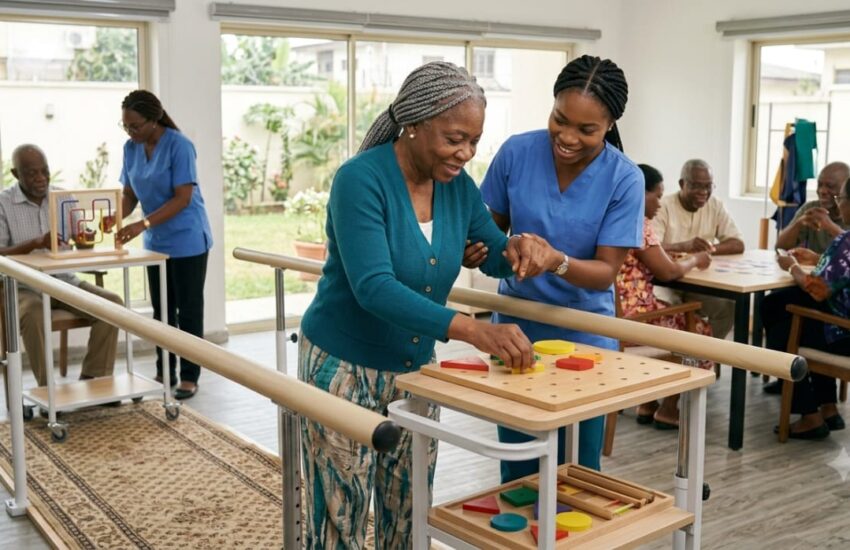
Cognitive stimulation activities are another cornerstone. These are not about drilling residents with flashcards. They are about meaningful engagement. A systematic review identified key components of effective cognitive stimulation interventions: reminiscence therapy, activities of daily living like baking or gardening, physical and relaxing exercises, cognitive exercises like word games or puzzles, music therapy, and multisensory stimulation. My mother responded most to music. She could not remember my name, but she could still hum along to songs from her youth. That was cognitive engagement. That was the connection.
The social environment matters enormously. A recent study on response facilitation found that group-based recreational activities more frequently elicited observable engagement and physiological markers consistent with attention among residents with dementia. What this means for families is simple: communal activities are not just social, they are cognitive. Watching others engage can stimulate residents who might not participate individually. The ripple effect is real. One resident’s engagement can spark another’s.
Sensory processing is another overlooked factor. The same 2025 study found that visual over-responsiveness, being overly sensitive to visual stimuli, was negatively associated with cognitive performance. This suggests that chaotic, overstimulating environments may actually harm cognitive function. Calm, sensory-friendly spaces with appropriate lighting and minimal clutter are not just about comfort. They are about supporting brain health.
Nursing home managers overwhelmingly believe that cognitive stimulation activities can help residents maintain cognitive function, and they recognize that nursing staff should have a key role in implementation. The challenge is integrating these activities into daily care, not treating them as add-ons. Cognitive stimulation should be woven into bathing, dressing, mealtimes, and conversations, not reserved for occasional activity sessions.
I also learned that individualization matters. Not every resident will thrive in a group setting. Some need one-on-one support. A 2025 study found that individualized exercises combining physical and cognitive stimulation were well-received and generated high participant satisfaction. The key is knowing each resident as a person, their history, preferences, and remaining abilities.
Risk factors for cognitive decline include age, education level, depression, poor sleep, malnutrition, and inactivity. Families can advocate for comprehensive assessments that address these factors holistically. Ask about sleep quality, nutritional status, and mood, not just cognitive test scores. These are all connected.
If your loved one is in a nursing home, you can help. Share their life story with staff. Bring familiar objects and music. Encourage movement, even seated exercises. Support participation in group activities. Advocate for calm, sensory-friendly environments. And never underestimate the power of simply sitting with them, holding their hand, and being present. That connection itself is cognitive stimulation.
There is so much more to learn about supporting cognitive health in long-term care. Our website is filled with articles on dementia care, family advocacy, and evidence-based interventions. Head over and explore, because maintaining cognitive abilities is not just about memory. It is about dignity, engagement, and quality of life.
References
Senior Home Plus. (2023, November 27). *Top strategies for cognitive stimulation in care homes*. https://www.seniorhomeplus.co.uk/residential-home-nursing-home/care-homes-activities/cognitive-stimulation-care-homes
DYNSEO. (2026, June 11). *Cognitive stimulation in nursing homes: Preserving memory and autonomy of seniors daily*. https://www.dynseo.com/en/cognitive-stimulation-in-nursing-homes-preserving-memory-and-autonomy-of-seniors-on-a-daily-basis/
InTouchLink. (2023, June 12). *7 brain-boosting ways senior living staff can support residents’ mental agility*. https://www1.intouchlink.com/7-brain-boosting-ways-senior-living-community-staff-support-residents-mental-agility/
PubMed. (2016, June 25). *The efficacy of a volunteer-administered cognitive stimulation program in long-term care homes*. https://pubmed.ncbi.nlm.nih.gov/26804606/
McKnight’s Long-Term Care News. (2025, June 1). *Enhancing cognitive wellness – a roadmap*. https://www.mcknights.com/blogs/guest-columns/enhancing-cognitive-wellness-a-roadmap/