
 Posted by
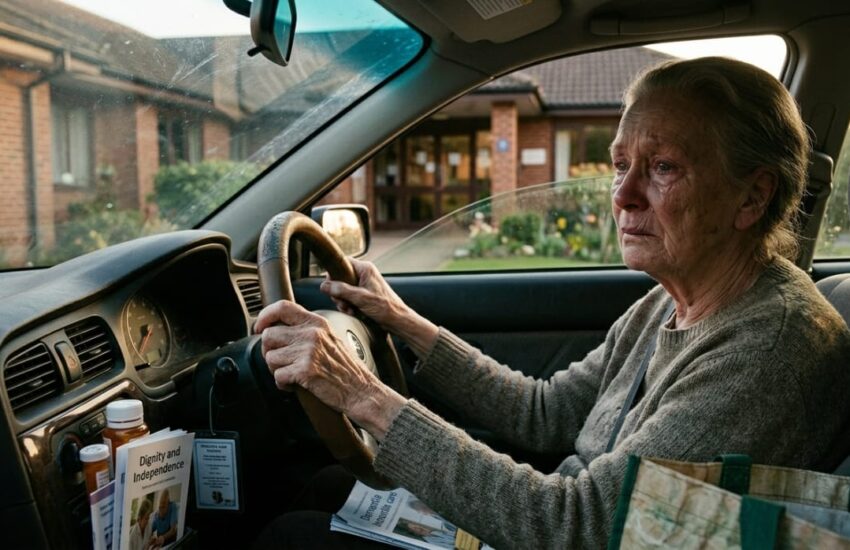
 The day my mother moved into the nursing home, I thought my caregiving role was over. I was wrong. I still managed her medications, communicated with staff, handled insurance battles, visited daily, and worried constantly. The only thing that changed was the location. The exhaustion stayed. The guilt stayed. The burnout grew worse.
I didn’t recognize it at first. I was just tired. Short-tempered with my kids. Forgetting appointments. Crying in the car between visits. I thought this was normal. Everyone with a parent in a nursing home felt this way, right? Wrong. I was burned out, and I didn’t even know it.
Family caregiver stress doesn’t end when your loved one enters a facility. You trade hands-on care for a different kind of labor: monitoring, advocating, coordinating, and grieving. The staff work shifts. You work twenty-four hours a day.
The first sign of burnout for me was irritability. Small annoyances became huge. A missed phone call from the nurse felt like a personal betrayal. A billing error sent me into a rage. I was angry all the time, mostly at people who didn’t deserve it. The second sign was exhaustion that sleep couldn’t fix. I’d lie awake replaying conversations with doctors, planning for the next crisis, worrying about decisions I’d made. Even when I slept, I woke up tired.
The third sign was withdrawal. I stopped calling friends. I stopped exercising. I stopped doing things I used to love. Everything felt like too much effort. The nursing home had become the center of my life, and nothing else fit.
The fourth sign was guilt. I felt guilty when I visited and guilty when I didn’t. I felt guilty that my mother was in a facility at all. I felt guilty that I resented her for needing me. The guilt was constant and crushing. The fifth sign was physical. Headaches. Stomach problems. A cold that wouldn’t go away. My body was shouting what my mind wouldn’t hear: You cannot keep going like this.
I finally asked for help when I snapped at my daughter for no reason. Her face crumpled. I saw myself through her eyes, angry, distant, scary. That was my wake-up call.
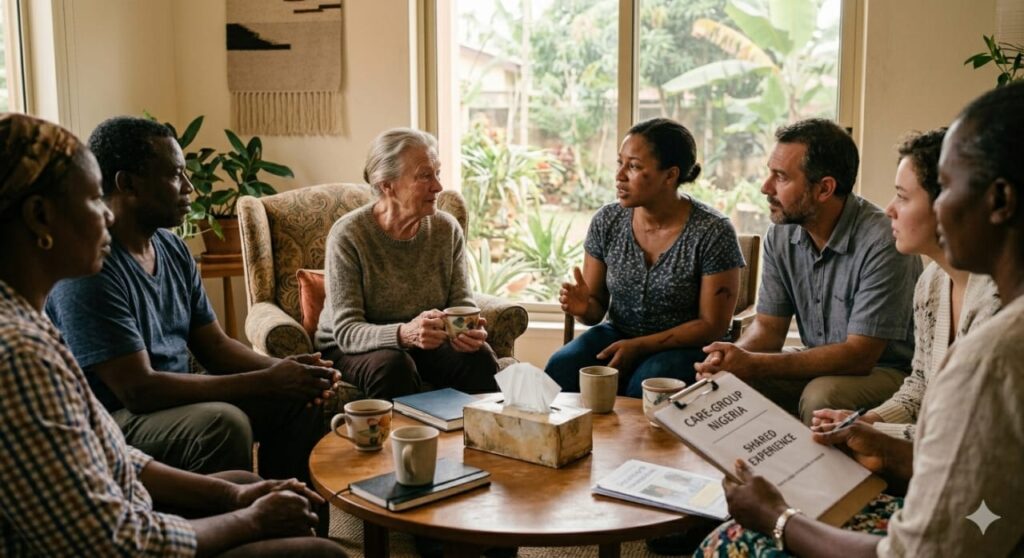
The first thing I learned was that I couldn’t do it alone. I joined a support group for family caregivers. Just sitting in a room with people who understood was healing. They didn’t judge my guilt. They shared their own. I stopped feeling so alone.
I learned to set boundaries with the facility. I didn’t need to be there every day. I didn’t need to answer every phone call immediately. I could ask questions during business hours instead of panicking at night. The world didn’t collapse when I stepped back.
I learned to accept that I couldn’t control everything. The nursing home would make mistakes. My mother would have bad days. I couldn’t prevent every problem. I could only respond to problems as they arose. Releasing the illusion of control lowered my anxiety dramatically.
I found small moments for myself. A ten-minute walk before entering the building. A coffee with a friend after visiting hours. A podcast during the drive. These weren’t indulgences. They were medicine. I also permitted myself to grieve. My mother’s decline was a loss. My old life was a loss. The future I’d imagined was a loss. I needed to mourn those losses, not just power through them. I cried in my car. I cried in the shower. I let myself feel sad instead of pretending to be fine.
Most importantly, I asked for help. I asked my siblings to take specific shifts, not just “help when you can.” I hired a geriatric care manager to handle some advocacy tasks. I saw a therapist who helped me untangle my guilt from my love. Asking for help was the hardest, bravest thing I did.
If you’re a family caregiver, your health matters. Not just for your own sake, but for your loved ones’. You cannot pour from an empty cup. Burnout helps no one. There’s so much more to learn about sustaining yourself while caring for others. Our website is filled with articles on caregiver burnout, support resources, and setting boundaries. Head over and explore, because you deserve care too.
References
National Academies of Sciences, Engineering, and Medicine. (2016). *Families caring for an aging America*. National Academies Press. https://www.ncbi.nlm.nih.gov/books/NBK396398/
Cohen, S. M., et al. (2000). The interplay of institution and family caregiving: Relations between patient hassles, nursing home hassles and caregivers’ burnout. *International Journal of Aging and Human Development, 51*(3), 213-229. https://pubmed.ncbi.nlm.nih.gov/11044875
Mayo Clinic. (2026, February 4). *Caregiver stress: Tips for taking care of yourself*. https://www.mayoclinic.org/healthy-lifestyle/stress-management/in-depth/caregiver-stress/art-20044784
Cleveland Clinic. (2023, August 16). *Caregiver burnout: What it is, symptoms & prevention*. https://my.clevelandclinic.org/health/diseases/9225-caregiver-burnout
Kim, J. H., & Shin, H. S. (2017). Factors affecting caregivers’ burnout caring for a family member in an intensive care unit. *Korean Journal of Adult Nursing, 29*(5), 517-527. https://kjan.or.kr/journal/view.php?doi=10.7475/kjan.2017.29.5.517