
 Posted by
 My mother’s first nursing home was clean, efficient, and utterly depressing. Long, identical hallways in beige and gray. Fluorescent lights that hummed constantly. A central nurses’ station behind a high counter. Residents lined up in wheelchairs facing a television that no one watched. The building was designed for staff convenience, not human dignity. And my mother declined faster there than anywhere else.
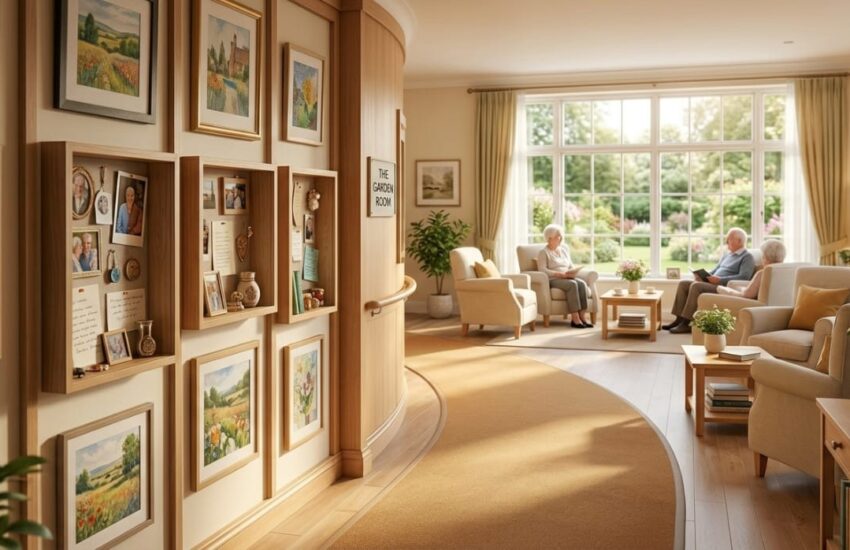
When we moved her to a different facility, the architecture was completely different. Small, home-like neighborhoods instead of long corridors. Real wood, warm colors, soft lighting. A garden visible from every common area. Private rooms with space for personal furniture. The change in her mood was immediate and lasting.
Nursing home architecture and design aren’t just aesthetics. They’re medicine. The physical environment affects fall risk, infection control, orientation, mood, sleep, and social connection. Bad design harms. Good design heals.
The first thing to notice is the hallway layout. Traditional nursing homes use long, straight corridors with identical doors. For someone with dementia, this is a nightmare. Every door looks the same. There are no landmarks. Getting lost is almost guaranteed. Better facilities use small “households” or “neighborhoods”, clusters of rooms around a common living space. Residents can find their way because the scale is human and the landmarks are clear.
Lighting matters enormously. Elderly eyes need more light to see clearly, but harsh overhead lights create glare and shadows that confuse people with dementia. The best facilities use layered lighting: ambient light for general illumination, task lighting for reading or activities, and natural light wherever possible. My mother’s facility had large windows in every common area. The sunlight improved everyone’s mood.
Flooring is another critical element. Shiny floors look clean but create glare that can look like water to someone with dementia. Busy patterns can be disorienting. The best facilities use matte, non-slip flooring with high contrast at edges and transitions. When the floor color changed at the entrance to my mother’s room, she could find her way back easily.
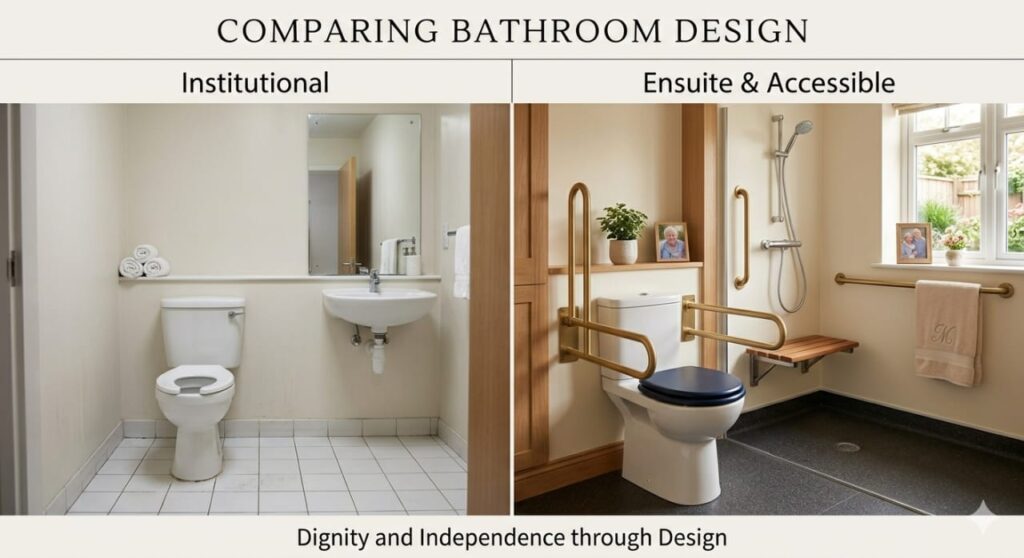
Bathroom design directly affects independence and dignity. Traditional nursing homes have shared bathrooms down the hall. Better facilities have private bathrooms en suite, with contrasting toilet seats, grab bars, and roll-in showers. My mother’s private bathroom meant she could maintain her privacy and routine. That small dignity mattered enormously.
Outdoor access is non-negotiable. Being able to step outside, feel the sun, and breathe fresh air improves sleep, mood, and physical health. The best facilities have secure gardens with wandering paths, fragrant plants, shaded seating, and wheelchair accessibility. My mother’s garden had raised planting beds at wheelchair height. She could garden again, something she’d loved her whole life.
Acoustics are often overlooked. Hard surfaces reflect sound, creating a constant din that frazzles residents and staff alike. Sound-absorbing ceilings, carpeting, and acoustic panels reduce noise dramatically. In the quieter facility, residents were calmer. Staff were less stressed. Conversations were possible without shouting.
Furniture needs to be both comfortable and functional. Low, soft chairs look homey but are hard to get out of. The best facilities use chairs with firm seats, armrests, and appropriate seat height. Dining tables have cutouts for wheelchairs. Beds adjust for safety and comfort. None of it looks institutional.
Wayfinding features help residents navigate independently. Memory boxes outside each door display personal photos and objects. Distinctive art or murals mark different neighborhoods. Clear, high-contrast signage with both words and pictures. My mother found her room by the ceramic bird outside her door, not by reading a number she couldn’t remember.
Color and pattern choices affect orientation and mood. High contrast helps people with low vision see edges and obstacles. Warm, familiar colors feel comforting. The good facility used soft blues and greens, which are calming, with pops of warm yellow for contrast. It felt like a home, not a hospital.
If you’re evaluating nursing homes, look at the environment with fresh eyes. Does it feel like a home or an institution? Can residents find their way independently? Is there outdoor access? Is the lighting comfortable? Does the noise level feel calm or chaotic? These aren’t superficial details. Their quality of life.
The architecture won’t fix bad care, but good care can’t fully succeed in a bad environment. My mother’s decline slowed dramatically when she moved to the thoughtfully designed facility. She wasn’t cured, but she was more comfortable, more oriented, more herself. The building helped her hold on.
There’s so much more to learn about creating healing environments for seniors. Our website is filled with articles on nursing home design, dementia-friendly spaces, and evaluating facilities. Head over and explore, because the building matters as much as the care inside it.
References
Whole Building Design Guide. (n.d.). *Nursing home*. https://www.wbdg.org/building-types/health-care-facilities/nursing-home
Facility Guidelines Institute. (2018). *Design guide for long-term care homes* [PDF]. https://www.fgiguidelines.org/wp-content/uploads/2018/03/MMP_DesignGuideLongTermCareHomes_2018.01.pdf
The Korte Company. (2018, September 24). *Nursing home architecture design*. https://www.korteco.com/construction-industry-articles/nursing-home-architecture-design/
Wabenbow. (2011). *Small house floor plan designs for nursing homes* [PDF]. https://wabenbow.com/wp-content/uploads/2011/10/Small-House-Floor-Plan-Designs-December-2011-compressed.pdf
Arhiv Zatehnickenauke. (n.d.). *Architectural design of nursing homes in the aspect of quality assessment in architecture* [PDF]. https://arhivzatehnickenauke.com/article/290/pdf